Trump’s Iran Stance: Bold Strategy or Tactical Retreat?
The debate over Donald Trump's handling of Iran centers on whether his extension of a ceasefire was a strategic masterstroke or a sign of weakness. Supporters argue he's playing a long game, leveraging Iran's economic woes for a better deal. Critics contend this approach forfeits crucial leverage, allowing Iran to delay indefinitely.

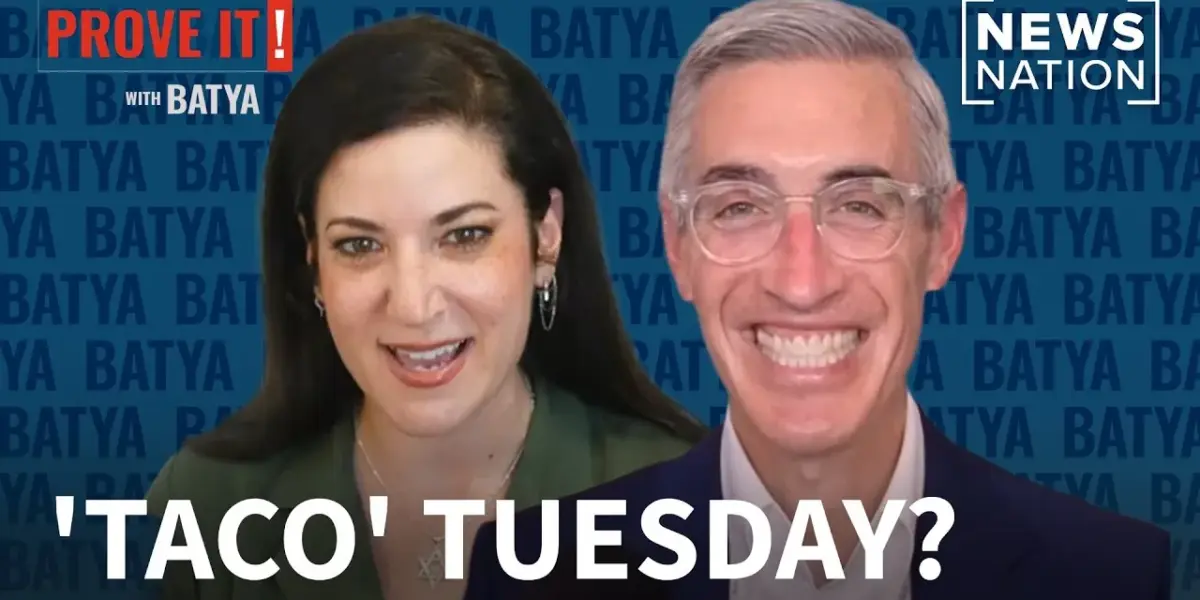
Trump’s Iran Stance: Bold Strategy or Tactical Retreat?
The question of whether former President Donald Trump “chickened out” on Iran after threatening military action has sparked intense debate. Critics point to his decision to extend a ceasefire rather than launch a bombing campaign as evidence of a retreat. Supporters, however, argue this move is part of a calculated strategy to achieve a better deal.
The “Chicken Out” Argument
Those who believe Trump backed down highlight the extension of the ceasefire agreement. This agreement was set to expire, but Trump chose to prolong it indefinitely, even without Iran returning to the negotiating table.
Dan Turrentine, a commentator, suggests this repeated pattern of threats without follow-through might weaken America’s leverage. He argues that Iran, and other nations, may see this as a sign of unpredictability that ultimately backfires.
Turrentine explains that while Trump’s “madman theory” – appearing unpredictable – can be a strength, it loses its impact if not backed by action. He believes Iran’s internal divisions, between moderates and hardliners, could persist indefinitely if the U.S. doesn’t create an “action-forcing event.” This perspective suggests that Trump’s decision was a missed opportunity to apply decisive pressure.
A Calculated Waiting Game
Conversely, supporters of Trump’s approach argue that he holds the stronger hand. They point to Iran’s economic vulnerabilities, specifically its reliance on oil exports. With oil tanks filling up and the potential for irreparable damage to infrastructure like Kharg Island, Iran faces a critical point where it may be forced to reduce production significantly.
This perspective suggests that Iran will struggle to fund its military and internal security forces, like the IRGC, without oil revenue. By waiting, Trump can exert economic pressure that weakens the regime from within. Appearing nonchalant and less eager for a deal can lead to better terms, as the party needing the deal more will likely accept less favorable conditions.
Internal Divisions and Global Dynamics
The complexity of the situation is amplified by Iran’s internal political landscape. Reports suggest a division between more moderate figures, like Ali Larijani, who might be open to negotiation, and hardliners within the IRGC who prefer continued conflict. This internal struggle can slow down any potential agreement.
Adding another layer, Iran is not entirely isolated. It has potential avenues for support from countries like China and Russia, who could provide financial assistance. This means that while economic sanctions have an impact, they might not be enough to cripple the regime without a broader international consensus or more direct action.
Historical Context: The Obama Deal and Beyond
The current debate often references the Joint Comprehensive Plan of Action (JCPOA), negotiated under President Obama. Many on the right view that deal as too lenient, citing its sunset clauses, lack of action on ballistic missiles, and perceived weaknesses in inspections. They argue it did not prevent Iran from pursuing nuclear weapons.
Trump’s administration withdrew from the JCPOA, aiming for a “better deal.” The current negotiations, therefore, are seen by some as an attempt to achieve this, even if the outcome resembles aspects of the original deal. The challenge lies in creating an agreement that is demonstrably superior to the JCPOA and can satisfy domestic political demands.
The “Madman Theory” and Moral Superiority
One argument for Trump’s approach suggests his seemingly chaotic style is a deliberate tactic. By presenting himself as unpredictable and even aggressive, he aims to neutralize the “genocidal nature” of the Iranian regime, which operates without the same moral constraints as Western powers. This strategy, proponents argue, is a way to compensate for the U.S. adhering to higher ethical standards.
This is compared to Israel’s situation with groups like Hamas, where a more value-driven military faces an adversary with fewer ethical boundaries. Trump’s strategy, therefore, is not about simply winning a negotiation but about navigating a conflict with a morally bankrupt opponent while operating under a system of values that can be a disadvantage.
Why This Matters
The stakes in the Iran standoff are incredibly high. The potential for a nuclear-armed Iran poses a significant threat to global security, and the U.S. has a vested interest in preventing this. The debate over Trump’s strategy reflects a broader discussion about how to effectively counter hostile regimes without resorting to costly military interventions.
The effectiveness of economic sanctions, diplomatic pressure, and the “madman theory” are all being tested. The outcome of these negotiations, and the long-term implications for regional stability and the global non-proliferation regime, will be closely watched. The core question remains: can Trump secure a deal that genuinely halts Iran’s nuclear ambitions and addresses its destabilizing behavior, or will the current approach lead to a less favorable outcome?
Implications and Future Outlook
If the U.S. secures a deal that is perceived as weak or merely a repeat of the Obama-era agreement, it could embolden Iran and alienate allies. Conversely, a successful, robust deal could significantly de-escalate tensions and prevent a dangerous arms race. The internal dynamics within Iran, and the willingness of other global powers to cooperate or obstruct, will play a key role.
The long-term outlook depends on whether diplomatic solutions can be found that satisfy U.S. security concerns without provoking further conflict. The debate highlights the difficulty of crafting foreign policy that balances national interests with moral considerations, especially when dealing with adversaries who operate by a different set of rules.
A key point of contention is Iran’s demand for unfrozen assets, which could provide significant financial resources. The U.S. government is reportedly exploring creative ways to address this, but any cash infusion back into Iran’s coffers will be a difficult pill to swallow for many, especially if the regime’s behavior does not change.
Ultimately, the question of whether Trump “chickened out” or employed a brilliant strategic delay hinges on the final outcome. If Iran is demonstrably prevented from obtaining nuclear weapons and its destabilizing activities are curtailed, the strategy may be vindicated. If the situation deteriorates or a deal is struck that fails to achieve these core objectives, the criticism will likely intensify.
The path forward involves navigating complex geopolitical currents, internal Iranian politics, and domestic U.S. political pressures. The administration’s ability to secure a verifiable agreement that limits Iran’s nuclear program and curbs its regional influence will be the ultimate test of its strategy.
The next steps will involve monitoring Iran’s response to ongoing mediation efforts and the potential for a breakthrough or further stalemate. The global community will be watching to see if a diplomatic resolution can be reached or if the situation escalates.
Source: Did Trump 'chicken out' on Iran? Debate with Dan Turrentine | Prove It! with Batya (YouTube)

Related Articles
Iran Won’t Talk to Trump Until He Changes His Tone
Iran attacked three ships in the Strait of Hormuz, seizing two, in a move signaling its demand for President Trump to change his approach before any negotiations can occur. Experts believe serious talks are unlikely due to a lack of key conditions and a mismatch in pain tolerance between the two sides. The conflict is also impacting global economies, with the UK experiencing a rise in inflation.

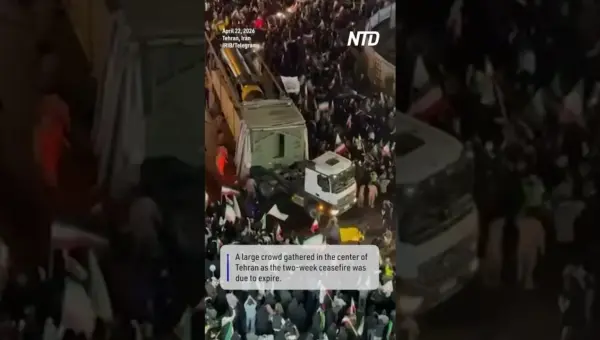
Iran Shows Off Missiles Amid US Talk Collapse
Iran showcased ballistic missile launchers during a military parade in Tehran, following the collapse of proposed talks with the U.S. in Pakistan. This display signals Iran's military priorities amidst ongoing international tensions.
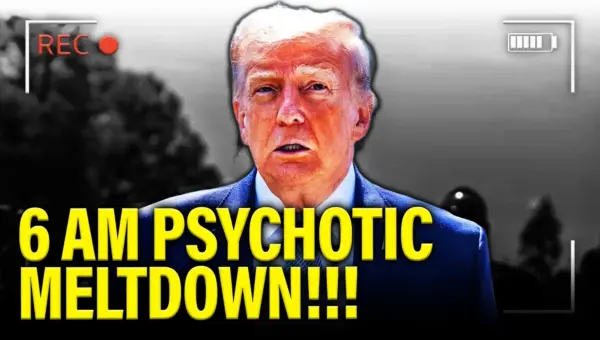
Trump’s Early Morning Tweets Spark Global Concern, Mockery
Donald Trump's early morning social media posts, filled with erratic commentary and insults, have drawn widespread criticism and international mockery. While claiming progress on Iran talks, Iran itself reported capturing vessels and highlighted its ability to disrupt global internet cables. This behavior, coupled with historically low approval ratings, has led to China viewing itself as a major beneficiary of U.S. diplomatic missteps.