Stock Market Crash Fears Drive Real Estate Search
Fears of a stock market crash, particularly concerning the baby boomer generation, are driving interest towards real estate as a stable investment. Robert Kiyosaki predicts a market downturn could leave many homeless. This sentiment highlights real estate's appeal as a tangible asset offering potential income and long-term value.


Stock Market Crash Fears Drive Real Estate Search
Concerns are mounting over a potential stock market crash, leading many to seek stability in real estate. This fear, particularly among older generations, is prompting a search for alternative investments. The idea is that physical assets like property can offer a safer haven when financial markets become volatile.
Robert Kiyosaki, author of “Rich Dad Poor Dad,” has voiced a dire prediction. He fears the stock market, specifically the S&P 500, will be intentionally crashed. Kiyosaki believes this could happen to the detriment of the baby boomer generation, potentially leaving many without homes.
This prediction stems from a belief that older generations, who were the first to widely adopt 401(k)s, are now running out of time to recover from a market downturn. As Kiyosaki himself approaches 80, he sees a critical window closing for those who rely heavily on stock market gains for retirement.
Why Real Estate Becomes Attractive
In times of economic uncertainty, real estate often shines as a tangible asset. Unlike stocks, which can vanish in value overnight, property ownership provides a physical asset. This asset can generate rental income and potentially appreciate over the long term, offering a more predictable income stream.
Investors often look at metrics like capitalization rate, or cap rate, to assess a property’s potential return. The cap rate is calculated by dividing the property’s net operating income (rent minus expenses) by its market value.
A higher cap rate generally indicates a better return on investment. For example, a property that generates $10,000 in net income and is valued at $100,000 has a 10% cap rate.
Another key concept is cash flow, which is the money left over after all expenses, including mortgage payments, are paid. Positive cash flow means the property is generating income, while negative cash flow means it’s costing money to own.
Lenders also consider the loan-to-value (LTV) ratio, which is the mortgage amount divided by the property’s appraised value. A lower LTV often means better loan terms.
Broader Economic Context
The fears of a stock market crash are amplified by current global events. Geopolitical tensions, such as conflicts in oil-producing regions, can create widespread economic instability. Such events often lead to increased oil prices, which can fuel inflation and slow economic growth.
Inflation erodes the purchasing power of money, making it harder for people to afford goods and services. Central banks often respond to inflation by raising interest rates.
Higher interest rates make borrowing more expensive, impacting everything from mortgages to business loans. This can further dampen economic activity and increase the risk of a market downturn.
Regional Differences and Impact
The impact of these market shifts varies significantly by region. Areas with strong job markets and consistent population growth tend to be more resilient. In these locations, demand for housing often remains steady, supporting property values even during broader economic slowdowns.
However, areas that are heavily reliant on specific industries or have seen rapid price appreciation may be more vulnerable. Buyers in these markets might face challenges with affordability, while sellers could see longer listing times or need to adjust their price expectations. Investors are closely watching these regional trends to identify opportunities and risks.
For those worried about their financial future, understanding these market dynamics is crucial. While Kiyosaki’s prediction is a stark warning, exploring diverse investment strategies, including real estate, can provide a path to greater financial security. Learning from experienced individuals who practice what they teach, rather than just theoretical knowledge, is often advised.
The next major economic indicator to watch will be the upcoming inflation report, scheduled for release on July 12th.
Source: A Dire Warning From Robert Kiyosaki (YouTube)

Related Articles


Homeowners Sell at Losses as Market Cools
Homeowners are increasingly selling properties at a loss as the housing market cools. Accidental landlords, in particular, are struggling to offload properties bought at peak prices. This trend presents potential opportunities for buyers and investors in affected regions.


Borrow Smart, Earn More: Real Estate Arbitrage Wins
Smart real estate investors are using arbitrage to profit by borrowing at low rates and investing for higher returns. This strategy focuses on controlling assets and maximizing capital growth. Understanding interest rates and regional market differences is key to successful arbitrage.

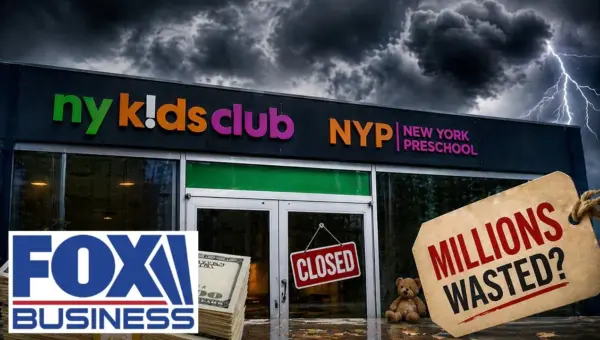
$100M Wasted on Empty NYC Preschools
New York City faces a $100 million cost for unopened preschools, sparking outrage over government waste. Meanwhile, a proposed tax on luxury second homes is criticized for potentially harming investment and lowering property values. Investors watch closely as budget negotiations could reshape the city's financial future.