Iran’s Missile Claims Debunked by US Intel
Recent claims of Iran's complete military defeat are being challenged by U.S. intelligence, which suggests Iran retains significant missile capabilities. This discrepancy highlights potential misrepresentations of conflict outcomes and impacts diplomatic efforts.


US Intel Contradicts Claims of Iran’s Military Weakness
Recent statements from public figures like Pete Hegseth have claimed that Iran’s military capabilities, particularly its missile stockpiles and air force, have been completely destroyed. These assertions suggest a decisive victory, painting a picture of Iran as having “nothing left.” However, this narrative clashes sharply with information from within the U.S. military itself, raising serious questions about the accuracy of the public pronouncements.
The repeated declarations of Iran’s total defeat, often linked to former President Trump’s past statements about Iran’s air and naval forces, seem to contradict the reality of ongoing diplomatic efforts. If a war were truly won and Iran’s military capabilities were non-existent, there would be no need for continued, and reportedly failed, negotiations. This suggests a disconnect between the declared victory and the actual situation on the ground.
Intelligence Reports Offer a Different Picture
Contrary to the claims of Iran’s complete decimation, U.S. military intelligence and former insiders indicate a significantly different scenario. These sources suggest that Iran still possesses a substantial portion of its missile stockpile, potentially around half of its original capacity. This remaining arsenal is reportedly larger, on a proportional basis, than that of the United States.
While some missile launchers may have been damaged or buried, intelligence reports suggest these are easily repairable. There is a strong possibility that Iran maintains hidden missile caches in underground facilities, unknown to U.S. intelligence. This hidden capacity adds another layer of complexity to the narrative of total destruction.
External Support and Shifting Dynamics
Adding to the complexity, reports suggest that China may be supplying Iran with additional ballistic missiles. This external support could further strengthen Iran’s military strength, directly undermining the idea that Iran’s capabilities have been neutralized. The notion of Iran being militarily finished appears to be a misrepresentation of the facts.
The persistent claims of Iran’s military collapse and America’s swift victory seem to serve an internal purpose for those making them. These assertions may be intended to strengthen morale or justify past actions, rather than reflect a factual assessment of the situation. This self-deception, however, could have serious consequences for future diplomacy.
Historical Echoes and Future Concerns
The situation draws uncomfortable parallels to past conflicts, such as Iraq and Vietnam, where initial claims of success did not align with long-term outcomes. The aggressive rhetoric and the downplaying of civilian casualties and damage in such conflicts often mask a more complex and costly reality. The repeated emphasis on winning quickly, while ignoring the human cost, is a worrying sign.
The aggressive and often insulting public statements made by some figures regarding Iran’s situation may actually hinder diplomatic progress. Such behavior can make future negotiations more difficult, potentially pushing Iran further away from the negotiating table. This approach, which relies on bullying rather than genuine diplomacy, is proving to be ineffective.
Why This Matters
Understanding the true state of Iran’s military capabilities is crucial for informed foreign policy decisions. Relying on exaggerated claims of victory can lead to miscalculations, potentially escalating tensions or prolonging conflicts. Accurate intelligence is the bedrock of effective diplomacy and security strategy.
The discrepancy between public statements and intelligence assessments highlights a broader challenge in communicating complex geopolitical realities. It highlights the importance of critical thinking and verifying information, especially when dealing with sensitive international relations. The public deserves an accurate understanding of the challenges and successes in foreign policy.
Implications and Future Outlook
The future outlook suggests that diplomatic channels will remain tense, with the possibility of continued misunderstandings fueled by conflicting narratives. The effectiveness of future negotiations will likely depend on a more realistic assessment of Iran’s capabilities and a willingness to engage in genuine dialogue, rather than relying on triumphalist rhetoric.
Moving forward, a more nuanced approach is needed. This involves acknowledging the complexities of the situation, respecting international law, and prioritizing de-escalation. The goal should be to achieve stable relations through understanding, not through the projection of an inaccurate image of total victory.
Historical Context
The history of U.S.-Iran relations is marked by periods of intense hostility and cautious engagement. Following the 1979 revolution, relations soured significantly, leading to decades of tension. Recent years have seen fluctuating levels of confrontation and attempts at diplomacy, often influenced by regional dynamics and global politics.
The current situation can be seen as a continuation of this complex relationship, where actions and rhetoric from both sides contribute to an ongoing cycle of mistrust. Understanding this long-standing dynamic is key to interpreting present-day events and anticipating future developments.
The next live stream covering these topics is scheduled for Monday through Friday at 10:00 a.m. Eastern.
Source: Hegseth FACEPLANTS, Caught Exaggerating Iran ‘Victory’ (YouTube)

Related Articles

Trump’s Fitness: A Divided Nation Seeks Answers
A debate on Donald Trump's fitness to lead reveals deep divisions, weighing democratic legitimacy against concerns over character and norms. Nuanced views highlight the role of authenticity and the impact of globalization on American workers.

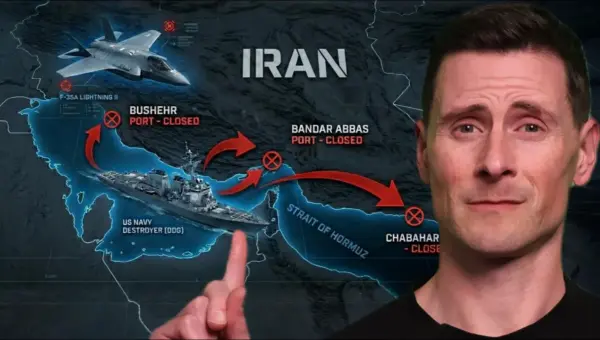
US Navy Tightens Strait of Hormuz Blockade
The U.S. Navy has tightened its blockade in the Strait of Hormuz, part of Operation Economic Fury against Iran. Pentagon officials have issued direct warnings to the IRGC, emphasizing U.S. military dominance and offering an "off-ramp" for a diplomatic resolution. While Iran has issued defiant threats, its naval capabilities are severely degraded, leaving few options against the U.S. carrier strike groups and advanced air power.

US Navy Dominates Hormuz: Iran’s Threats Are Just Piracy
The US Navy maintains firm control over the Strait of Hormuz, dismissing Iran's claims as mere piracy and terrorism. Experts highlight the US's 'real assets and real capabilities' versus Iran's lack of naval power. This control is vital for global energy security and economic stability.