Fed Nominee Rejects CBDC; Military Calls Bitcoin Strategic
Potential Fed Chair Kevin Worsh rejected the concept of a U.S. central bank digital currency, while military officials testified to Bitcoin's national security value. Meanwhile, Arbitrum froze $71 million in Ethereum following a DeFi exploit, sparking decentralization debates.


Fed Nominee Rejects CBDC; Military Calls Bitcoin Strategic
Crypto faced a double dose of significant news this week as a potential Federal Reserve Chair nominee rejected the idea of a central bank digital currency (CBDC) and top military officials testified to Bitcoin’s national security potential. These developments suggest a potentially more favorable environment for private digital assets.
During his confirmation hearing, Jerome Powell’s successor, Kevin Worsh, was asked if the Federal Reserve has the legal right to issue a CBDC. Worsh firmly stated that he believes the Fed does not have this right and that pursuing a CBDC would be a poor policy choice. He further agreed that under his chairmanship, the Federal Reserve would not explore any move toward creating a CBDC.
This stance is seen as positive for companies like Circle, which issues the USDC stablecoin, and for networks like Ethereum and Solana, which host many stablecoins. It means the power to create these dollar-pegged digital currencies would likely remain in the private sector rather than being controlled by the government.
Worsh also addressed questions about interest rates and his conversations with President Trump. While he avoided directly stating he would lower rates, Worsh emphasized his belief that interest rates are a more effective monetary policy tool than bond purchases. He stressed the need for the Fed to be nimble and make decisions based on incoming data, rather than pre-committing to specific rate paths.
Separately, in what appeared to be another congressional hearing, U.S. military officials testified about the strategic importance of Bitcoin. Admiral Douglas Fears highlighted Bitcoin’s potential as a tool for national security, citing its underlying technology. He described Bitcoin as a valuable computer science tool combining cryptography, blockchain, and proof-of-work, which offers unique applications for cybersecurity and power projection.
Fears noted that China’s Communist Party has also researched Bitcoin as a strategic asset. He explained that Bitcoin’s proof-of-work protocol requires significant computational effort, making it costly to attack and secure. The admiral suggested that understanding and potentially holding Bitcoin could enhance U.S. leverage, resilience, and deterrence, especially in relation to geopolitical competition with China.
This military endorsement of Bitcoin as a strategic asset, coming from high-ranking officials, adds a new layer to the ongoing debate about digital currencies. It suggests that beyond its investment potential, Bitcoin is being viewed by some in government as a critical technological and financial tool.
On the technical side, Bitcoin’s price action continues to be watched closely. While the asset has experienced several weeks of gains, some analysts point to a bearish flag pattern on charts.
This pattern, statistically, often precedes a price decline, though it does not guarantee it. Traders are monitoring key price levels, with potential rallies into the high 70s or low 80s being discussed before a possible breakout or breakdown.
Arbitrum Freezes Assets in DeFi Exploit
In a notable event on the Ethereum network, the Layer 2 scaling solution Arbitrum took action to freeze approximately $71 million worth of Ethereum. This move was in response to an exploit targeting the DeFi project Kelp DAO.
The Arbitrum Security Council froze over 30,000 ETH that was traced back to the Kelp DAO exploit. This decision has sparked debate within the crypto community about decentralization. Critics argue that the ability of a council to freeze assets demonstrates a degree of centralization, contradicting the core principles of decentralized finance.
Supporters of Arbitrum’s action, however, point out that such measures are outlined in the project’s development plans. They emphasize that Arbitrum is currently in an early phase of development, with plans to increase decentralization over time. This incident is a reminder that while many newer altcoins and Layer 2 solutions aim for decentralization, they often retain more centralized control mechanisms in their early stages compared to more established networks like Bitcoin or the Ethereum mainnet.
The event also highlights a common tactic used by hackers: moving stolen funds to more decentralized networks or to those with robust mixing services to obscure their trail. This reinforces the ongoing tension between security, decentralization, and the practicalities of managing digital assets in a rapidly evolving financial space.
The next Bitcoin Conference is scheduled for 2026.
Source: New Fed Chair Just Lit the Fuse for the Crypto Explosion (YouTube)

Related Articles


Trump Fed Pick Faces Scrutiny Over Epstein Ties
Kevin Warsh, a nominee for Federal Reserve chair, faced tough questioning from senators regarding his financial ties to Jeffrey Epstein and undisclosed assets. His responses often skirted direct answers, raising concerns about transparency and independence.

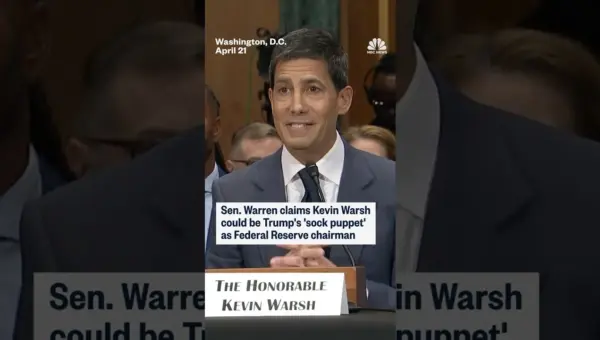
Warren Questions Fed Nominee’s Independence from Trump
Senator Elizabeth Warren questioned Federal Reserve nominee Kevin Warsh's independence from President Trump, suggesting he might act as a "sock puppet." Warren cited Trump's alleged remarks about controlling interest rates through his chosen nominee. Warsh attempted to distance himself from political questions during the hearing.

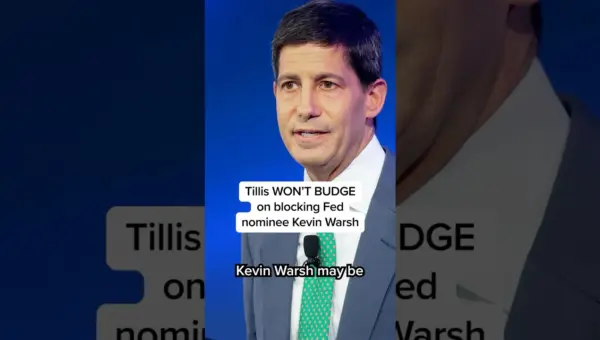
Senator Tillis Blocks Fed Nominee Over DOJ Probe
Senator Thom Tillis is blocking Kevin Warsh's nomination to the Federal Reserve. He demands the DOJ drop its investigation into Fed Chair Jerome Powell. Tillis fears political interference will harm the Fed's independence and the financial system.