China’s Tech Race: Billions Spent, But Progress Stalls
China is investing billions in science and technology to catch up with the US, but many projects face failure due to a top-down system that can encourage risky ventures. From ghost chip factories to exploding rockets, significant funding does not always translate into innovation. This approach raises questions about China's ability to achieve its technological ambitions.


China’s Tech Race: Billions Spent, But Progress Stalls
China is investing heavily in science and technology, hoping to catch up with and even surpass the United States. The Chinese government is pouring money into research, labs, and new facilities. This spending has more than tripled since 2015.
China has built or plans to build over 90 major scientific projects. These include a floating nuclear-proof bunker and a large radio telescope.
However, this massive spending doesn’t always lead to success. The Chinese system, where money flows from the top, can create problems.
For example, in the electric vehicle (EV) industry, while companies like BYD are successful, many others receive government money. These companies often cut corners and end up failing, leaving behind graveyards of abandoned EVs.
Trouble in the Chip Industry
The semiconductor industry shows even bigger issues. Chinese companies are eager to build chip factories, known as fabs, with government funding. But many of these fabs fail to produce anything useful.
These are called ‘zombie fabs’ because they cost a lot of money and resources but do nothing. This problem highlights how failure can sometimes be profitable in China.
A striking example is Wuhan Hongsing Semiconductor Manufacturing Company (HSMC). Founded in 2017, HSMC claimed it would build advanced 7-nanometer chips. It received over $2 billion from the Wuhan government.
It even hired former employees from Taiwan’s leading chipmaker, TSMC, and acquired advanced chipmaking machines. Despite these efforts, HSMC collapsed without ever producing a single chip.
Investigations revealed that HSMC’s founders had no real experience in semiconductors. One co-founder reportedly had only an elementary school education. They managed to deceive local officials and other companies.
This happened because local officials were too eager to start projects to please their superiors. They did this without checking if the companies had the right experience or resources.
Many other Chinese semiconductor companies have faced similar failures. These projects have cost China billions of dollars. The government has now promised to control the chaos in the chip industry.
They plan to hold leaders accountable for risky projects that lose money. China’s efforts in science are producing more chaos than actual results.
Space Program Faces Setbacks
China’s space industry is also facing difficulties. The government has encouraged many local areas to support private space companies.
These companies aim to compete with American firms like SpaceX. They are also reducing regulations to speed things up.
However, even successful rocket launches can cause problems. Toxic debris from these launches falls onto the Chinese countryside. There have also been major failures.
A rocket explosion in 1996 caused widespread damage and deaths in a Chinese village. This incident was covered up by the government.
More recently, in 2024, a private company called Space Pioneer had a rocket test go wrong. The rocket accidentally launched, failed, and exploded nearby.
In January of this year, China experienced two rocket launch failures on the same day. Another Space Pioneer rocket failed during its flight test earlier this month.
Global Impact and Future Outlook
The constant failures in China’s science and technology sectors are costly. While China has excelled in areas like solar energy and EVs, its top-down system often leads to wasted resources. When the government directs massive funding without proper oversight, it can encourage risky projects and outright scams.
This approach means that despite significant investment, China is not necessarily leading the world in many advanced technologies. The US remains ahead in key areas like artificial intelligence and space exploration. China’s struggle to translate funding into consistent innovation highlights the challenges of its centralized economic and political system.
The situation in China’s tech sector will continue to be closely watched. The government’s attempts to correct course by holding leaders accountable might bring some improvements.
However, the underlying issues of centralized control and the pressure to show quick results could persist. China’s ambition to be a global science leader faces significant hurdles.
The next live stream event discussing Chinese tech and global affairs is scheduled for Saturday night. This event will feature discussions on China’s economy and the impact of events in Iran.
Source: No, China Is Not Living in the Future (YouTube)

Related Articles
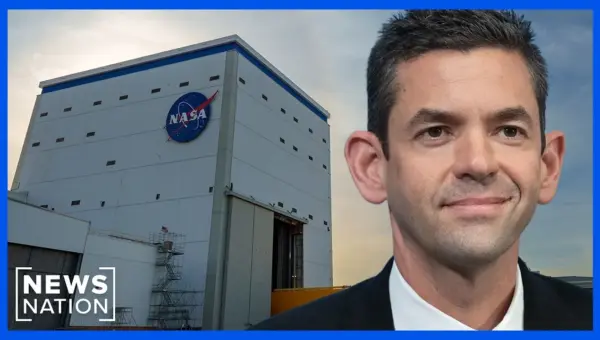
NASA Budget Cuts Threaten Space Race Future
NASA faces significant questions as proposed budget cuts threaten its future. Experts warn that slashing funding, particularly for non-human missions, could hinder technological advancements and America's standing in space exploration.

AI Chip Demand Fuels Data Center Growth Past $25 Billion
The artificial intelligence boom is fueling massive demand for computing power, with companies like Anthropic seeing revenue growth potentially exceeding $25 billion. This surge is driving significant investment in data center infrastructure, though power delivery remains a key bottleneck. The market is increasingly focused on hardware solutions supporting AI inference.


Trump Nominee’s Fed Hearing Reveals ‘Puppet’ Fears
Kevin Warsh, Donald Trump's nominee for Federal Reserve Chair, faced intense scrutiny over his independence during a recent hearing. Senator Elizabeth Warren questioned his ability to resist political pressure, especially after Warsh hesitated to confirm Trump's 2020 election loss. The hearing also touched on broader concerns about financial conflicts of interest and the mysterious dissolution of a Trump-affiliated fund.