NASA Explores Nuclear Power for Moon Bases and Deep Space
NASA is advancing plans for nuclear power on the Moon and in deep space, exploring fission reactors for consistent energy and propulsion. Sand batteries offer a simpler heat storage solution. The Habitable Worlds Observatory continues the search for Earth-like exoplanets, while the speed of light remains a fundamental limit on real-time observation.

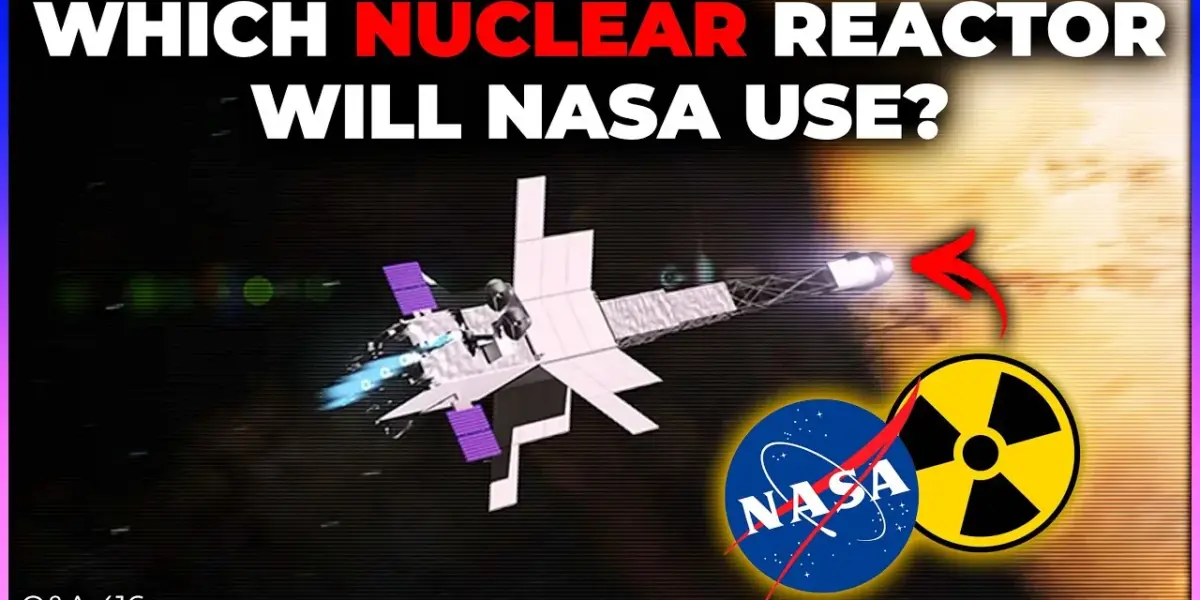
Moon Bases Could Run on Nuclear Power, NASA Reveals
NASA is looking at nuclear reactors to power future moon bases and deep space missions. This move comes as solar power faces limitations, especially during the moon’s long nights.
Nuclear fission reactors, similar to those used in submarines and aircraft carriers, are being developed for space exploration. These reactors can provide consistent, high levels of power, crucial for survival and operations far from Earth.
Powering the Lunar Frontier: Beyond Solar
The moon presents unique challenges for power generation. While solar panels work well during the 14-day lunar day, the equally long lunar night makes them unreliable. This is where nuclear power, specifically fission reactors, becomes essential.
NASA’s Kilopower project, for example, aims to develop a 100-kilowatt fission reactor suitable for lunar surface use. This technology could provide the base load power needed to keep habitats warm and equipment running through the darkness.
Sand Batteries: A Simple Solution for Lunar Heat Storage
Alongside nuclear power, simpler energy storage solutions are also being explored. One innovative idea is the ‘sand battery’. This concept involves heating lunar regolith (soil) to high temperatures, up to 400 degrees Celsius, using solar power.
Pipes carrying a fluid would transfer this heat into the regolith, effectively storing it. During the lunar night, this stored heat could be extracted to generate electricity and keep bases warm. Similar sand battery technologies are already being tested on Earth, showing the practicality of this straightforward approach.
Nuclear Reactors in Space: A Long History
The idea of using nuclear reactors in space is not new. Both the United States and the Soviet Union experimented with space-based nuclear reactors in the past. The US tested two, while the Soviets launched 31.
These tests proved the technology could work, but concerns over nuclear waste and safety led to a shift towards solar power and radioisotope thermoelectric generators (RTGs). RTGs use the heat from decaying plutonium to generate electricity, but produce much less power than fission reactors.
The Next Leap: Nuclear Propulsion and Power Systems
Modern efforts are reviving interest in space-based nuclear reactors. NASA and the Department of Energy are developing new reactor designs. These reactors offer two main advantages for spacecraft.
First, they can power advanced propulsion systems like nuclear rockets. These rockets expel superheated propellant, providing much higher thrust and efficiency than traditional chemical rockets, dramatically cutting travel times to distant destinations.
Second, they can generate electricity to power ion engines, which use electric fields to accelerate charged particles for propulsion. This dual capability makes nuclear reactors vital for future deep space exploration, including potential missions to Mars.
Habitable Worlds Observatory: Searching for Earth 2.0
Looking beyond our solar system, the Habitable Worlds Observatory is designed to find and study Earth-sized planets around sun-like stars. Previous missions like Kepler aimed for this goal but faced limitations. Kepler lost its ability to point accurately after a critical component failure, preventing it from completing its primary mission of finding Earth-like planets in habitable zones.
The TESS mission, while successful, is not powerful enough to find many such planets around sun-like stars. The Habitable Worlds Observatory will act as both a finder and an analyzer, capable of detecting these rare worlds and studying their atmospheres for signs of life.
The Speed of Light: An Unbreakable Limit
The dream of viewing distant planets in real-time remains just that – a dream, limited by the speed of light. This fundamental constant of the universe means that any information, including light, takes time to travel across vast cosmic distances. Even light from the Sun takes about 8 minutes to reach Earth.
Observing planets hundreds or thousands of light-years away means we are always looking into the past. Faster-than-light communication or observation, often depicted in science fiction, is not possible with our current understanding of physics.
Upcoming Missions and Future Prospects
NASA’s focus on nuclear power for lunar bases and spacecraft signifies a commitment to sustained deep space exploration. The development of advanced reactors and propulsion systems could drastically reduce travel times to Mars and beyond.
Meanwhile, observatories like the Habitable Worlds Observatory promise to expand our knowledge of exoplanets and our search for life. The next steps involve continued testing and refinement of these technologies, with potential test flights of nuclear-powered systems planned for the coming years.
Source: Moon Base Basics, HWO Targets, Mars Nuclear Reactor| Q&A 416 (YouTube)

Related Articles

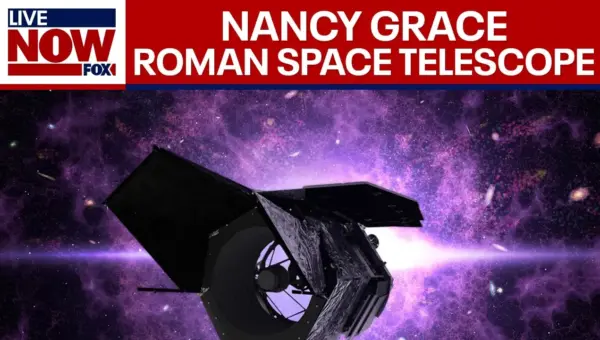
NASA’s Roman Telescope Set for Early September Launch
NASA's Nancy Grace Roman Space Telescope is fully assembled and set for an early September launch, eight months ahead of schedule and under budget. This powerful observatory will explore dark matter, dark energy, and search for potentially habitable exoplanets with unprecedented speed and detail. Roman's discoveries will complement existing telescopes like Hubble and James Webb, offering a more complete picture of the universe.

NASA Prepares Artemis 3 for Moon Landing by 2028
NASA has unveiled a major section of its Space Launch System rocket, preparing for the Artemis 3 mission set for 2027. The mission will test lunar landers from SpaceX and Blue Origin, aiming for a human return to the lunar surface by 2028 and the start of a permanent moon base.
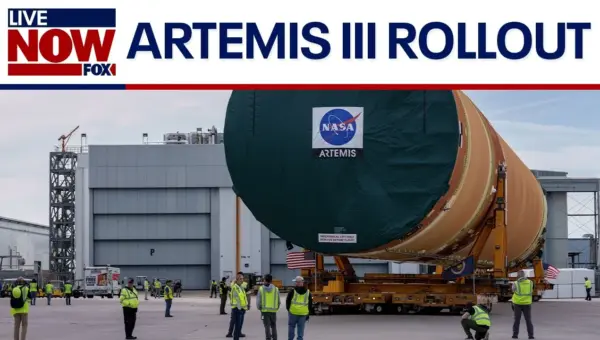
NASA Rolls Out Giant Rocket Piece for Next Moon Mission
NASA has rolled out the largest section of its Space Launch System (SLS) rocket, the core stage, for the upcoming Artemis III mission. This massive component, built in New Orleans, is now on its way to Florida for integration with other rocket parts. The Artemis III mission, targeting a 2027 launch, is a crucial step towards landing astronauts on the moon for the first time in over half a century.