Ukraine Uses ‘Graphite Bombs’ to Blackout Russia
Russia claims Ukraine is using 'graphite bombs' to disable its power grid. These weapons disperse conductive fibers, causing short circuits and blackouts without physical destruction. Historically used by the US and NATO, their potential deployment on low-cost drones by Ukraine signifies a major strategic shift, democratizing a powerful disruption capability.

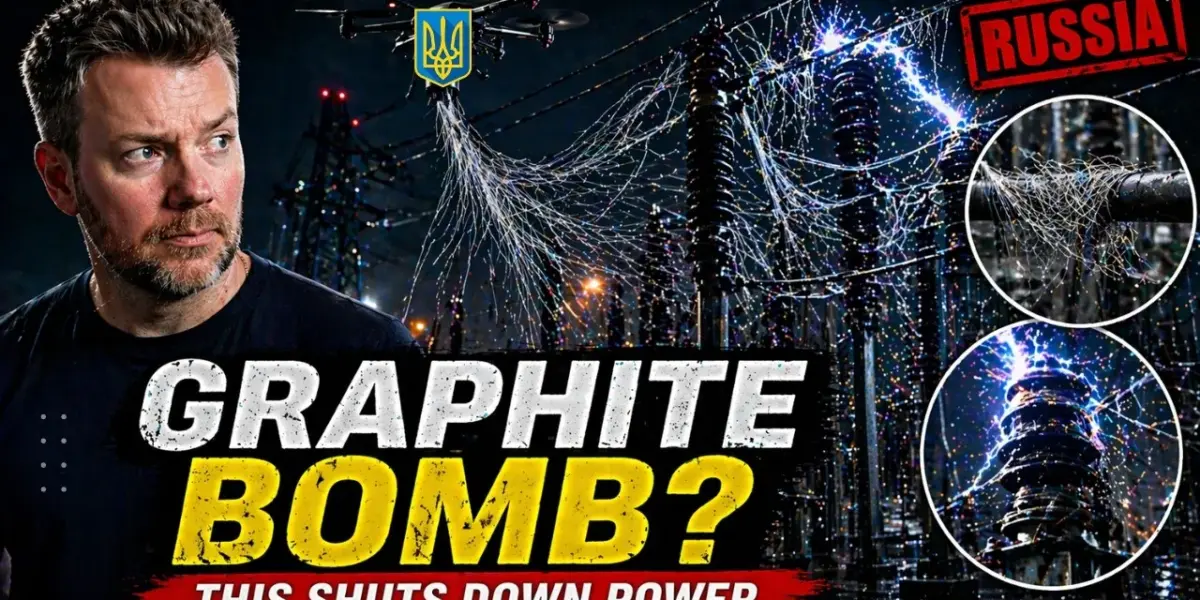
Ukraine May Employ ‘Graphite Bombs’ Against Russian Power Grid
Russia claims Ukraine is now using graphite bombs, a weapon designed to cause widespread power outages without direct destruction. This tactic, if confirmed, represents a significant shift in Ukraine’s strategy. It targets Russia’s electrical infrastructure to disrupt military and civilian functions.
The nature of these alleged attacks is still unclear, with limited evidence and no official confirmation from Ukraine. Russian military bloggers on Telegram channels have been the primary source of these claims, sharing footage and debris from strike sites. However, these sources are often unreliable and operate with their own agendas.
Understanding Graphite Bombs: A ‘Blackout’ Weapon
A graphite bomb is not an explosive in the traditional sense. Instead, it disperses extremely fine, conductive carbon filaments. These microscopic strands, akin to metallic dust, float through the air and settle on power infrastructure like transformers and switchyards.
When electricity encounters these fibers, it creates short circuits. The current arcs, overheats, and triggers system shutdowns, leading to a blackout. The graphite itself vaporizes upon contact with electricity, creating a path for more current to flow, which can lead to a cascading failure that forces the grid offline.
This method exploits the system’s design rather than destroying it. Power grids are built to withstand physical damage, with reinforced substations and redundant switching. However, they are not typically designed to handle a cloud of conductive material settling over critical components like a 400-kilovolt switchyard.
Historical Precedent: US and NATO Use
The concept of using graphite-based weapons is not new. The United States employed them during the Gulf War in 1991. The BLU-114 Bravo munition, delivered by Tomahawk cruise missiles and F-117 Nighthawks, reportedly disabled about 85% of Iraq’s electrical grid.
NATO forces also used similar tactics in Serbia in 1999 during Operation Allied Force. These strikes led to roughly 70% of the country’s electricity going out. This significantly hampered Serbian air defense systems, which relied on powered radar.
Historically, these weapons were used for disruption rather than permanent destruction. Restoring power was often possible once the fibers were cleared. The strategic advantage lay in temporarily disabling air defenses, communications, and logistics at critical moments.
Strategic Implications: Democratizing a Strategic Weapon
What makes the current claims about Ukraine particularly significant is the delivery method. Historically, graphite bombs were deployed using high-cost, advanced platforms like cruise missiles and stealth aircraft. This limited their use to nations with substantial air power and resources.
Ukraine has repeatedly shown its capability to modify small drones for various payloads, including explosives and incendiary materials. These drones have reached targets hundreds of kilometers into Russian-held territory. The idea of fitting a graphite dispersal package onto a low-cost drone is a major development.
If Ukraine is indeed employing this tactic, it has effectively democratized a strategic weapon. A capability that once required expensive, nation-state-level assets can now potentially be deployed from a simple vehicle. This dramatically inverts the cost exchange and exposes Russia’s power infrastructure to a threat that is difficult to counter.
Impact on Military Systems and Infrastructure
The consequences of widespread electrical disruption are far-reaching for a modern military. Radar systems, command centers, communication networks, missile guidance, and industrial production all depend on electricity. A sustained campaign targeting Russia’s grid could degrade nearly every military system.
Electrical disruption is also cumulative. Repeated attacks can damage transformers and switchgear, which are difficult and time-consuming to replace. Russia’s industrial base is already strained, and systematic graphite attacks could significantly lengthen recovery timelines for its infrastructure.
The Nuance of Effectiveness and Restoration
Graphite attacks are temporary, and power can often be restored relatively quickly if crews can access and clear the affected equipment. This temporary nature means they are generally not classified as war crimes, unlike attacks on civilian infrastructure that cause lasting harm.
However, even temporary blackouts strain maintenance crews, degrade nerves, and put continuous pressure on infrastructure through attrition. Ukraine’s approach to targeting Russian oil refineries suggests an understanding of this logic: sustained, repeated attacks force Russia to divert resources and incur ongoing costs.
Future Trajectory and Potential for Ukraine
Whether or not the current claims about graphite bombs are definitively proven, the discussion itself highlights a key trend in the war. Ukraine’s strike campaign has consistently focused on smarter, more cost-effective, and harder-to-defend-against methods. Graphite weapons fit this pattern perfectly.
They are relatively cheap to produce, difficult to intercept, and target critical underlying systems. Unlike physical destruction, which can be rebuilt, the vulnerability of electrical switchgear to conductive fibers presents a unique challenge. If Ukraine has successfully integrated this capability onto drones, it represents a significant evolution in the nature of battlefield strikes.
The potential for Ukraine to employ such tactics, especially given its engineering talent, suggests a continued focus on innovative solutions. The war’s trajectory indicates that sophisticated engineering and tactical adaptation may be as crucial as the quantity of weaponry deployed.
Source: Ukraine's New Strategy: Shutting Down Russia's Lights (YouTube)

Related Articles


Putin Wins Big as Ukraine Fights Back: A Strategic Gamble
Vladimir Putin is unexpectedly benefiting from global tensions, finding new markets for Russian oil. Ukraine's resistance is a key factor limiting Putin's financial gains. Meanwhile, Iran is strategically positioning itself by threatening vital shipping routes.


Russia’s UN Envoy Mocks Ukraine as ‘Expendable’
Russia's UN envoy Vasily Nebenzya sparked controversy by calling Ukrainians 'expendable material' and blaming the West for prolonging the war. Ukraine's UN representative countered with stark casualty projections for Russia. Meanwhile, the EU is moving to approve a 90 billion euro aid package for Ukraine, while internal criticism emerges from Russian pro-war channels regarding infrastructure defense.


Vlogger’s Plea Sparks Kremlin Panic, Unites Russian Women
A beauty vlogger's online plea for internet access during emergencies has unexpectedly shaken the Russian government. Victoria Bonya's viral video prompted reactions from Kremlin officials and communist leaders, highlighting public discontent. The incident reveals cracks in Russia's propaganda machine and a growing assertiveness among Russian women.