Red State GOP Leaders Resist Trump’s Grip
Red state Republican lawmakers are pushing back against Donald Trump's influence, particularly concerning redistricting. Indiana Republicans refused Trump's demands to redraw maps, fearing it would hurt their party. This signals a growing pragmatism among state GOP leaders prioritizing voter sentiment over loyalty to Trump.

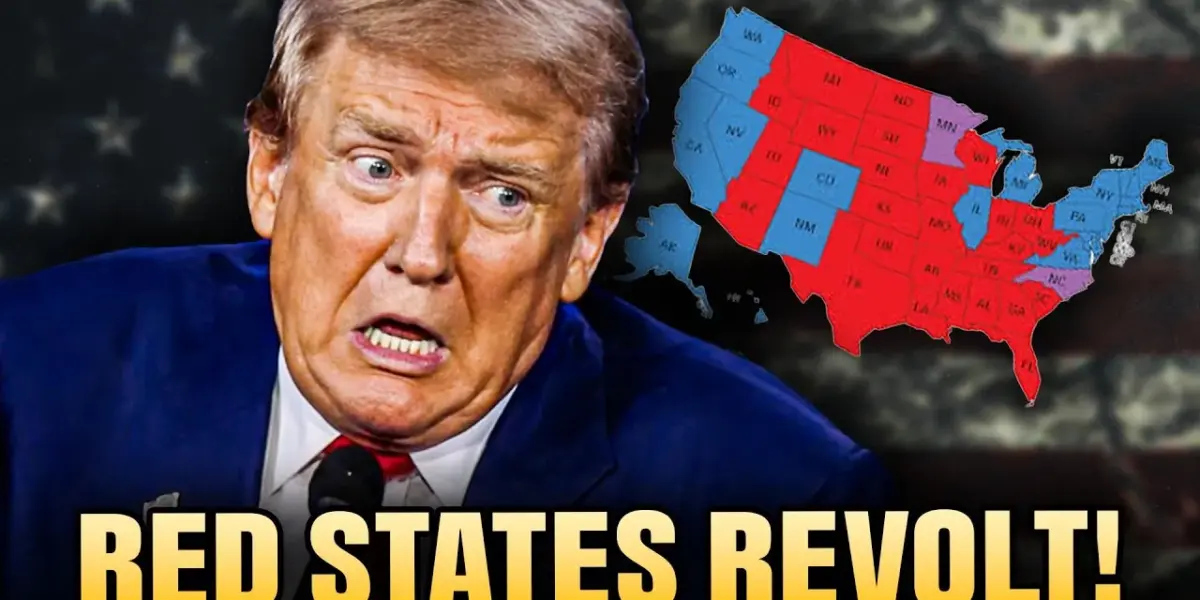
Red State GOP Leaders Resist Trump’s Grip
Many American voters are unhappy with Donald Trump’s actions over the past year. However, Republican lawmakers at the state level are also showing their displeasure. This is especially true for Republican lawmakers in so-called “red states,” meaning states that tend to vote Republican.
The state of Indiana offers a clear example of this growing discontent. During the redistricting battles of 2025, Trump urged Republican-controlled states, including Indiana and Texas, to redraw political maps. His goal was to favor Republicans and gain more seats in Congress by “gerrymandering Democrats out of existence.”
Texas followed Trump’s advice and redrew its districts. Democrats in California did the same for their own party.
But in Indiana, Republican leaders controlling the state government refused Trump’s demand. They told him they would not redraw the maps, believing it would upset voters and potentially make safe Republican seats vulnerable to Democratic takeover.
These Indiana Republicans understood that Trump’s plan could backfire. The gains they might make could be erased by Democratic gains elsewhere.
In essence, they showed a level of strategic thinking that Trump’s plan lacked. This refusal angered Trump significantly.
For months, Trump has attacked eight Republican state senators in Indiana. He is now supporting opponents against them.
This has created a major conflict among Indiana Republicans. They worry that this internal fighting could cause them to lose their majority in the state house.
State Senator Travis Holdman, a key Republican leader in Indiana, spoke about the situation. He stated that the White House pushed Republican legislators to quickly pass new district maps in under two months.
This was unusual, as redistricting typically takes up to five months. Holdman noted that the proposed maps were not even shared with lawmakers until right before a vote, which ultimately failed by a large margin.
“We were being asked to vote for something we hadn’t seen.”
Holdman explained that he approached JD Vance, who was involved in the process. He asked Vance for the maps so they could see what they looked like before voting.
Vance promised the maps would arrive the next day, but they did not appear until the day before the floor vote. At that point, Holdman felt they could not proceed because the proposed changes would have made safe Republican seats vulnerable to flipping to Democratic control.
In a recent interview, Holdman expressed his frustration. He said, “We’ve lost our ever-loving minds over this issue.” He described the divisive language and name-calling, where anyone not showing absolute loyalty is labeled a disloyal enemy. Holdman believes this damage could take decades to repair and that the party needs time to settle down and find unity again.
Holdman’s call for the “parties to settle down” suggests a desire for calm. However, the speaker in the original video noted that this kind of internal conflict is not as apparent on the Democratic side.
While policy disagreements exist among Democrats, they are not seen as being at each other’s throats. This suggests the internal turmoil is primarily a Republican issue, fueled by Trump’s demands.
Reports of similar situations are emerging from other states. Alabama is experiencing comparable challenges, and Georgia has also gone through its own redistricting disputes. State-level Republicans are increasingly recognizing that Donald Trump is unpopular with many voters, even those who previously supported him.
These Republican officials face a difficult choice. Do they continue to align with Trump, risking voter backlash, or do they break away and try to win back voters’ favor?
The dilemma shows a struggle between loyalty to Trump and responsiveness to their constituents. Some leaders seem unsure which path to take.
The smart choice, according to the analysis, is to follow the voters. The less wise option is to stick with an unpopular figure who cannot run for office again. The inability of some Republican leaders to make this clear decision highlights what the speaker views as poor leadership within the party.
Why This Matters
This internal conflict within the Republican party is significant for several reasons. It shows that Trump’s influence, while still strong with a core group of supporters, is not absolute, especially at the state level where practical governance and voter sentiment are immediate concerns. State-level Republicans are beginning to prioritize their own electoral survival and the practical needs of their constituents over blind loyalty to Trump.
The refusal by Indiana Republicans to gerrymander districts based on Trump’s directive is a case in point. They recognized the potential for negative consequences, including losing their own seats. This indicates a growing pragmatism among some Republican leaders who are willing to push back against Trump when his demands conflict with their own political interests or the well-being of their state.
This dissent can create a ripple effect. As more state-level officials see that it is possible to defy Trump without immediate, catastrophic consequences, others may be emboldened to do the same. This could lead to a broader fracturing of Trump’s control over the Republican party, allowing for more diverse viewpoints and strategies to emerge.
Implications, Trends, and Future Outlook
The trend of state-level Republican resistance to Trump’s directives suggests a potential shift in the party’s dynamics. As Trump faces legal challenges and his political future becomes less certain, state leaders may increasingly distance themselves from him to secure their own political futures. This could lead to a more decentralized Republican party, where state-level concerns take precedence over national directives.
The upcoming elections will be a crucial test. If Republican candidates who distance themselves from Trump perform well, it could validate the strategy of breaking away.
Conversely, if candidates who align closely with Trump achieve success, it might reinforce his influence. The outcomes in states like Indiana, Alabama, and Georgia will offer valuable insights into the evolving relationship between Trump and the broader Republican electorate.
The future outlook suggests continued tension. Trump is likely to continue exerting pressure on party officials, while state leaders will continue to weigh the benefits of his endorsement against the risks of his unpopularity. This push and pull will shape the Republican party’s platform, messaging, and electoral strategies for years to come.
Historical Context and Background
Redistricting, the process of redrawing electoral district boundaries, has long been a contentious issue in American politics. It is often used by the party in power to gain an advantage, a practice known as gerrymandering. This has been a recurring tactic, with both parties employing it when they have the opportunity.
The power of a party leader to dictate redistricting strategies to state-level officials is not entirely new. However, Trump’s direct involvement and demands, as described in Indiana, represent a significant exertion of personal influence. Historically, party leaders might offer guidance or support, but the level of direct pressure described here is notable.
The current situation also reflects a broader trend in American politics where party loyalty is increasingly tested. The rise of social media and a polarized media environment can amplify divisions and create intense pressure on politicians to conform to a specific party line, often dictated by the most prominent figures.
Source: Red State Republicans Have Had It Trump (YouTube)

Related Articles

Trump’s Iran Standoff: A Risky Game of Brinkmanship
Critics argue Donald Trump's strategy with Iran relies on risky brinkmanship without clear fallback plans, drawing parallels to past conflicts. His administration's approach seems to misunderstand Iran's willingness to endure prolonged pressure, while diplomatic efforts are complicated by public statements and conflicting advice. This standoff carries significant global implications for economic stability and international security.
Iran Outmaneuvers Trump, Forcing U.S. Into Strategic Retreat
Professor Robert Pape argues that Donald Trump lacks control in the conflict with Iran, projecting an illusion of power while Iran strategically advances its goals. Iran is not seeking a face-saving exit for Trump but aims to inflict economic damage and establish itself as a major world power.

Democrats Punch Back: Rigging Claims Ignite Fierce Retaliation
Republicans' attempt to redraw electoral maps mid-cycle has backfired, prompting a more assertive response from Democrats. Figures like Senator Eloise Lucas embody this new, aggressive political strategy, signaling a shift in how parties engage in power struggles.