NASA Science Chief: ‘We Must Believe Life Exists Beyond Earth’
NASA's Head of Science, Dr. Nicola Fox, believes life exists beyond Earth and detailed the agency's ongoing search. Following the successful Artemis 2 lunar mission, Fox highlighted scientific findings and the crucial role of technology developed by NASA that benefits life on Earth. The agency continues its quest to answer if humanity is alone in the universe.

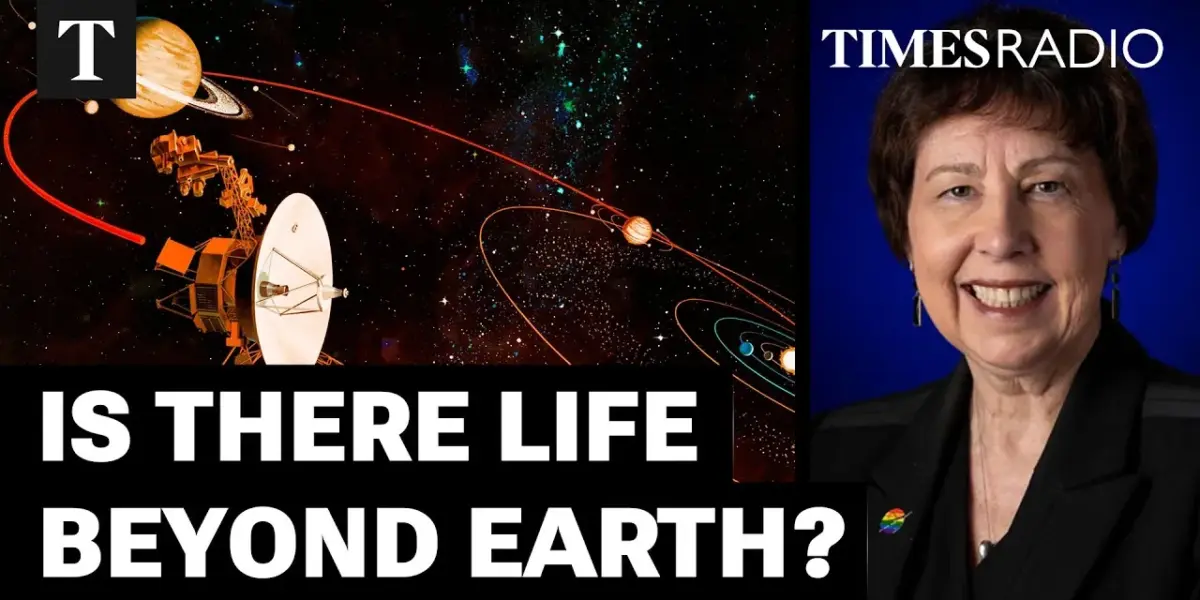
NASA’s Head of Science Confident in Extraterrestrial Life
Dr. Nicola Fox, the head of science for NASA, has expressed a strong conviction that Earth is not the only planet harboring life in the vast universe. Speaking shortly after the successful Artemis 2 mission, Fox emphasized NASA’s ongoing efforts to explore exoplanets and analyze their atmospheres for signs of habitability. The agency is dedicated to characterizing newly discovered planets to determine if they possess the necessary elements to support life.
Artemis 2 Mission Fuels Excitement and Scientific Discovery
The recent Artemis 2 mission, which sent four astronauts on a journey around the Moon, has been hailed as a major success. Dr. Fox described the launch as spectacular and the splashdown as emotional, but highlighted the profound impact of hearing the astronauts describe their views of the lunar surface. Their words conveyed immense joy and wonder, captivating people worldwide during the flyby.
Witnessing the launch was a deeply personal experience for Dr. Fox, marking her first time seeing the massive rocket ascend and her first major crewed mission. She recalled the palpable sense of calm confidence at Kennedy Space Center despite challenging weather. The experience of feeling the rocket’s powerful vibrations, a physical wave following the sound, made the event even more dramatic and immersive.
Scientific Insights from the Lunar Flyby
The Artemis 2 mission yielded significant scientific findings. For the first time, human eyes observed certain parts of the Moon’s surface that were not illuminated by the sun. During these observations, the astronauts witnessed impact flashes in real-time as micrometeorites struck the far side of the Moon, providing high-resolution images of these events.
Beyond visual data, the mission emphasized the importance of human perception in scientific observation. Astronauts were encouraged to describe what they saw using everyday language, leading to vivid comparisons, such as a crater resembling a lampshade. This approach aimed to capture the raw wonder and unique perspective of experiencing space firsthand.
Tissue Chip Experiment Paves Way for Future Space Exploration
A key biological experiment on Artemis 2 involved tissue chips designed to mimic human organs. These chips, one for each crew member, experienced microgravity and radiation similar to what astronauts will face on long-duration missions. Upon the crew’s safe return, these tissue chips, along with a control set kept on Earth, will be analyzed to understand the effects of space travel on human tissue.
This research is crucial for preparing for sustained human presence on the Moon and future missions to Mars. By studying these effects, NASA aims to develop strategies to protect astronauts and ensure their health during extended stays in hostile environments. The data will inform the development of lunar bases and the planning of the challenging journey to the Red Planet.
The Long Road to Mars and NASA’s Role
Dr. Fox acknowledged that sending astronauts to Mars remains a long-term goal, with astronaut safety being NASA’s top priority. The journey itself presents significant challenges, including a minimum six-month transit in microgravity, exposure to radiation, extreme isolation, and landing in a harsh environment. NASA views the Moon as a vital proving ground for the technologies and strategies needed for a Mars mission.
Currently, robotic missions are actively exploring Mars. NASA’s Perseverance and Curiosity rovers are conducting vital scientific work, characterizing the Martian surface, and studying the interaction of dust with equipment like spacesuits. This ongoing robotic exploration is essential for gathering the knowledge required before humans can venture to Mars.
NASA’s Technological Contributions Benefit Humanity
Addressing the common question about the cost of space exploration, Dr. Fox highlighted NASA’s significant technological advancements that translate into everyday benefits on Earth. Technologies developed for space missions have led to breakthroughs in medical treatments, such as potential cancer therapies derived from tissue chip research. Innovations in agriculture, inspired by the need to grow plants in challenging lunar conditions, can help improve farming in difficult terrestrial environments.
NASA’s work in astrophysics has driven advancements in precision optics and stable platforms, contributing to technologies like LASIK eye surgery, derived from mirror-polishing techniques for the James Webb Space Telescope. Numerous everyday items, including memory foam, pressure-absorbing airplane seats, advanced footwear, the Jaws of Life rescue tool, iPads, baby formula, and clean drinking water systems, trace their origins back to cutting-edge NASA research and development.
The Search for Extraterrestrial Life Continues
Dr. Fox reiterated that a primary goal at NASA is to answer the fundamental question: “Are we alone in the universe?” While Artemis 2 was not expected to find evidence of life on the Moon, NASA’s astrophysics telescopes, rovers, and upcoming missions like the Europa Clipper and Dragonfly to Titan are actively searching for signs of habitability and life beyond Earth.
The Nancy Grace Roman Space Telescope will discover billions of galaxies, stars, and planets, further expanding our understanding of the cosmos. The future Habitable Worlds Observatory will be specifically designed to study exoplanet atmospheres for subtle indicators of life, potentially even signs of industrial activity. Dr. Fox stressed the importance of being open to the possibility of life existing in forms unlike our own, citing extremophiles on Earth as examples of life adapting to harsh conditions.
Looking Ahead: The Artemis Generation and Mars
When asked about the future astronauts who might travel to Mars, Dr. Fox suggested they are likely very young, possibly in primary school now – the “Artemis generation.” While current lunar astronauts are actively working within NASA, the individuals destined for Mars may still be in the early stages of their education. NASA continues to push the boundaries of exploration, driven by fundamental questions about our place in the universe and the potential for life beyond our home planet.
The agency’s commitment to scientific inquiry and technological innovation promises further discoveries. The ongoing exploration of the Moon and the search for life elsewhere represent humanity’s enduring quest to understand the cosmos and our role within it. Future missions will undoubtedly build upon the successes of Artemis 2, bringing us closer to answering the profound question of whether we are alone.
Source: Nasa Head Of Science: ‘You’ve Got To Believe We’re Not The Only Planet That Has Life’ | Nicola Fox (YouTube)

Related Articles


China’s Tech Race: Billions Spent, But Progress Stalls
China is investing billions in science and technology to catch up with the US, but many projects face failure due to a top-down system that can encourage risky ventures. From ghost chip factories to exploding rockets, significant funding does not always translate into innovation. This approach raises questions about China's ability to achieve its technological ambitions.
NASA Budget Cuts Threaten Space Race Future
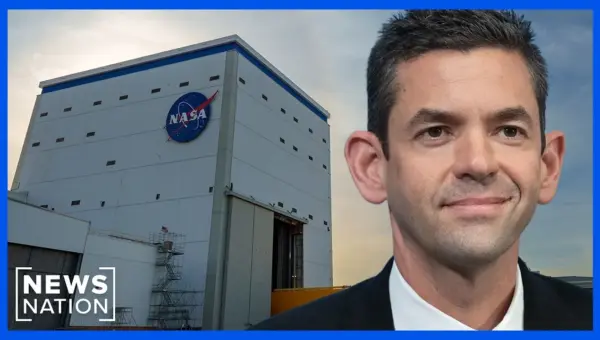
NASA faces significant questions as proposed budget cuts threaten its future. Experts warn that slashing funding, particularly for non-human missions, could hinder technological advancements and America's standing in space exploration.
NASA Explores Nuclear Power for Moon Bases and Deep Space
NASA is advancing plans for nuclear power on the Moon and in deep space, exploring fission reactors for consistent energy and propulsion. Sand batteries offer a simpler heat storage solution. The Habitable Worlds Observatory continues the search for Earth-like exoplanets, while the speed of light remains a fundamental limit on real-time observation.