Ukraine Strikes Cripple Russian Oil; US Goes Global
Ukraine's drone attacks are crippling Russian oil exports and production, forcing significant output reductions. Simultaneously, the U.S. Navy is expanding its reach globally, seizing Iranian oil tankers far from the Persian Gulf. This dual pressure signals a potential breakdown of global trade in energy, agriculture, and manufacturing.


Ukraine Strikes Cripple Russian Oil; US Goes Global
Ukraine’s attacks on Russian oil transport infrastructure are significantly reducing Russia’s oil exports and production. This is a major blow to Russia’s economy, which relies heavily on oil sales. The Ukrainians have expanded their targets from the Baltic Sea to include Black Sea transport hubs.
These strikes have already cut Russian crude oil exports by over a million barrels a day. Production has also dropped by about half a million barrels per day.
Russia faces a challenge because it lacks large internal storage for oil. It also cannot easily move oil exports from one port to another due to limited pipeline connections.
When key pipelines, like the one serving the Baltic region, are offline, Russia cannot simply reroute oil from other areas. This forces a reduction in overall exports.
The reduction in production is happening mostly in southern Russian regions like Bashkortostan and Tatarstan. These areas are easier to restart if needed.
The further north oil fields are in Siberia, the harder they are to restart, especially if they freeze in winter. These remote areas often require drilling new wells.
Russia has about a million barrels a day of production in the southern zones. About half of this is now offline.
Russia has a buffer of roughly the same amount of oil. However, if Ukrainian attacks continue at their current pace, this buffer could be gone within a month.
Ukrainian drones can now reach key transport points, including the major hub at Samara. This suggests permanent reductions in Russian oil output are likely by the end of May.
US Navy Expands Global Reach in Iran Conflict
Meanwhile, the United States has broadened its actions against Iran beyond the Persian Gulf. For some time, the U.S. has been blockading Iranian ports and targeting ships that violate it. Now, the U.S. is going after Iranian vessels far from the Gulf.
Recently, U.S. forces seized a large oil tanker with a 2 million barrel capacity off the coast of Sri Lanka. This location is thousands of miles away from the Persian Gulf. This move signals a shift in U.S. policy, effectively turning the U.S. Navy into a privateer force capable of reaching anywhere globally.
This new approach marks a formal break from the practices that have supported global trade for decades. It is now official American policy. The main question is who the U.S. will target next.
Global Trade Faces New Risks
This expansion of naval reach is expected to be adopted by other nations with significant navies. These countries may start enforcing their own maritime boundaries and trade rules. Such actions threaten global agriculture, energy supplies, and manufacturing.
Countries that depend on these sectors for imports or exports need to reassess their supply chains. If their partners or customers are located in regions with hostile navies, they may need to abandon those connections. This includes trade routes in the Persian Gulf, China, the Black Sea, and the Baltic Sea.
The breakdown of global transport systems has significant consequences for energy, agriculture, and manufacturing. These disruptions could lead to shortages and price increases worldwide. The current situation suggests a move away from the interconnected global economy toward more regionalized or isolated markets.
Looking ahead, the impact of these disruptions will depend on the extent of future attacks and naval actions. The ability of countries to adapt their supply chains and secure alternative sources will be crucial. The coming months will show how deeply these changes affect global trade and stability.
Source: Say Goodbye to the Global Order || Peter Zeihan (YouTube)

Related Articles


Russia’s Economy Crumbles Under Sanctions, Dissent Grows
New intelligence reports indicate Russia's economy is collapsing under sanctions, with falling oil revenues and rampant inflation. Dissent is growing, with prominent figures and even pro-Kremlin bloggers openly criticizing the government and President Putin.
Trump Warns Iran: Bombing Could Start ‘Tomorrow’
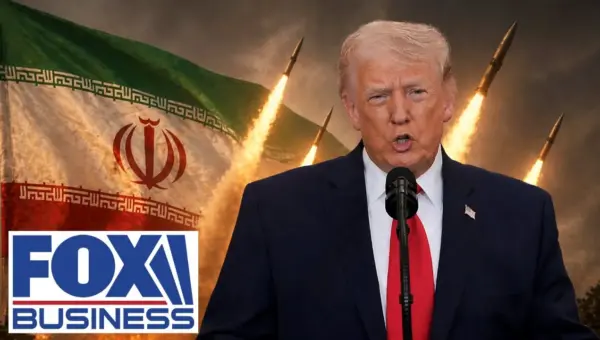
President Trump has signaled a tough stance on Iran, warning that he expects to be "bombing tomorrow" if a satisfactory deal isn't reached, with the current cease-fire set to expire. Despite the escalating rhetoric, financial markets have remained measured, seemingly pricing in a future resolution and a potential "peace dividend."


Trump’s War Strategy Crumbles Amidst Iranian Stand-Off
President Trump's diplomatic efforts with Iran have collapsed, leading to an emergency White House meeting. Iran claims the U.S. violated a ceasefire, prompting a refusal to negotiate. The situation teeters on the brink of military escalation, with critics raising concerns about corruption and the administration's strategy.