Trump’s Iran Standoff: A Risky Game of Brinkmanship
Critics argue Donald Trump's strategy with Iran relies on risky brinkmanship without clear fallback plans, drawing parallels to past conflicts. His administration's approach seems to misunderstand Iran's willingness to endure prolonged pressure, while diplomatic efforts are complicated by public statements and conflicting advice. This standoff carries significant global implications for economic stability and international security.


Trump’s Iran Standoff: A Risky Game of Brinkmanship
In the complex world of international relations, Donald Trump’s approach to Iran has often been described as unpredictable. A recent analysis suggests that his administration’s strategy relies heavily on pressure and brinkmanship, with a notable lack of clear fallback plans. This approach, critics argue, risks escalating tensions without a well-defined path to resolution, drawing parallels to past conflicts.
The core of the strategy appears to involve military strikes and economic pressure, aiming to force Iran’s surrender. However, long-time experts on Iran, from various countries, largely agree that this fundamental misunderstanding of the Iranian regime’s mindset is a major flaw. Instead of yielding, Iran seems prepared to adopt tactics designed to make the conflict as painful and drawn-out as possible, hoping to wear down American public opinion and the economy.
Echoes of Past Conflicts
This strategy draws uncomfortable comparisons to the Vietnam War. In that conflict, North Vietnamese forces understood they couldn’t win on the battlefield against the United States.
Their approach was to use guerrilla warfare and make the war costly, aiming to break the American will to fight. Iran appears to be employing a similar tactic, seeking to outlast Trump and make the economic and human cost too high for the U.S.
The concern is that when a war primarily consists of bombing campaigns and the other side refuses to surrender, the next step is unclear. Critics argue that Trump’s administration lacks a ‘Plan B’ to deal with this exact scenario. This failure to understand the opposing side’s culture and motivations, they contend, echoes the difficulties faced in Iraq and Afghanistan, where a lack of historical understanding led to prolonged and unsuccessful conflicts.
Diplomacy’s Rocky Road
Recent events highlight the difficulties in diplomatic efforts. A proposed meeting in Pakistan, intended to mediate talks, became entangled in conflicting claims and scheduling issues. U.S. officials, including J.D.
Vance, were reportedly set to attend, but the Iranian delegation never confirmed their participation. Pakistan, attempting to mediate, seemed to amplify optimistic claims from the Trump administration that Iran had agreed to attend, creating a situation where U.S. diplomats were left waiting, only for the meeting to be indefinitely postponed.
Adding to the complexity are President Trump’s public statements, particularly on social media. These posts, made during sensitive negotiations, are seen by some as undermining the process. When Trump claims sweeping victories or imminent Iranian surrender, it reportedly makes it difficult for Iranian negotiators to present any deal to their own leadership and public, as it appears to contradict the narrative back home.
Conflicting Advice and Unclear Strategy
The decision-making process also appears to be influenced by a range of advisors with differing opinions. Reports suggest that figures like Benjamin Netanyahu and Mohammad bin Salman may be pushing for more aggressive action against Iran, while European allies express concerns about the legality and wisdom of such moves. This influx of conflicting advice, coupled with Trump’s tendency to shift positions, makes sticking to a consistent strategy a significant challenge.
The initial hope, according to some interpretations, was that military strikes would lead to an uprising within Iran, similar to the approach attempted in Venezuela. This would result in a regime change favorable to the U.S., securing open shipping lanes and preventing Iran from developing nuclear weapons. However, when this scenario did not unfold as planned, the lack of a backup strategy became apparent.
The Blockade Dilemma
A key point of contention is the naval blockade imposed by the U.S. on ships going to and from Iranian ports. Iran views this blockade as an act of war, a historical justification used by nations in past conflicts.
Their red line for entering negotiations is the lifting of this blockade. However, for Trump to lift it now would be seen as a concession, potentially undermining his administration’s claims of leverage and strength.
This creates a difficult dilemma. Iran’s ability to fight back through unconventional means, such as drone or speedboat attacks, can inflict significant economic pain globally.
This, in turn, can influence domestic politics, like rising gas prices, potentially impacting elections. Iran is reportedly aware of these dynamics and is watching U.S. elections closely.
Concerns Over Security and Information Control
There are also concerns about how sensitive information is handled. Parallels have been drawn to past instances where military leaders reportedly took steps to ensure stability, such as communicating with adversaries to prevent unintended conflict. Some speculate that, at crucial moments, key figures may be limiting Trump’s access to information to prevent impulsive actions, given his history of not keeping secrets and his reliance on social media pronouncements.
The focus on personal credit and projecting an image of winning, rather than achieving specific objectives, is seen as a significant obstacle. A leader focused on ego might struggle to admit when a negotiation didn’t achieve all its goals, a necessary step for de-escalation. The inability to be honest about compromises or setbacks with the American public is viewed as a major impediment to resolving the current situation.
Why This Matters
The current situation with Iran is more than just a regional dispute; it has global implications for economic stability and international security. The reliance on aggressive tactics without clear diplomatic off-ramps, coupled with a potential misunderstanding of adversaries, risks a dangerous escalation. The world watches as diplomatic channels appear strained and the path forward remains uncertain, with significant consequences for global markets and peace.
Looking Ahead
The immediate future hinges on whether a diplomatic breakthrough can occur or if the current cycle of pressure and counter-pressure continues. The effectiveness of the U.S. blockade, Iran’s ability to withstand economic hardship, and the political pressures on both sides will shape the coming weeks and months. The situation remains fluid, with the potential for miscalculation carrying significant weight.
Source: LIVE: MAGA gets UNCOVERED as Trump TRAPPED by IRAN WAR (YouTube)

Related Articles
Iran Outmaneuvers Trump, Forcing U.S. Into Strategic Retreat
Professor Robert Pape argues that Donald Trump lacks control in the conflict with Iran, projecting an illusion of power while Iran strategically advances its goals. Iran is not seeking a face-saving exit for Trump but aims to inflict economic damage and establish itself as a major world power.

Trump’s Gnat-Like Focus Fuels Risky Diplomacy
Donald Trump's use of escalating rhetoric, even admitting it's a tactic to appear unstable, is aimed at pushing nations to negotiations. This approach, driven by a reported boredom with prolonged conflicts and a short attention span, risks international instability.
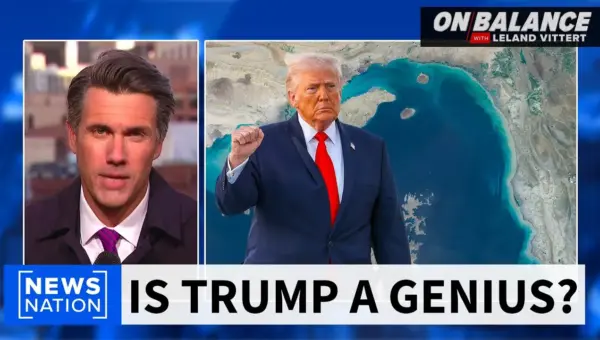
Trump’s Iran Cease-Fire Extension: Genius Move or Political Paralysis?
President Trump's decision to unilaterally extend a cease-fire with Iran has sparked debate, with two main interpretations: a brilliant strategic move or political paralysis. While Iran dismisses the extension, the U.S. continues its pressure campaign, but its momentum appears to have shifted. The outcome will significantly impact regional stability and Trump's legacy.