Trump’s War Gambit: Economic Chaos for Political Gain?
An analysis suggests Donald Trump may have intentionally escalated tensions with Iran to distract from domestic failures, leading to a surge in oil prices and economic hardship for Americans. The strategy's effectiveness and long-term consequences are questioned.

Trump’s War Gambit: Economic Chaos for Political Gain?
The assertion that former President Donald Trump intentionally initiated a conflict in the Middle East to distract from domestic policy failures and strengthen his political standing is a serious one, sparking debate about the intersection of foreign policy, economic stability, and electoral strategy. This perspective suggests that the escalation of tensions with Iran, and the subsequent impact on global oil markets, was not an unforeseen consequence but a calculated move.
The Economic Fallout: A Steep Price for Distraction
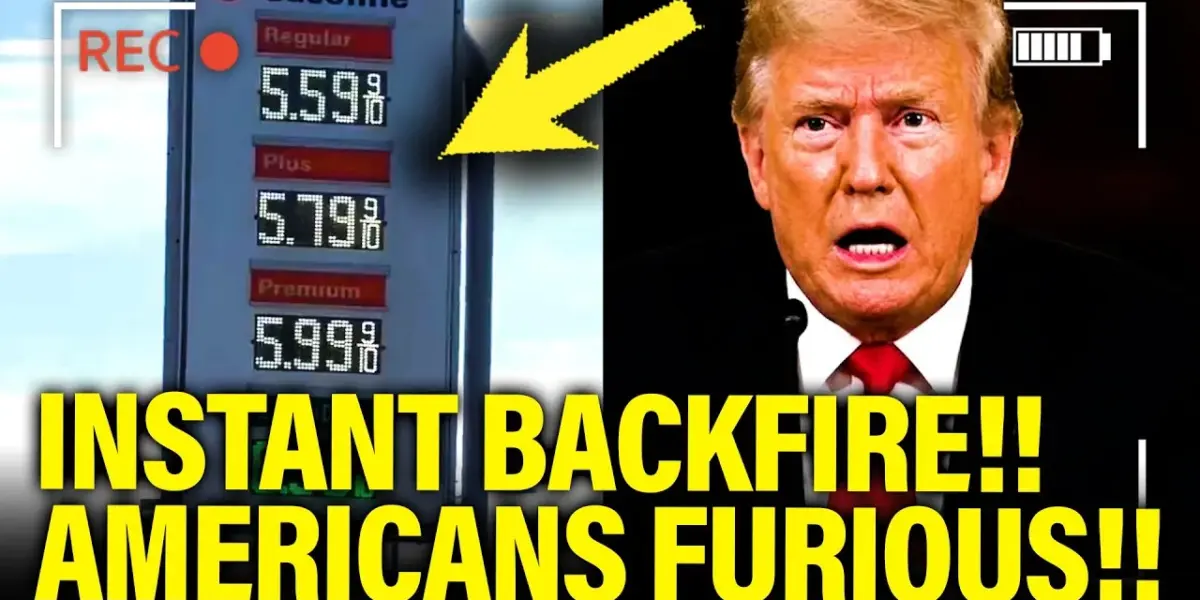
At the heart of this analysis is the dramatic increase in oil prices. The transcript highlights a significant surge, with the price of a barrel of oil climbing from the $70 range in February to over $110 by early March, coinciding with the escalation of conflict involving Iran.
This rapid ascent has direct implications for the American consumer, with projections of a 50% to 60% increase in gas prices in the immediate aftermath. The argument posits that this economic pressure is a direct result of policies that have effectively ‘cut the fuel line between the American economy and energy.’
This economic strain is presented as particularly damaging given the pre-existing conditions of the Trump economy. The transcript points to a concerning jobs report showing a net loss of nearly 100,000 jobs in February, contradicting any narrative of robust economic growth. The imposition of tariffs, inflation, and unemployment are cited as ongoing domestic issues that, according to this viewpoint, Trump sought to overshadow through foreign intervention.
Allies and Adversaries: A Complex Web of Influence
The role of OPEC nations, particularly the UAE and Kuwait, is brought into sharp focus. The transcript suggests that these countries, some of which have financial ties to Trump’s family business, are exacerbating the economic pressure on the U.S. By exploiting the situation to increase oil prices. This raises questions about the loyalty and strategic alignment of these supposed allies, and whether they are capitalizing on a perceived weakness or a deliberate policy choice by the Trump administration.
The Strategic Imperative: Distraction or Destruction?
The core of the argument is that the war in Iran was a deliberate attempt to replicate a ‘Nixonian’ strategy of external conflict to improve domestic political fortunes. The idea is that by creating a global crisis, Trump aimed to divert public attention from his administration’s perceived failings, including its handling of taxes, inflation, and job creation. The transcript explicitly states, ‘Trump came into the war with Iran, which he hopes all of these global impacts, his exporting of chaos would distract attention and make people forget about his failings at home.’
However, the analysis suggests this strategy is backfiring. With approval ratings hovering in the 30% range and widespread dissatisfaction with immigration policies, tariffs, inflation, and joblessness, the intended distraction is failing to resonate. The economic consequences, particularly the rising cost of energy, are directly impacting the very voters Trump seeks to appease, leading to a scenario where the political gamble is proving counterproductive.
Historical Context and Geopolitical Ramifications
The Strait of Hormuz, a critical chokepoint for global oil transport, is highlighted as a significant factor. The transcript notes that 20% of the world’s oil passes through this strait and that Iranian actions have effectively turned it into a ‘giant parking lot.’ The proposed U.S. Response of escorting ships through this volatile region is characterized as ‘policy on the fly,’ indicative of a lack of a coherent, long-term strategy.
The analysis draws a parallel to the ‘Powell Doctrine,’ which emphasizes the need for a clear plan and sufficient force for post-conflict stabilization. The concern is that without such a plan, any military action could lead to a prolonged and devastating conflict, turning the Middle East into a ‘raging inferno.’ The transcript voices apprehension about the administration’s capacity to manage the aftermath, suggesting a lack of ‘competent people’ and questioning the intellectual horsepower of key figures in decision-making roles.
The Cost of Chaos: Beyond the Gas Pump
The economic burden extends beyond immediate energy costs. The transcript estimates the potential cost of intervention in Iran and Venezuela to be as high as half a trillion dollars.
This figure is contrasted with alternative uses for such vast sums, including funding education, healthcare, and housing initiatives. The primary beneficiaries, according to this view, are the military-industrial complex and weapons manufacturers, who are described as ‘giddy’ over the prospect of increased defense spending.
A Populace Undermined?
A particularly sharp critique is leveled at Trump’s communication with his own supporters. The transcript quotes him seemingly dismissing opposition to his policies as foolishness, particularly when it comes to higher gas prices in exchange for perceived nuclear security. This is interpreted as a patronizing and dismissive attitude towards the electorate, suggesting that Trump views his followers as easily manipulated or as willing to endure economic hardship for his political objectives.
Why This Matters
This analysis raises profound questions about the motivations behind foreign policy decisions and their impact on the lives of ordinary citizens. If the intent behind military action is indeed to serve as a political distraction, it undermines the principles of transparent governance and responsible leadership.
The economic consequences, particularly the rise in the cost of living, disproportionately affect lower and middle-income households, exacerbating existing inequalities. The potential for miscalculation in foreign policy can have catastrophic and long-lasting geopolitical repercussions, far beyond the electoral cycle.
Implications, Trends, and Future Outlook
The situation described points to a dangerous trend where foreign policy can be weaponized for domestic political gain. The potential for escalating conflicts, driven by the need to manage public perception rather than genuine national security interests, poses a significant threat. The reliance on oil and the vulnerabilities of global energy markets are brought into stark relief, suggesting a need for greater energy independence and diversification.
The analysis implies that a lack of clear, consistent, and competent foreign policy decision-making, coupled with a disregard for the economic well-being of the populace, could lead to further instability. The transcript concludes with a warning that the economic suffering and the perceived reckless foreign policy decisions are precisely what could ultimately undermine Trump’s political viability, suggesting that the electorate may not be as easily swayed by manufactured crises as some leaders might believe.
Source: SECRETS of Trump WAR MARKET MANIPULATION Finally EXPOSED!!! (YouTube)

Related Articles
Ex-Official: Trump Focused on ‘Ballroom and Arch’ Over Economy
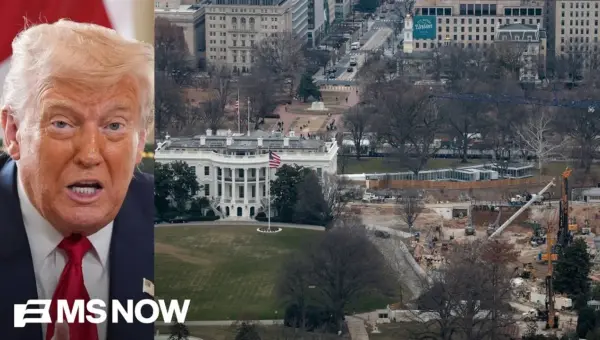
Former State Department official Matthew Rojansky criticizes Donald Trump's apparent focus on symbolic issues over the economy. Polls indicate voters are confused and distrustful of the administration's messaging on the Iran war and economic policies, suggesting a communication breakdown. Concerns are rising about the administration's priorities as voters express anxiety over financial struggles and foreign conflicts, with some feeling the focus is on 'ballroom and arch' rather than substantive solutions.

Carlson’s ‘Apology’ Exposes His True Political Game
Tucker Carlson's recent 'apology' for misleading people is seen by many not as a sign of genuine change, but as a strategic political move. Analysts suggest he's distancing himself from Donald Trump as Trump's popularity wanes, aiming to rebrand himself for future political ambitions.

Trump’s Iran Stance: Bold Strategy or Tactical Retreat?
The debate over Donald Trump's handling of Iran centers on whether his extension of a ceasefire was a strategic masterstroke or a sign of weakness. Supporters argue he's playing a long game, leveraging Iran's economic woes for a better deal. Critics contend this approach forfeits crucial leverage, allowing Iran to delay indefinitely.