Karoline Levit Dodges Reality on Iran and Election Woes
Karoline Levit's public statements on Iran's actions and election outcomes appear to diverge from factual reporting, creating confusion. The analysis explores how these narratives clash with reality and the implications for public trust and democratic discourse.


Karoline Levit’s Reality vs. Facts: A Tale of Two Worlds
In the often-confusing world of politics, sometimes it feels like there are multiple realities playing out at once. This seems to be the case when looking at statements made by figures like Karoline Levit, who appears to be navigating an “alternate reality” separate from verifiable facts. This disconnect is particularly evident when discussing major international events and domestic election outcomes, creating a situation where official narratives clash sharply with on-the-ground evidence.
The core issue is a tendency to echo or defend a specific viewpoint, even when evidence suggests otherwise. This approach can create confusion and distrust among the public, who rely on factual reporting to understand complex situations. When official statements consistently diverge from observable events, it raises important questions about transparency and accountability in political communication.
Iran’s Actions Contradict Official Claims
A prime example of this divergence involves recent events concerning Iran and the Strait of Hormuz. While former President Trump claimed Iran was “collapsing financially” and desperate to open trade routes, events immediately following this statement told a different story.
Iran seized multiple vessels in the Strait of Hormuz, demonstrating continued control and regional influence. This action directly contradicted the narrative of financial collapse and desperation.
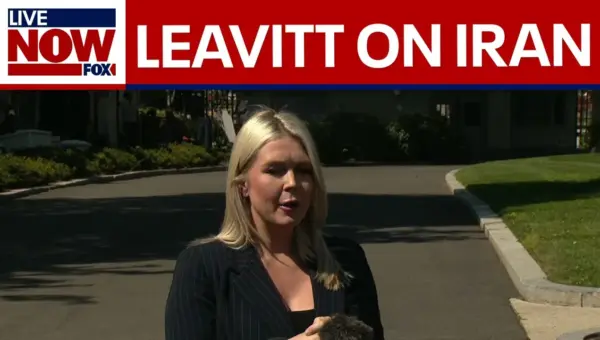
Karoline Levit’s response to these seizures highlighted this disconnect. She suggested the seizures were not a violation because the ships were not American or Israeli, and that the U.S. had “obliterated Iran’s conventional navy.” However, this framing omits crucial context.
Iran possesses a secondary naval force, the IRGC Navy, which uses asymmetric tactics like suicide boats and mines to control the strait. This force, despite the state of the conventional navy, clearly remains a significant threat.
“The factual reality that you and I lie in and we play in every single day. We use facts to build up our worldview. And then there’s this entirely separate reality that Caroline Levit and Marco Rubio and a lot of these people deep down know is wrong, but they have to play by due to Donald Trump’s true social post.”
The speaker in the source material argues that this selective presentation of facts, focusing on the weakened conventional navy while ignoring the IRGC’s capabilities, serves to maintain a narrative of U.S. victory. This narrative, however, is undermined by the fact that Iran continues to exert control over a vital international waterway. The situation demonstrates how official statements can downplay ongoing challenges to fit a predetermined conclusion.
Election Disputes and Shifting Narratives
Beyond international affairs, domestic election results have also become a point of contention, with similar patterns of narrative control. Following a significant Democratic victory in Virginia, driven partly by a redistricting vote that neutralized Republican efforts, former President Trump declared the election “rigged.” His statement pointed to a “massive mail-in ballot drop” as evidence of foul play, a claim familiar to those who have followed election disputes.
This reaction draws parallels to past claims of election irregularities, often made when results do not favor a particular political side. The argument presented in the source material is that this is not a new tactic but rather a consistent response to unfavorable outcomes. It suggests a pattern of discrediting election results when they do not align with desired political goals, rather than accepting the democratic process.
Karoline Levit’s role in these discussions also came under scrutiny. When questioned about the election, she stated she was “no longer part of the president’s political team” and was a “government employee.” This statement appeared to contradict her public role and the common understanding of the White House press secretary’s position, which inherently involves political alignment and communication strategy. This created confusion about her current standing and allegiances.
The Problem of Mission Creep and Extended Timelines
Another area where official narratives have faced challenges is the duration of military operations. A reporter pointed out that a conflict, initially projected to last four to six weeks, had entered its seventh week. This observation highlights the concept of “mission creep,” where military engagements extend beyond initial projections without a clear end in sight.
Levit’s response suggested that the president would “ultimately dictate the timeline” based on what he believes is in the best interest of the United States. However, the source material interprets this as a sign that the timeline is flexible and subject to change, rather than a fixed plan. The implication is that the public cannot rely on initial timelines provided by political leaders, especially in prolonged military conflicts.
Why This Matters
The consistent divergence between official statements and verifiable facts, as seen in the discussions around Iran and election results, has significant implications. It erodes public trust in political institutions and the media. When people feel that they are being presented with a distorted version of reality, it becomes harder for them to make informed decisions or engage constructively in civic life.
This pattern also raises concerns about the health of democratic discourse. A functioning democracy relies on a shared understanding of basic facts.
When political actors actively promote alternative realities, it can polarize the electorate and make compromise or reasoned debate nearly impossible. The public deserves clear, fact-based communication from its leaders and representatives.
Historical Context and Future Outlook
The use of alternative narratives and the questioning of election results are not new phenomena in politics. Throughout history, leaders have used propaganda and selective information to shape public opinion and maintain power. However, in the age of instant information and social media, these tactics can spread rapidly and have a profound impact on public perception.
The future outlook depends on the public’s ability to discern fact from fiction and demand transparency from political figures. It also depends on the willingness of media outlets to hold power accountable and provide accurate, unbiased reporting. Without these checks and balances, the trend of political narratives diverging from reality is likely to continue, posing a significant challenge to democratic societies.
The situation demands a critical approach to information. As the source material concludes, the United States appears to be seeking an “off-ramp” from difficult international situations, often while projecting an image of strength that may not align with the current reality. This complex interplay between perception and fact will continue to shape political discourse and international relations.
Americans will need to remain vigilant, questioning official narratives and seeking out verified information, especially as key dates like the extended ceasefire deadline approach.
Source: Karoline LEAVING TRUMP after NEW DISASTER ?! (YouTube)

Related Articles
Iran and US in Standoff: No Talks Seen, Escalation Possible
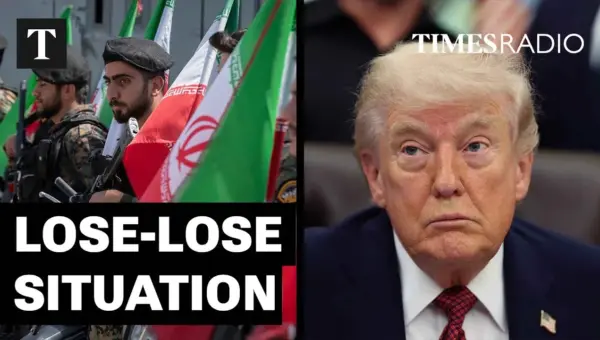
Neither Iran nor the United States is currently ready for serious negotiations, according to diplomatic and political experts. Both nations are focused on gaining leverage, creating a lose-lose situation. While one side believes the US is winning through economic pressure and military strategy, the other views it as a series of losses for both parties, with the urgent need to reopen the Strait of Hormuz.

Iran’s Viral Takedown: How Memes Undermine Trump’s Image
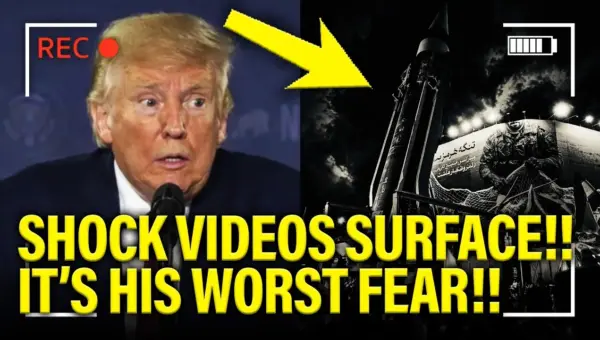
Iran is employing a sophisticated digital strategy, using viral Lego videos and memes to mock Donald Trump. These animations criticize his policies, character, and foreign relations, aiming to undermine his public image globally. The campaign highlights the growing importance of information warfare in international relations.
Iran Ceasefire Extended: US Tightens Economic Grip
The White House announced an extension of the ceasefire with Iran, but emphasized that economic pressure through a naval blockade continues. Press Secretary Leavitt stated the U.S. is 'strangling their economy' and awaits a unified response from Tehran amidst internal divisions. No firm deadline has been set for Iran's proposal.