Trump’s Iran Policy: Humiliation or Prudence in Hormuz?
Iran's recent attacks on vessels in the Strait of Hormuz have sparked debate about President Trump's foreign policy. Critics argue his approach emboldens adversaries, while others see it as a prudent effort to avoid conflict.


Iran Escalates in Hormuz, Trump’s Response Under Scrutiny
Overnight, Iran launched a series of aggressive actions in the Strait of Hormuz, attacking two vessels and reportedly a third that attempted to pass through. This escalation has led to significant international attention and debate about the effectiveness of U.S. foreign policy under President Donald Trump.
The incidents occurred shortly after the United States agreed to extend a ceasefire with Iran by three days. President Trump had previously spoken about giving Iran some flexibility, a move that, while intended to avoid conflict, is now being viewed by some as enabling further aggression.
Analyzing the Strategic Strait of Hormuz
The Strait of Hormuz is a critical chokepoint for global oil transport. Roughly 30% of the world’s seaborne oil trade passes through this narrow waterway connecting the Persian Gulf to the Gulf of Oman. Its strategic importance means that any disruption here can have immediate and far-reaching economic consequences worldwide.
Iran has a history of using the strait to exert influence and pressure. This has included threats to close the strait and, as seen recently, direct attacks or seizures of vessels. These actions are often interpreted as a response to international sanctions or political tensions.
Trump’s Shifting Stance on Iran
President Trump has adopted a strong stance against Iran, often labeling its actions as terrorism and making serious threats. However, critics point to a pattern where, when faced with direct confrontation, his administration appears to back down or seek de-escalation.
This perceived inconsistency, according to some analysts, creates a “permission structure” for Iran. It suggests that Iran may feel emboldened to continue testing the boundaries of international norms and U.S. resolve. The repeated actions in the Strait of Hormuz are seen as evidence of this pattern.
Why This Matters
The events in the Strait of Hormuz have significant implications for global security and economic stability. Iran’s actions directly threaten international shipping lanes, potentially impacting oil prices and supply chains for countries around the world.
The situation raises questions about the credibility of U.S. foreign policy and deterrence. When a leader makes strong threats but then appears to yield ground, it can weaken the perceived strength of their leadership and encourage adversaries to continue their aggressive behavior.
Historical Context and Future Outlook
Tensions between the U.S. and Iran have been a persistent feature of Middle Eastern politics for decades. Following the 1979 Iranian Revolution, relations have been marked by mistrust, sanctions, and proxy conflicts.
The Obama administration pursued a diplomatic approach, culminating in the 2015 Joint Comprehensive Plan of Action (JCPOA), or Iran nuclear deal. The Trump administration later withdrew from this agreement, reimposing stringent sanctions and adopting a more confrontational policy.
The current situation reflects the ongoing debate about the best approach to managing relations with Iran. Some advocate for a firm, uncompromising stance backed by military readiness, while others believe that diplomacy and de-escalation, even with adversaries, are more effective in preventing wider conflicts.
The future outlook remains uncertain. Iran’s continued escalations in the Strait of Hormuz, coupled with the U.S. response, will likely shape regional dynamics and international relations for the foreseeable future. Future actions by both nations will be closely watched.
The next few days will be critical in determining whether tensions de-escalate or continue to rise in the vital Strait of Hormuz.
Source: Trump Backs Down… Iran Keeps Escalating #politics #fyp #New (YouTube)

Related Articles

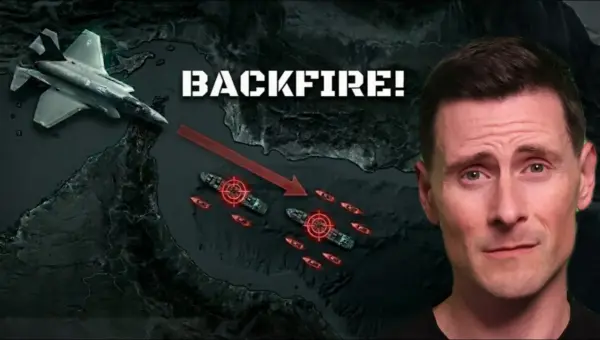
US Extends Iran Blockade, Regime Shows Signs of Strain
The U.S. has extended its blockade on Iranian ports, intensifying financial pressure on the regime. Reports indicate Iran is losing $500 million daily, causing internal strain and aggressive rhetoric from the IRGC, which has seized two cargo ships. U.S. military assets remain postured for any escalation.

Middle East Tensions Spike Amid Ship Attacks and Ceasefire Extension
Tensions flared in the Middle East as at least three ships were attacked in the Strait of Hormuz, despite an extended ceasefire with Iran. Meanwhile, a nominee for the Federal Reserve faced intense scrutiny over financial disclosures and independence from political pressure. Air quality reports also revealed unhealthy pollution levels affecting millions across the U.S.
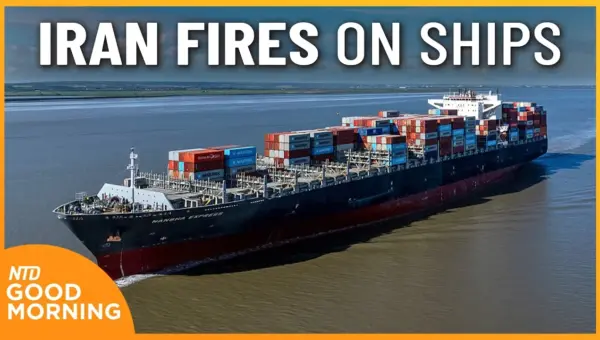
Iran Attacks Ships, US Extends Ceasefire Amid Tensions
Iran has fired on ships in the Strait of Hormuz, leading to an extended US ceasefire and continued naval blockade. Meanwhile, Virginia voters approved a new congressional map favoring Democrats, and Senate Republicans are moving forward with a Homeland Security funding plan. The Pentagon also announced a $1.5 trillion defense investment.