Oil Shock Looms: J.P. Morgan Predicts April 20th Crunch
J.P. Morgan has identified April 20th as a critical date when depleted oil reserves will likely cause physical and paper prices to converge. This event signals the end of a supply buffer, potentially leading to increased energy costs and market volatility.


Oil Prices Set to Spike After April 20th, Analyst Warns
Global oil markets are bracing for a significant shift, with analysts at J.P. Morgan pinpointing April 20th as a critical date. This is when the world will likely feel the full impact of recent supply chain disruptions.
Until this date, existing oil reserves are expected to keep prices stable. However, after April 20th, the market may face a sharp increase in costs.
Supply Chain Buffer Nears Empty
The last oil tanker to pass through the Strait of Hormuz before its recent closure departed on February 28th. This vessel is projected to arrive at its destination around April 20th. J.P.
Morgan’s analysis suggests that this arrival marks the depletion of all oil supplies that were in transit before the closure. Once these pre-closure barrels are fully integrated into the global supply chain, there will be no further buffer to absorb potential shocks.
Physical and Paper Prices to Converge
This depletion of reserves is expected to force a convergence between the physical price of oil and its futures, or ‘paper,’ price. The physical price reflects the immediate cost of buying oil today. The paper price, on the other hand, is based on contracts for oil to be delivered in the future.
When supply is tight, these two prices tend to move closer together. This convergence often signals a tighter, more responsive market.
Market Impact: What Investors Should Know
The period leading up to and immediately following April 20th could see increased volatility in oil prices. Investors and consumers should prepare for potential upward pressure on energy costs. This could affect transportation expenses and the prices of goods that rely heavily on oil for production or shipping.
The convergence of physical and paper prices suggests that the market will react more directly to real-time supply and demand. Any further disruptions after this date could lead to more immediate and pronounced price increases.
The implications extend beyond just the cost of gasoline. Higher oil prices can ripple through the economy, increasing costs for businesses across various sectors. This includes manufacturing, agriculture, and logistics.
Consumers may face higher prices for everyday goods as companies pass on increased energy expenses. Central banks might also monitor these developments closely, as energy costs are a significant factor in inflation. Persistent high oil prices could influence monetary policy decisions.
For investors, this period calls for careful consideration of energy sector exposure. Companies that produce oil may see increased revenues, while those heavily reliant on oil as a cost input might face margin pressures. Understanding the timing of this supply crunch is key to anticipating market movements in the coming weeks and months.
The J.P. Morgan forecast provides a specific timeline for when these market dynamics are expected to intensify.
The upcoming weeks are crucial for monitoring global energy supply and demand. The market is watching closely to see how the depletion of these existing oil reserves plays out. The arrival of the final pre-closure tanker on April 20th is the key event to track.
Source: When Will Oil Prices Hit The Economy? (YouTube)

Related Articles

Trump’s Iran War Gamble Backfires, Weakens Global Standing
Journalist David K. Johnston argues that President Trump's approach to the Iran conflict lacks strategy, leading to unpredictable outcomes and a weakened global position. The extended ceasefire quickly broke down, revealing Iran's upper hand and the potential for severe economic consequences worldwide.

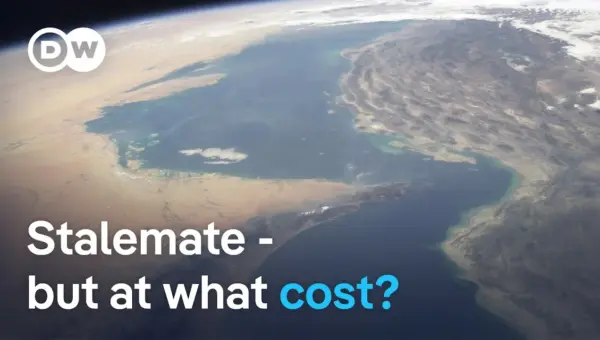
Trump Extends Ceasefire, But Oil Prices and Strait of Hormuz Remain Tense
President Trump has extended a ceasefire with Iran, but the Strait of Hormuz remains a point of tension, impacting global oil prices. Experts suggest both sides have suffered losses, and the path forward requires de-escalation and confidence-building measures. Donald Trump's negotiating tactics have been criticized as aggressive rather than diplomatic.

Trump’s Iran Standoff: A Costly War With No Clear Win
President Trump's strategy in the Iran conflict is under scrutiny as the costly standoff yields no clear victory. Key objectives, like securing passage through the Strait of Hormuz, remain unmet, while domestic and international economic impacts persist. Both sides face difficulties in claiming success amid ongoing tensions.