Recession Fears Rise: Iran War Threatens Fragile US Economy
The U.S. economy faces growing recession risks, amplified by the conflict in Iran. Experts warn of stalled job growth, inflation, and consumer debt, while the stock market shows cautious optimism. The potential $1 trillion cost of the war raises questions about national priorities.


US Economy Faces Growing Recession Risk
The United States economy is showing signs of strain, with experts raising concerns about a potential recession. The ongoing conflict with Iran is adding to existing economic pressures, including a stalled job market, falling consumer confidence, and persistent inflation. These factors combine to create a challenging environment for both businesses and individuals.
Economic Indicators Point to Weakness
Leading economic institutions are signaling a heightened risk of recession. Goldman Sachs recently increased its probability of a recession within the next 12 months from 25% to 30%. Moody’s Analytics, a widely respected economic analysis firm, places the odds even higher, just below 50%. These figures suggest a significant chance that the U.S. could enter an economic downturn.
“My angst around the possibility of a recession continues to rise.” – Mark Zandi, Chief Economist at Moody’s Analytics
Iran Conflict Exacerbates Economic Headwinds
The war in Iran is a major concern for business leaders, who believe it will worsen the current economic situation the longer it continues. This geopolitical tension adds another layer of uncertainty to an economy already struggling with several challenges. The conflict could lead to increased energy price volatility, disrupt global trade, and further dampen consumer and business sentiment.
Betsy Stevenson, a Professor of Public Policy and Economics at the University of Michigan, acknowledges the rising risks but maintains a cautiously optimistic view. “It’s more likely than not that we don’t have a recession,” Stevenson stated. However, she emphasized that numerous factors could push the U.S. economy toward a recession. She advises policymakers to focus on increasing certainty for consumers and businesses, a strategy she feels is not currently being prioritized by the administration.
Consumer Spending and Debt Concerns
A key area of concern is the spending habits of American consumers. Many are reportedly spending money they do not have, relying on credit or savings. There is a real question about when consumers will hit their limit and drastically cut back on spending. While this might not trigger a full-blown recession, it would certainly lead to an economic contraction and a slowdown in corporate earnings.
Wall Street’s Cautious Optimism
Despite the concerning economic indicators, some on Wall Street, like J.P. Morgan CEO Jamie Dimon, have expressed a more positive outlook. Dimon noted that consumer and business spending remains healthy. However, he also highlighted unpredictable risks such as geopolitical tensions, energy price swings, trade uncertainties, large global deficits, and high asset prices.
Stevenson suggests that the stock market’s current optimism might be misplaced. She believes the market could be underestimating the combined impact of various risks. A global economic slowdown is almost certain, which would reduce demand worldwide. This, coupled with potential cutbacks in American consumer spending, creates a scenario where current stock market valuations might be too high.
The Staggering Cost of War
The financial implications of the conflict in Iran are substantial. A public policy expert from Harvard Kennedy School estimated the total cost to American taxpayers could reach $1 trillion. This enormous sum raises critical questions about its impact on the national deficit and future government spending.
The debate over this expenditure focuses on what could have been achieved with such funds instead. Alternatives include investments in healthcare, childcare, and other social programs that President Trump has previously suggested the nation cannot afford. The trillion-dollar price tag for the war prompts a vital discussion about national priorities and where taxpayer money should be allocated.
Looking Ahead
As the situation in Iran continues to unfold, economists and policymakers will be closely watching key economic data. The Federal Reserve’s decisions on interest rates, consumer spending trends, and inflation figures will be crucial. The potential impact of the war on global energy markets and international trade will also be closely monitored. The coming months will be critical in determining whether the U.S. economy can weather these storms or if it will succumb to a recession.
Source: Chance of U.S. recession ticks up as Iran war impact hits Americans (YouTube)

Related Articles

UK Public Reaches Breaking Point Over Economy, Defense
Britons are increasingly frustrated by the UK's economic outlook, with the IMF predicting the lowest growth and highest inflation in the G7. This, combined with worries about national defense, has led to public pressure, as many feel they have already endured years of hardship and sacrifice, making further demands difficult to accept.

Trump’s War Policy Fuels Global Economic Fears
The International Monetary Fund has lowered its global growth forecast, citing the Iran conflict as a key factor. Rising inflation in the US and international calls for de-escalation highlight growing economic concerns. The situation raises questions about leadership and its impact on global stability.
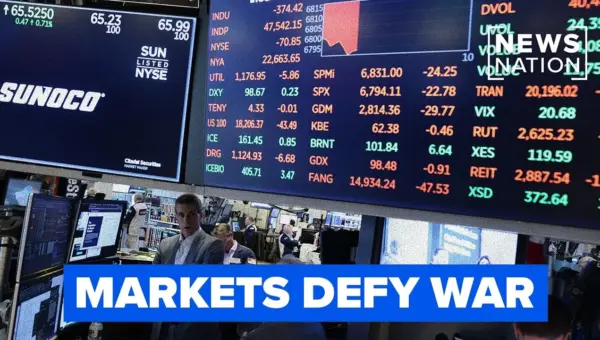
Markets Defy War Fears as Oil Prices Fluctuate
Wall Street rallied and erased Iran war losses as oil prices fluctuated near $100 a barrel. Despite market gains, Americans face higher gas prices, with a U.S. blockade of the Strait of Hormuz potentially worsening inflation. The Producer Price Index report is closely watched for future inflation signals.