Shadowy UAP Files Ignite Global Secrecy Debate
New analysis of the Majestic 12 (MJ-12) documents, allegedly detailing secret government UAP programs, is sparking debate. Researchers are examining CIA and FOIA records to uncover if these papers reveal genuine government secrecy or an elaborate hoax, impacting our understanding of official narratives.


Shadowy UAP Files Ignite Global Secrecy Debate
New analysis of the mysterious Majestic 12 (MJ-12) documents is forcing governments and researchers to question decades of official silence surrounding unidentified aerial phenomena (UAP). These documents, first appearing in the late 1980s, suggest a top-secret government program tasked with studying and concealing evidence of extraterrestrial technology. Experts are now sifting through newly uncovered CIA and Freedom of Information Act (FOIA) records, trying to determine if these papers reveal genuine government secrecy or a clever fake designed to mislead the public.
Unpacking the MJ-12 Mystery
The MJ-12 documents, allegedly created in 1952, claim to show a committee of scientists, military leaders, and intelligence officials formed by President Harry S. Truman. Their supposed mission was to deal with the aftermath of the 1947 Roswell incident and any recovered alien technology. Geoff Cruickshank, a former Australian intelligence official, and Jed Davis, a lawyer and independent researcher, discussed these claims on Ross Coulthart’s show “Reality Check.” They are looking at evidence, including a memo from General Nathan Twining in 1947 about “flying discs” and the “Cutler-Twining memo” from 1954, to see if these fit with the MJ-12 narrative.
Government Interests and Motivations
Intelligence agencies worldwide have long been interested in UAP sightings, especially when they occur near sensitive sites like nuclear weapons facilities. The documents hint that understanding advanced technology, whether terrestrial or not, is seen as crucial for national security. If the MJ-12 documents are real, they suggest a deep-seated government desire to control information that could cause public panic or give rival nations a technological edge. Conversely, if they are a hoax, the motivation might be to distract from other classified projects or to test public reaction to such claims.
Historical Echoes of Secrecy
The discussion around MJ-12 is not new. It connects to a history of government secrecy around advanced technology and potential alien encounters. Operation Paperclip, for example, involved the U.S. bringing Nazi scientists to America after World War II to study their advanced rocket and aviation technology. Some researchers believe this operation may have also involved studying information related to UAP programs. The alleged involvement of figures like Dr. Robert Goudsmit, a physicist who worked on early radar projects and later expressed skepticism about UFOs, adds another layer of complexity. His connection to Nazi Germany, as explored in the research, raises questions about the flow of scientific knowledge and potential cover-ups.
The Challenge of Authentication
Authenticating historical documents, especially those related to intelligence matters, is incredibly difficult. Cruickshank and Davis are examining details like paper type, ink, signatures, and internal consistency. They are also comparing the MJ-12 papers to other known declassified documents from the era. The CIA’s own acknowledgment of investigating UAP sightings, alongside the release of FOIA documents, provides a backdrop for this investigation. However, the possibility of sophisticated disinformation campaigns, designed to flood researchers with false leads and confuse the truth, remains a significant concern.
Economic and Strategic Implications
While the MJ-12 documents focus on technological secrets, the implications touch upon economic and strategic power. Control over revolutionary technology, whether developed domestically or reverse-engineered, could grant immense advantages in military might and economic development. The fear of such technology falling into the wrong hands, or being used to destabilize global power balances, likely drives much of the secrecy. The history of intelligence agencies often involves managing perceived threats, and advanced, unknown technology would certainly qualify.
Future Scenarios and Global Impact
The ongoing debate over the MJ-12 documents highlights a fundamental tension between the public’s right to know and a government’s perceived need for secrecy in matters of national security. If the documents are proven authentic, it would confirm a long-held suspicion among many that governments have been hiding profound truths about our world and beyond. This revelation could lead to widespread public demand for transparency and a re-evaluation of global scientific and defense priorities. Conversely, if they are definitively debunked as a hoax, it would serve as a cautionary tale about the dangers of misinformation and the challenges of historical research in the intelligence realm. Regardless of their authenticity, the MJ-12 saga continues to fuel questions about what governments know and why they might choose to keep it hidden, reshaping how we view official narratives about the unknown.
Source: A secret history: Inside shadow intelligence, the MJ-12 documents | Reality Check (YouTube)

Related Articles


Lawmaker Demands UAP Videos Citing National Security Risks
Congresswoman Anna Paulina Luna has demanded the release of 46 UAP videos from the Defense Department, citing national security concerns. The videos reportedly show phenomena operating outside known physics, with some experts calling them "interdimensional." This call for transparency comes as UAP investigations move from the fringe to the mainstream, with past reports and testimonies raising significant questions.

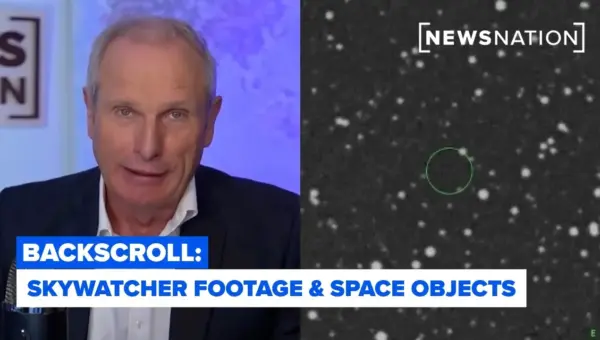
US Military Explores Secret Tech From Unknown Origins
Former NASA surgeon Dr. Gregory Rogers' testimony about seeing footage of a US Air Force-identified craft has sparked renewed interest in UAP. This, alongside accounts of advanced aerial vehicles and the exploration of psionic contact methods, points to a growing, albeit secretive, engagement with unexplained phenomena by military and private sectors. Experts suggest retrieved technology may be influencing innovation, while calls for greater public disclosure intensify.


UAP Focus Shifts Global Attention, Obscures Other Issues
The recent surge in UAP discussions, potentially amplified by political figures, raises questions about diverting attention from other issues. However, the profound implications of understanding UAP could fundamentally alter humanity's perspective, regardless of the motivations behind the current discourse.