Markets Defy War Fears as Oil Prices Fluctuate
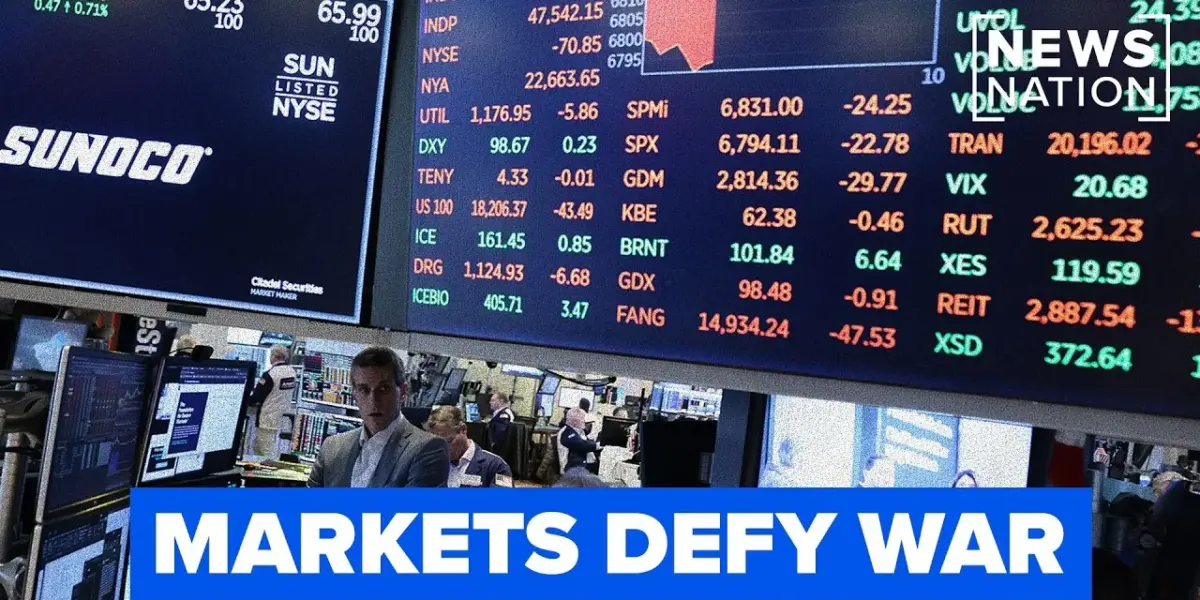
Wall Street rallied and erased Iran war losses as oil prices fluctuated near $100 a barrel. Despite market gains, Americans face higher gas prices, with a U.S. blockade of the Strait of Hormuz potentially worsening inflation. The Producer Price Index report is closely watched for future inflation signals.

Markets Defy War Fears as Oil Prices Fluctuate
Wall Street saw a strong rally, erasing losses tied to the conflict in Iran within a single day. This happened even as the United States implemented a blockade of the Strait of Hormuz. The stock market’s quick recovery suggests investors are looking past immediate geopolitical tensions, at least for now. However, the impact of these events is still being felt by everyday Americans, particularly at the gas pump.
Economic Data Signals Inflation Concerns
Key economic data, including the Producer Price Index (PPI), is being released. The PPI tracks the prices that manufacturers and sellers receive for their goods. Investors watch this report closely because it can signal future inflation. If it costs more to make or sell an item, that cost often gets passed on to consumers.
Market analysts expected an increase in producer prices. Higher energy costs are a main reason for this expectation. The PPI is often seen as a leading indicator for the Consumer Price Index (CPI). This means that rising producer prices today could lead to higher prices for consumers in the future. This suggests a potential return to an inflationary spiral as energy prices climb.
Oil Prices and Geopolitical Tensions
Oil prices experienced a significant spike, briefly going over $100 a barrel. They later pulled back slightly, settling just under $99 a barrel. These price swings are directly linked to the ongoing situation involving the U.S. and Iran. The Strait of Hormuz is a critical waterway for oil transport. A U.S. blockade there raises concerns about the global oil supply.
Analysts believe that discussions between the U.S. and Iran, along with a fragile ceasefire, are influencing these oil prices. The market’s ability to rally despite the blockade suggests a complex interplay of factors. Investors may be factoring in potential diplomatic solutions or assessing the actual impact of the blockade on supply chains.
Consumer Impact: Gas Prices Remain High
Despite the stock market’s gains, many Americans are still feeling the pinch of higher energy costs. The national average price for a gallon of gas has slightly decreased. It now stands at $4.11 per gallon. However, this price is still considerably higher than it was just a month ago.
The U.S. blockade of the Strait of Hormuz could potentially cause oil prices to spike again. This would likely translate into even higher gasoline costs for consumers. Such a development would further fuel inflation, impacting household budgets across the country.
Global Impact: Energy Routes and Inflation
The situation highlights the critical importance of energy routes like the Strait of Hormuz. Any disruption in this vital shipping lane can have immediate and significant effects on global energy markets. The price of oil is a major factor in inflation worldwide. When oil prices rise, transportation costs increase, affecting the price of almost all goods.
The market’s quick recovery on Wall Street shows a degree of resilience. However, the underlying economic pressures, particularly from energy costs, remain a concern. The Federal Reserve and other central banks often monitor PPI and CPI data closely when setting interest rate policies to control inflation.
Historical Context: Oil Shocks and Market Reactions
Historically, oil price shocks have often led to periods of economic instability and inflation. Events like the 1970s oil crisis demonstrated how disruptions in oil supply could severely impact global economies. Markets have shown varying reactions to geopolitical events over time. Sometimes, they react sharply to immediate news, while at other times, they seem to absorb shocks as long as supply lines remain fundamentally intact or diplomatic solutions appear likely.
The current situation shows that while financial markets can sometimes recover quickly, the real-world impact on consumers, especially through energy prices, can be more persistent. The interplay between geopolitical events, energy markets, and inflation remains a central challenge for policymakers and the global economy.
Source: Wall Street rallies, wipes out Iran war losses | Morning in America (YouTube)

Related Articles

US Naval Blockade Forces Iran to Negotiate
The U.S. is using a naval blockade to force Iran to negotiate, targeting oil tankers to disrupt Tehran's revenue. This strategy aims to secure freedom of navigation through the Strait of Hormuz and prevent Iran from developing nuclear weapons. Investors should watch regional stability and oil prices.

Trump Ultimatum: No Deal Without Nuclear Ban
President Trump has issued an ultimatum in Iran negotiations, stating no deal will be reached if Iran pursues nuclear weapons. Meanwhile, domestic policy debates continue over DHS funding, with a reconciliation process being considered for various legislative items. Positive economic news includes a significant rise in average tax refunds, boosting consumer spending.


Iran’s Bold Move Exposes US Weakness in Persian Gulf
A Chinese tanker's easy passage through a U.S. blockade and a U.S. aircraft carrier's lengthy detour raise questions about American influence in the Persian Gulf. As global alliances shift, the effectiveness of U.S. foreign policy is under scrutiny.