China’s Cracks: Social Anger Fuels Extreme Violence
A wave of violent attacks and infrastructure failures in China points to deep social and financial pressures. From a market poisoning and vehicle ramming in Beijing to collapsing bridges and suspicious fires, these incidents reveal a system under strain. The root causes appear to be local government fiscal stress and escalating social resentment among citizens pushed to the brink.

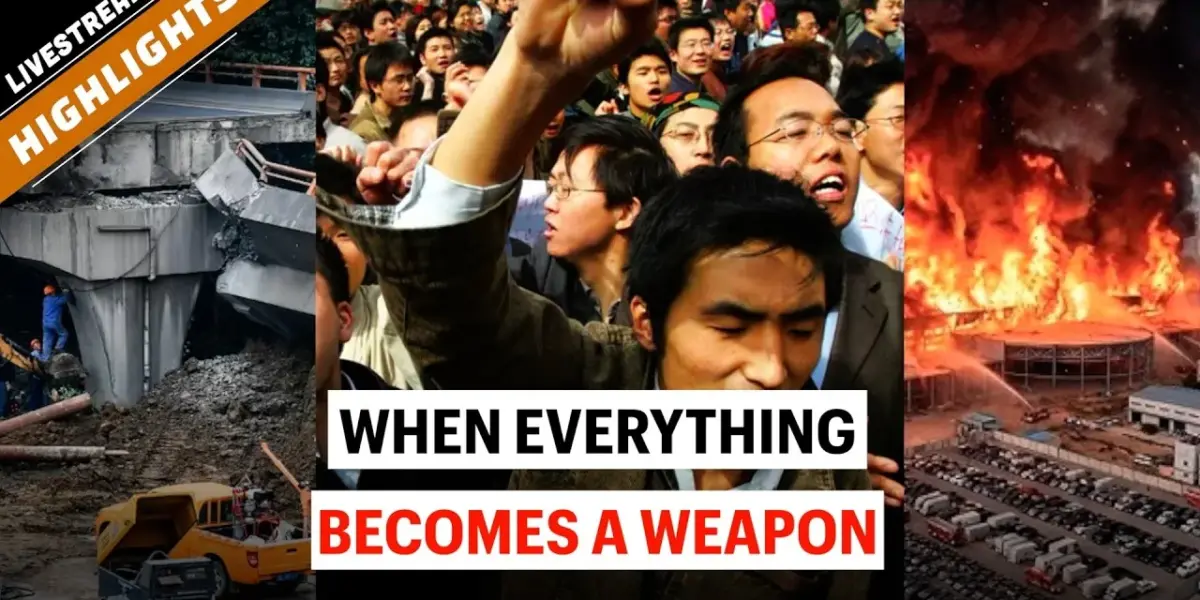
China’s Cracks: Social Anger Fuels Extreme Violence
Recent events in China reveal a disturbing trend: what appears to be a surge in extreme violence and infrastructure failures, driven by deep social and financial pressures. From deadly market attacks to collapsing bridges, these incidents suggest a system under strain is beginning to break.
A City Under Siege: Beijing Attack Highlights Desperation
One of the most shocking events occurred in Beijing on March 29th. A 53-year-old man, identified as Chu, carried out a two-stage attack in a busy market.
He first spread industrial sodium nitrate into food stalls during the morning rush, causing widespread poisoning. Following this, he used a rented heavy loader to ram into the chaotic crowd, causing further devastation.
Chu’s personal story clarifies the growing desperation felt by many. Once a factory owner, he lost his savings in a dispute over demolition compensation.
Facing illness, lack of medical care, and repeated detentions for seeking help, he reached a breaking point. While Chu bears direct responsibility, the environment of social injustice and government inaction likely pushed him toward this extreme act.
More Than Accidents: Intentional Acts on Public Streets
These incidents are not isolated. Similar events have followed rapidly. On April 15th, a car intentionally rammed into multiple electric mopeds in Chongqing.
While officials reported minor injuries, witnesses described the car continuing at high speed, suggesting deliberate intent. Just two days earlier, a Land Rover SUV in Shaanxi plowed through eight vehicles, with rumors of significant casualties despite official reports of only two injuries.
These attacks, happening in quick succession, indicate that social pressure has reached a critical point. For those pushed to the edge, vehicles are becoming tools for violent retaliation against society. This escalating anger is not random; it stems from deeper issues within China’s economy and governance.
Targeting Livelihoods: Shenzhen’s Electric Bike Crackdown
Consider Shenzhen, China’s tech hub. The city recently launched a massive campaign to seize electric moped bikes, internally called a “zero out operation.” In one night, over 100,000 bikes were taken. With over six million such bikes in circulation and no alternative transport options, this policy has directly impacted the livelihoods of millions of working-class riders.
Enforcement has been harsh. Videos show police tripping moving riders and beating civilians.
For many lower-income individuals, these bikes are not just for transportation; they are essential for survival. This aggressive approach, however, serves a dual purpose for local governments.
Fines as Revenue: A Financial Lifeline for Local Governments
The fines collected from confiscating these vehicles have become a crucial source of revenue for local governments struggling with financial stress. When owners cannot afford to pay fines to retrieve their bikes, the vehicles are often sold off. Reports show large numbers of these confiscated Chinese electric bikes appearing in parts of Africa, suggesting a direct export of seized assets.
This practice highlights a broader issue: local governments are increasingly relying on fines and asset sales to stay afloat. This creates a cycle where enforcement becomes more aggressive, pushing already struggling citizens further into hardship and resentment.
Infrastructure Crumbles: Bridges Fail Under Strain
The financial strain isn’t just affecting people’s livelihoods; it’s also impacting China’s physical infrastructure. Since last June, multiple major bridges have failed or collapsed. This wave of failures points to a serious problem: poor construction and insufficient maintenance funding.
Many of these projects were built with substandard materials and weak oversight. As local governments face budget shortfalls, funds for essential maintenance disappear. Aging infrastructure, neglected due to lack of money, is now becoming a significant public safety hazard.
Explosions and Fires: Are They Accidents or Something More?
The year 2026 is associated with the Fire Horse, and China seems to be experiencing a fiery period. Industrial zones and public spaces have seen a rise in fires and explosions, many of which raise questions about whether they are truly accidents. On April 13th alone, three major incidents occurred: a restaurant explosion in Ningbo, a fire at a technology company facility, and a restaurant blast in Shandong that flattened the building.
The official explanations often cite welding sparks or gas leaks. However, online accounts suggest different causes, such as unpaid wages leading to desperation, or fires triggered by faulty battery installations. The BYD factory fire on April 14th further fueled public suspicion, with rumors of a high death toll and official attempts to control the narrative.
A Collapse of Trust: When Official Stories Don’t Match Reality
The divergence between official accounts and public perception in incidents like the BYD fire erodes trust. When official narratives are met with widespread skepticism, it signals a deeper breakdown in communication and transparency. This lack of trust is amplified by the frequency of these events across different regions.
In just two weeks, Shandong province alone saw a chemical plant explosion and a factory fire. Other incidents include chemical fires, explosions, and tunnel blasts in various cities. These events are no longer just safety failures; they reflect two major systemic issues.
Two Deeper Breakdowns: Oversight and Resentment
First, there’s a collapse of oversight. Local governments are diverting resources from basic functions like industrial safety enforcement towards political control. Aging infrastructure, declining standards, and financial stress have turned many facilities into ticking time bombs.
Second, and perhaps more concerning, is the radicalization of social resentment. When workers are pushed to the brink, facing financial hardship with no legal recourse, disputes can escalate into extreme violence. This anger, directed at society itself, is a dangerous consequence of a system under immense pressure.
Why This Matters
The combination of crumbling infrastructure and escalating social unrest poses a significant challenge to China’s stability and its image on the global stage. These events highlight the human cost of economic downturns and stringent governance. The government’s focus on maintaining control and generating revenue through fines, rather than addressing underlying social needs, appears to be fueling a dangerous cycle of anger and desperation.
Implications and Future Outlook
As China’s economy faces headwinds, the pressure on local governments and citizens will likely intensify. This could lead to more frequent and severe incidents of both infrastructure failure and social unrest. The government faces a difficult choice: continue with coercive measures that risk further alienating its population, or implement reforms that address the root causes of discontent, which may involve ceding some control and reallocating resources.
Historical Context
China’s rapid economic growth over the past few decades was built on massive infrastructure development and a focus on manufacturing. However, this growth often came with lax environmental and safety regulations, and a widening gap between the wealthy and the working class. Issues like inadequate compensation for land disputes and insufficient social safety nets have long been simmering beneath the surface.
The current situation echoes past periods of social strain in China, where widespread discontent has sometimes led to unpredictable outcomes. The government’s response, historically, has often involved a strong emphasis on maintaining social order, sometimes at the expense of addressing citizens’ grievances directly.
Looking Ahead
The coming months will be critical in observing how Beijing responds to these mounting pressures. The trust deficit between the public and the authorities, exacerbated by these events, will be difficult to overcome. The trend suggests that until systemic issues like local government fiscal stress and the lack of social safety nets are addressed, the risk of further extreme incidents remains high.
The next major indicator of potential infrastructure issues will be the ongoing maintenance reports for the nation’s vast network of bridges and tunnels throughout the year.
Source: From Bridge Collapses to Street Attacks: What’s Really Happening in China (YouTube)

Related Articles


China’s Shadowy Grow Houses Fuel Maine’s Fentanyl Crisis
Mysterious grow houses in Maine, suspected to be run by Chinese criminal groups, are raising alarms. They may be fueling the fentanyl crisis by selling illegal marijuana to fund the purchase of precursor chemicals. This complex criminal network highlights international drug trade concerns.


Lithium-Ion Batteries Fuel EV Revolution, China Leads Charge
Lithium-ion batteries, first popularized by Sony camcorders, have fueled a global electric vehicle (EV) revolution. China leads this charge, making EVs cheaper and driving worldwide adoption. This shift creates significant opportunities and competitive pressures in the global market.


Geraldo Rivera’s Bold Claims on Politics and Pop Culture
Veteran journalist Geraldo Rivera weighs in on cultural divides highlighted by a Turning Point USA event, critiques political interview strategies, and debates the use of federal forces in cities. His sharp takes offer a look at current political and cultural tensions.