Republicans Cry Foul on Redistricting They Started
Donald Trump's claims of a "rigged election" in Virginia reveal a Republican party unwilling to accept electoral losses when they don't benefit. This analysis argues that Democrats are now fighting back against partisan gerrymandering, a tactic long used by Republicans, to level the playing field and ensure fairer representation.

Republicans Cry Foul on Redistricting They Started
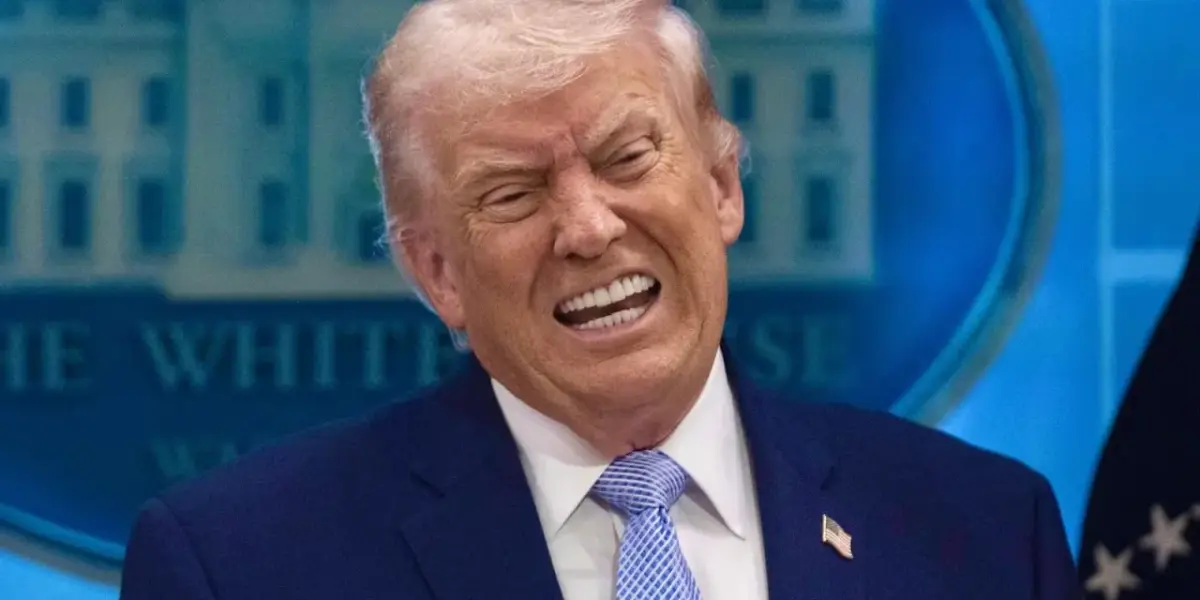
The recent redistricting vote in Virginia has sparked a fiery debate, with former President Donald Trump leading the charge in claiming the election was rigged. Trump posted on social media, calling the vote a “rigged election” and pointing to a “massive mail-in ballot drop” as evidence of foul play.
He also criticized the language of the referendum, saying it was intentionally confusing. This reaction comes after Virginia approved a new map that is expected to result in 10 Democrats and only one Republican in its congressional delegation.
This situation highlights a broader pattern: Republicans are quick to condemn redistricting efforts when they don’t benefit their party, yet they often initiated or benefited from similar tactics when the advantage was theirs. The speaker of the House, Mike Johnson, has also spoken out against the Virginia map, calling it a “hyper-partisan gerrymandering boondoggle.” However, this criticism rings hollow for many, given the lack of similar condemnation from Republican leaders when districts were drawn to favor their party in states like Texas and Florida.
Fighting Fire with Fire
The analysis suggests that Democrats are now fighting back against partisan gerrymandering, a strategy Republicans have used extensively. The speaker notes that he himself has been a proponent of fighting for fairer maps, even raising money for redistricting efforts in California and New York. He argues that when Republicans wield states like Texas and Florida as “massive weapons” through gerrymandering, Democrats are justified in responding in kind rather than disarming unilaterally.
This “fight fire with fire” approach is seen as a necessary response to Republican tactics. The speaker points out that not a single Republican spoke out against the redistricting efforts in Texas, which aimed to gain more Republican seats.
Yet, when Democrats engage in similar strategies, the Republican party seems to have a collective meltdown. This double standard, the speaker argues, shows that Republicans are not against gerrymandering itself, but rather against Democrats using it effectively.
A Missed Opportunity for Reform
The piece emphasizes that Republicans could outlaw partisan gerrymandering nationwide if they were truly against it. With Republicans currently holding control of the House, Senate, and White House, they have the power to enact such reforms.
The speaker recalls that in 2021, Democrats proposed the Freedom to Vote Act, which included a ban on partisan gerrymandering, but not a single Republican voted for it. This inaction, he suggests, proves their lack of genuine commitment to ending the practice.
Instead of pursuing reform, the focus for some in the GOP seems to be on discrediting election outcomes they lose. The speaker sees Trump’s reaction to the Virginia vote as a preview of future defenses, where claims of rigged elections will be used as a pretext to undermine future results. This includes actions like seizing ballots in various counties and pushing for policies that could make voting more difficult, such as requiring passports for registration.
The core issue is not opposition to gerrymandering, but rather an objection to facing it when the opposition can effectively push back.
The Broader Implications
The analysis connects these redistricting battles to a larger trend of election interference claims within the Republican party. As legitimate paths to victory seem to narrow, the strategy shifts towards questioning the integrity of the electoral process itself. This is seen as a way to entrench power without necessarily delivering on campaign promises, ultimately disappointing voters who feel conned.
The speaker argues that this focus on maintaining power at all costs is detrimental to voters, regardless of their political affiliation. When parties prioritize entrenching their control over governing effectively, the public interest suffers. The Virginia referendum is presented as a much-needed check on a Republican party perceived as being out of control and increasingly anti-democratic.
Historical Context and Future Outlook
The discussion touches on the history of redistricting wars, with Democrats now actively engaging in a fight they believe Republicans started. The speaker highlights successful pushes back against Republican redistricting efforts in states like Texas, California, and Ohio. These actions are seen as inspiring other states, such as New York, New Jersey, and Colorado, to prepare for similar battles in future election cycles.
Looking ahead, the potential impact of Supreme Court decisions on the Voting Rights Act and the upcoming 2030 census are major concerns. These factors could significantly shift the political landscape, potentially leading to a loss of minority representation and a further advantage for Republican-leaning states. The strategy moving forward involves continuing to fight for fair elections and being prepared to respond aggressively to any attempts at voter suppression or manipulation.
Why This Matters
This analysis is crucial because it exposes a perceived hypocrisy within the Republican party regarding redistricting and election integrity. By framing these events as a direct response to Republican-led gerrymandering, the piece argues that Democrats are simply leveling the playing field. The underlying message is that voter empowerment and fair representation are at stake, and active participation and strategic responses are necessary to counter what is described as an anti-democratic slide.
The call to action is for voters to understand that political parties work for them, not the other way around. The author urges people to remain vigilant and to hold elected officials accountable, especially when their actions seem to prioritize power over the promises made to constituents. The fight for fair representation is ongoing, and the outcomes of these redistricting battles will shape the future of American democracy.
The next battlefield in this ongoing redistricting fight is expected to be Florida, where Republicans are reportedly considering further map manipulation. The warning is clear: if they proceed, Democrats are prepared to respond aggressively to create opportunities to defeat Republican incumbents.
Source: Trump SNAPS with UNHINGED FREAKOUT (YouTube)

Related Articles


Voters Push Back Against Election Schemes Ahead of Midterms
Virginia voters have rejected a Trump-backed redistricting scheme, opting for a fairer electoral map. The move, despite legal challenges, signals a voter pushback against perceived election manipulation ahead of the midterms. The discussion also touched on AI's role in spreading misinformation and the unifying power of space exploration.


Democrats Fight Back Against Gerrymandering, Warn Florida Governor
Democrats are signaling a new, aggressive strategy against gerrymandering, warning Florida Governor Ron DeSantis against redrawing congressional maps. Following recent victories, the party is prepared to fight back harder than ever to ensure fair elections.


Trump’s Approval Plummets to New Lows Amidst War and Economic Woes
Recent polls indicate a sharp decline in Donald Trump's approval ratings, with some figures dipping below his post-January 6th numbers. This drop coincides with rising gas and food prices and ongoing conflict in Iran, fueling public discontent. Despite attempts to manipulate election maps, voter-led initiatives in states like California and Virginia are pushing back against gerrymandering.