Virginia Judge Blocks New Congressional Map Amid Legal Fight
A Virginia circuit court judge has blocked the certification of a new congressional map that could have given Democrats control of most of the state's House seats. Attorney General Jay Jones vows to appeal, calling the decision an "activist judge's" overreach. This legal battle is part of a broader national trend of increased redistricting activity.

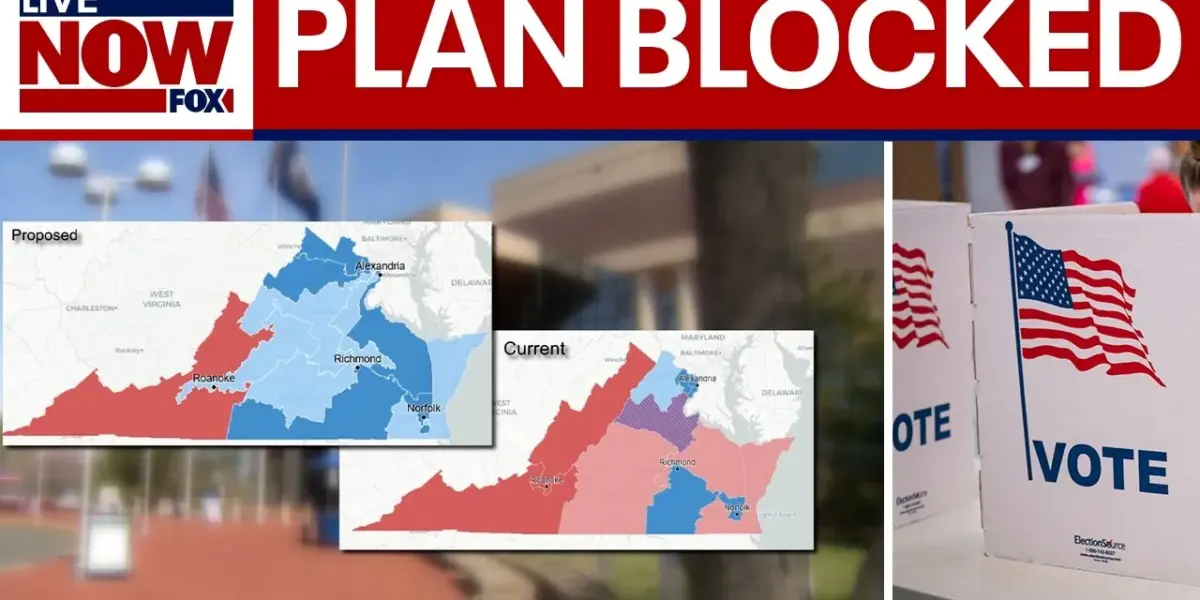
Virginia Judge Halts New Congressional Map
A Virginia circuit court judge has blocked the certification of a newly approved congressional map, throwing the state’s redistricting process into legal uncertainty. Voters narrowly approved the map, which could have significantly boosted Democratic representation, but the judge’s decision casts doubt on whether the results will stand. The ruling comes after a very close vote, with unofficial results showing 50% in favor and 49% against the new map.
Democrats Vow to Appeal Judge’s Decision
Virginia’s Attorney General, Jay Jones, announced his office would immediately appeal the ruling. He stated that an “activist judge” should not override the will of the voters.
Jones emphasized that Virginians have spoken and his office is ready to defend the election outcome in higher courts. The decision was made by a judge in Tazewell Circuit Court, who had previously attempted to block the referendum, siding with Republicans who filed lawsuits against the proposed map.
New Map Could Shift Political Balance
The proposed congressional map was designed to give Democrats control of 10 out of Virginia’s 11 House seats. Democrats pushed for this change, which they presented as a response to similar redistricting efforts initiated by Republicans in other states.
The map’s potential to alter the balance of power in Congress has made it a focal point of political debate. However, court documents from the Tazewell Circuit Court have declared all votes for or against the amendment to be ineffective due to the injunction.
Broader Redistricting ‘Competition’ Across U.S.
Experts note that this Virginia case is part of a larger trend of increased redistricting activity across the United States. Mid-decade redistricting, which redraws district boundaries outside the usual 10-year census cycle, is rare. Before this year, it had happened only about three times in the last 50 years.
This year alone, it has occurred six times, a significant increase. This surge appears to have originated from a call by former President Donald Trump for Republican states to redraw districts.
Political ‘War’ Over Districts
David Becker, executive director of the Center for Election Innovation and Research, described the situation as a national political competition, or even a “political war.” He explained that states like California moved away from nonpartisan redistricting commissions in response. Other states such as Ohio and Missouri have also engaged in redistricting efforts.
Becker suggested that politicians are playing these games to gain even a small advantage in a closely divided House of Representatives. He warned that voters often lose out, facing representatives from unfamiliar districts and dealing with confusing changes to election processes.
Impact on Voters and Election Officials
The frequent redrawing of districts creates significant challenges for election officials. They must reconfigure ballots and election systems to ensure every voter receives the correct materials. This process is complex enough when done once every ten years.
Having it happen every two years places an immense burden on these officials. For voters, it means potentially having their representatives change frequently, making it harder to stay informed and engaged with their elected officials.
Concerns About True Representation
Becker expressed concern that these redistricting efforts move the House of Representatives further away from true representation of its constituents. He called the practice “unsavory” and noted that it doesn’t serve the best interests of voters.
While some states have moved towards nonpartisan redistricting, Republicans have often resisted these changes. Becker holds out a small hope that both parties might eventually realize this constant competition is a no-win scenario.
Potential for Bipartisan Cooperation?
There is a possibility that the contentious redistricting battles could lead both parties to seek consensus on district boundaries. If politicians see that these tactics are not serving them well and are alienating voters, they might be more willing to work together.
The goal, Becker suggested, should be to serve the voters rather than just political parties. However, he remains cautious about this outcome, acknowledging that the current trend is likely to continue for at least this election cycle.
Future of Virginia’s Map Uncertain
The legal fight over Virginia’s new congressional map is ongoing. The immediate impact is uncertainty for election officials and voters.
The appeals process will determine whether the judge’s injunction stands or if the new map will be implemented. The outcome could affect the political landscape of Virginia and potentially influence the balance of power in the U.S. House of Representatives.
Source: Virginia redistricting: Judge blocks proposed congressional map (YouTube)

Related Articles


Virginia’s Gerrymandered Map Sparks Fierce Debate
Virginia voters approved a new congressional map favoring Democrats, sparking intense debate over gerrymandering. Republicans are challenging the map in court, citing deceptive ballot language and unconstitutional procedures. This closely watched case could significantly impact the balance of power in Congress.


Trump Tightens Iran Squeeze Without Firing a Shot
President Trump is increasing pressure on Iran through economic and naval blockades, aiming for concessions without direct military conflict. Meanwhile, domestic politics sees a debate over gerrymandering in Virginia, and a unique proposal to rename a Ukrainian region 'Doniland' emerges.
Virginia Vote Shifts Power Balance, Hurts GOP Ahead of Midterms
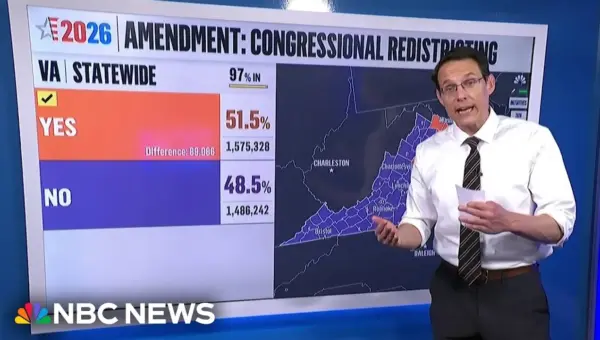
Virginia voters have approved a new congressional map, a move that could shift power to Democrats and net them up to four House seats. This comes as President Trump's approval ratings sink amid ongoing economic concerns and the war in Iran. Republicans are divided on how to respond to the redistricting changes, while Democrats vow to continue their fight.