Hollywood’s History Fails: Films That Lied for Drama
From Wyatt Earp's dubious heroism in "Tombstone" to the timeline chaos of "10,000 BC," many films dramatically distort history. This list explores how Hollywood sacrifices truth for a more thrilling, albeit inaccurate, cinematic experience.

Hollywood’s History Fails: Films That Lied for Drama
Many movies aim to tell stories from the past. However, some filmmakers twist historical facts to make their stories more exciting.
This can lead to major misconceptions about real events and people. Today, we look at films that sacrificed truth for dramatic effect.
10. Tombstone (1993)
The movie Tombstone tells the story of the famous 1881 shootout at the OK Corral. It made Wyatt Earp and the Cochise County Cowboys into legendary figures. However, the film plays fast and loose with the truth.
Wyatt Earp and his brothers weren’t just lawmen for moral reasons; they were in it because their businesses failed. Also, the crime syndicate in Cochise County wasn’t fully formed when Earp arrived. The movie adds a lot of Hollywood drama to a real event, making Wyatt Earp seem like a reluctant hero when history shows a more complex picture.
9. The Woman King (2022)
The Woman King is praised as an empowering historical drama about the all-female Agojie warriors of the Kingdom of Dahomey. But much of its story is fictional.
There’s no proof that Dahomey seriously considered ending its involvement in the slave trade in the 1820s. In reality, the kingdom’s economy depended heavily on capturing people from neighboring areas and selling them to Europeans. The Agojie were actually key in this practice.
King Gezo only officially abolished slavery decades later, and only after pressure from the British. Critics say the film softens the role African nations played in the slave trade to fit modern storytelling.
8. Rush (2013)
Ron Howard’s film Rush focuses on the intense rivalry between Formula 1 racers James Hunt and Niki Lauda. The movie makes their competition seem incredibly tense, both on and off the track.
In reality, Hunt and Lauda were good friends who even shared a home early in their careers. Lauda found happiness in Hunt winning the season while he was recovering from a terrible crash. The racers themselves have said their competition was never as hostile as the movie portrays it.
7. 1492: Conquest of Paradise (1992)
Ridley Scott’s 1492: Conquest of Paradise shows Christopher Columbus arriving in the New World. The film presents him as friendly with the native people, envisioning a peaceful, multicultural land.
This is far from the truth. Columbus actually led a campaign of enslavement and genocide.
His own incompetence led to a rebellion by a nobleman named Adrian de Moxica. The movie’s idealized version of Columbus ignores the brutal reality of his arrival and actions.
6. Braveheart (1995)
Mel Gibson’s Braveheart is an epic tale of Scottish freedom fighter William Wallace. While inspiring, the film takes many liberties with historical facts.
The movie is based on a 15th-century poem that was more nationalist propaganda than accurate history. Wallace is shown as a peasant who becomes a rebel after his wife’s murder.
The concept of ‘prima nocta’ (a lord’s right to sleep with a subject’s bride) is also historically inaccurate. Even Wallace’s famous blue face paint and bagpipes are popular myths with unclear origins.
5. Bonnie and Clyde (1967)
The film Bonnie and Clyde turned Clyde Barrow and Bonnie Parker into counterculture icons. During the Great Depression, many saw them as folk heroes who robbed banks that harmed ordinary people.
The movie embraced this Robin Hood image. However, the real Bonnie and Clyde mostly robbed small businesses and regular citizens.
They also killed about 13 people without showing remorse. The film doesn’t fully capture the criminals’ lack of morality.
4. Kingdom of Heaven (2005)
Ridley Scott’s Kingdom of Heaven tells the story of Balian of Ibelin during the Crusades. The movie depicts him as a blacksmith who becomes a reluctant leader in Jerusalem.
The film presents 12th-century politics through modern ideas, which is misleading. Crusaders were often driven by religious pilgrimage, not colonial economic gain.
The oppression of native Muslims was more about policy than outright violence. The idea of peaceful coexistence proposed by Balian was not something easily accepted at the time.
3. JFK (1991)
Oliver Stone’s JFK is a detailed look at the investigation into President John F. Kennedy’s assassination. The film presents a strong argument for a conspiracy.
However, the movie overlooks key issues with some of its witnesses and evidence. For example, L. Fletcher Prouty, the basis for the character Mr. X, was considered unreliable.
The film focuses heavily on one side of the argument, using circumstantial evidence and alleged witness intimidation to build its case. Despite the film’s impact, the jury in the actual trial acquitted the accused conspirator.
2. Apocalypto (2006)
Mel Gibson’s Apocalypto shows the dramatic collapse of Mayan civilization. While some aspects are accurate, its narrative is largely irresponsible.
The film ignores the Mayans’ advanced cultural achievements. A major inaccuracy is the ending, which places the story in the 16th century when Mayan society actually declined by the 10th century.
Critics debate whether the film glorifies the arrival of Spanish colonists or if the protagonist’s escape foreshadows genocide. Regardless, it presents a distorted view of Mayan civilization.
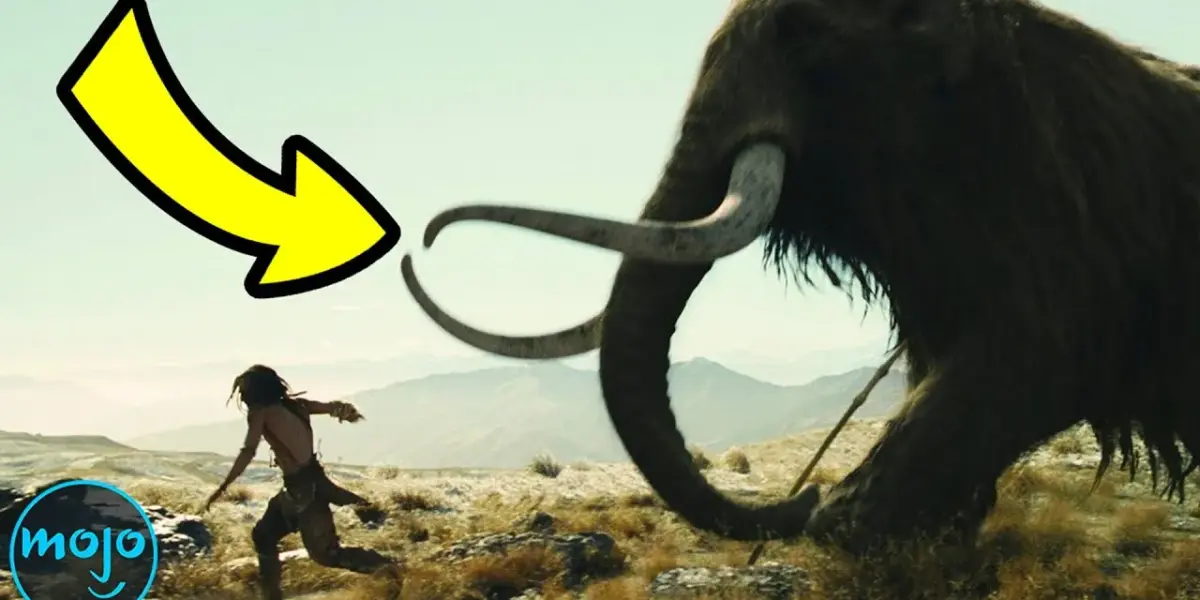
1. 10,000 BC (2008)
The film 10,000 BC takes audiences on a prehistoric adventure. While it starts with some realistic zoology and anthropology, it quickly goes off the rails.
The story culminates with the heroes discovering an urbanized Egypt, which is incorrectly blended with Mesopotamian civilization. This is a historical inaccuracy of over 7,000 years. The movie uses this timeline discrepancy to create a spectacular but nonsensical ending, making its title and historical details highly misleading.
Source: 10 Times Films Sacrificed Truth for Drama (YouTube)

Related Articles


Movies That Prove One Room Is Enough
Watch Mojo's latest list reveals the top 20 movies that prove a single location can be enough to deliver gripping stories. From confined cars to tense jury rooms, these films masterfully use their settings to build suspense and explore complex characters.


Movie Goodbyes That Will Make You Weep
A new countdown reveals the 20 most emotional goodbye scenes in movie history, from tragic romances like 'Edward Scissorhands' to epic farewells in 'Gone with the Wind'. Get ready for tears as iconic moments from 'Guardians of the Galaxy Vol. 3', 'Toy Story 3', and 'Casablanca' are revisited.


Horror Remakes That Eclipse Originals
Some horror remakes don't just retell a story; they redefine it. This list explores ten horror movie remakes that delivered a scarier, more disturbing experience than their original counterparts. From chilling new takes on iconic villains to updated atmospheres and intense pacing, these films prove that sometimes, a second take is even better.