US-Iran Ceasefire Extension Fuels Tensions Amid Strait of Hormuz Standoff
The U.S. has extended a ceasefire with Iran indefinitely, a move met with skepticism by Tehran, which views it as a tactic to prepare for an attack. Tensions remain high in the Strait of Hormuz, with both nations enforcing blockades and seizing vessels. Experts suggest the U.S. decision is driven by domestic pressure, while subtle shifts in positions hint at a potential, albeit private, preference for diplomacy.

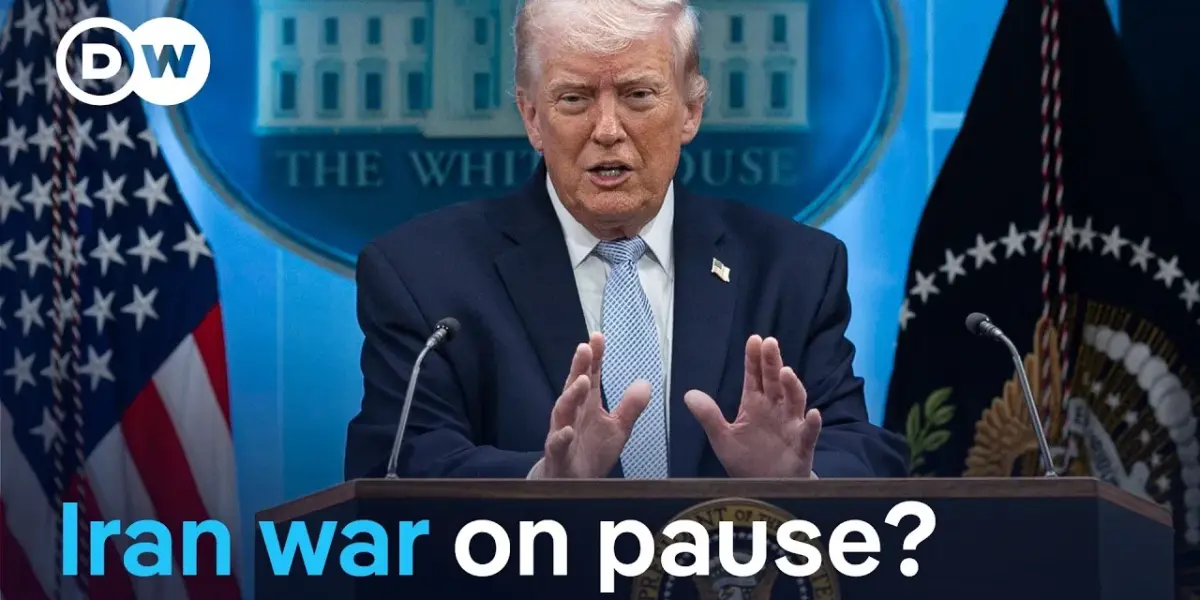
Fragile Peace Talks Follow Ceasefire Extension
U.S. President Donald Trump has extended a ceasefire with Iran indefinitely, following stalled peace talks in Pakistan. However, Iranian officials have dismissed the move, calling it a tactic to gain time before a potential surprise attack. Tensions remain extremely high in the Strait of Hormuz, where both the U.S. and Iran continue to enforce blockades and have seized vessels.
Strait of Hormuz Blockades Escalate Conflict
Ships are currently stuck near the Strait of Hormuz as Iran and the U.S. maintain blockades at both ends of this vital shipping lane. The Iranian Revolutionary Guard announced it had seized at least two ships attempting to pass through the strait. This action follows Iran’s recent display of military strength, including a parade of missiles in Tehran, as the regime refused to commit to a second round of peace talks with the U.S. in Pakistan.
Trump’s Ceasefire Extension and Iran’s Skepticism
President Trump announced the ceasefire extension on social media at Pakistan’s request. He stated that the U.S. military would continue the blockade and remain ready, extending the ceasefire until Iran submitted a proposal and discussions concluded.
Despite this, there are few signs that Iranian negotiators are prepared to meet the U.S. team again in Pakistan. An Iranian government official called the extension a ploy by the U.S. to prepare for a surprise attack.
Expert Analysis: Domestic Pressure Drives U.S. Policy Shift
Fio Kashani Set, a professor of history at the University of Pennsylvania, suggested that President Trump’s decision to extend the ceasefire stems from domestic pressure. She noted the unpopularity of the conflict and the growing economic strain on both the U.S. and the world due to the standoff in the Persian Gulf. Professor Kashani Set believes that despite the lack of easy solutions, the administration is facing a difficult reality.
“I think that President Trump has explored a series of venues and tactics in order to find a way to either mitigate the conflict, uh, bring it to some kind of a resolution and none of them seems to have worked effectively.”
Fio Kashani Set, Professor of History, University of Pennsylvania
Shifting Positions and the Hope for Diplomacy
Despite the public posturing, Professor Kashani Set sees subtle shifts in both countries’ positions. She pointed to a more subdued speech by Iran’s delegation head, Mohammad Bagher Ghalibaf, domestically, acknowledging Iran’s surprisingly strong defense but also its military weakness compared to the U.S. Similarly, the war has not been the swift victory some in the Trump administration had anticipated. Professor Kashani Set believes that privately, elements within both administrations recognize that diplomacy will ultimately be necessary to resolve the conflict.
Confusion Surrounds Ceasefire Terms
Pajo Ojelik, a senior research fellow for Middle East Security at the Royal United Services Institute, noted that the White House later seemed to walk back the indefinite nature of the ceasefire. Reports suggest President Trump expects Iran to present a unified position within three to five days.
This has created confusion about the terms and expectations for Iran during this period. Ojelik highlighted that the U.S. naval blockade continues alongside Trump’s declaration, and it remains unclear what Iran is expected to deliver before any potential talks.
Internal Divisions and Power Dynamics
The constant postponement of deadlines by President Trump has created significant confusion, according to Ojelik. She observes signaling from both sides, with Iran also appearing to have internal disagreements on its negotiating stance.
While bargaining tactics are evident, the specific preconditions President Trump might have set for U.S. negotiators to travel to Islamabad are not yet clear. Iran’s leadership has stated that lifting the U.S. blockade of its ports is a prerequisite for returning to talks.
Who is in Charge in Tehran?
Ojelik addressed the question of leadership in Tehran, suggesting that while divisions exist, it’s not necessarily a sign of fragmentation. Iran appears focused on protecting its national interests and red lines. The impact of the recent conflict and potential leadership strikes may have affected its ability to present a unified message.
The Supreme Leader has not yet publicly commented, while the IRGC, an already powerful force, seems to be playing an even larger role. The civilian diplomatic team, led by the parliamentary speaker and foreign minister, appears more open to accommodation and returning to talks with Washington, highlighting a key area of divergence.
Strait of Hormuz: The War’s Deciding Theater?
The Strait of Hormuz has become a central battleground, with Iran effectively using its geography to block non-friendly vessels. The U.S. responded with a blockade of Iranian ports, which appears to be working.
Escalation and volatility have increased in the area, making Hormuz crucial to how the conflict will conclude, potentially leading to a stalemate. Negotiations are heavily focused on unlocking the Strait of Hormuz.
Israel’s Role and Future Prospects
Israel, a key player in the region, has been sidelined from President Trump’s recent decisions regarding talks with Iran. Israeli officials have expressed skepticism about the effectiveness of the current policy.
With multiple fragile ceasefires across the Middle East, including in Lebanon and Gaza, Israel maintains its own security priorities. While the U.S. currently seems hesitant to resume military strikes, the wide gap between U.S. and Iranian positions means the military option cannot be entirely ruled out.
Source: US–Iran Standoff: Why the Ceasefire Is Fragile | DW News (YouTube)

Related Articles
U.S.-Iran Talks Hinge on Verification, Not Trust, Expert Says
Negotiations between the U.S. and Iran are complicated by a significant trust deficit, with experts emphasizing the importance of verification over mutual trust. Both nations are reportedly seeking an exit from current tensions, but differing timelines and internal divisions, particularly within Iran, complicate potential agreements. The focus appears to have shifted from initial U.S. goals to practical issues like opening trade routes, while the fate of American hostages remains a concern.

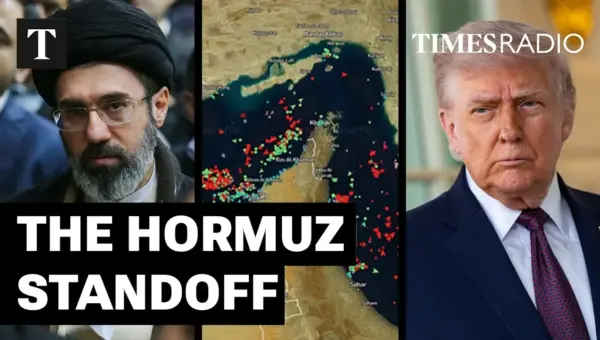
Strait of Hormuz: US and Iran Both Hold Key to Open Waters
The Strait of Hormuz, a vital global oil route, is effectively controlled by both the U.S. and Iran, requiring mutual agreement for open passage. Diplomatic efforts are stalled amidst escalating tensions, with both nations asserting control through actions like blockades and vessel seizures. Experts predict a negotiated resolution within weeks, though ensuring safe passage will remain a challenge.


Karoline Levit Dodges Reality on Iran and Election Woes
Karoline Levit's public statements on Iran's actions and election outcomes appear to diverge from factual reporting, creating confusion. The analysis explores how these narratives clash with reality and the implications for public trust and democratic discourse.