Detective’s Fatigue Leads to Fatal Courtroom Accident
A detective's exhaustion led to a fatal accident in a South African courtroom when he accidentally discharged a shotgun. In a separate tragedy, an athlete's overconfidence and an unusual sunscreen caused him to die from heatstroke during the 1912 Olympic marathon.

Detective’s Fatigue Leads to Fatal Courtroom Accident
On the morning of November 18th, 2019, Detective Muzi McKezy, a 54-year-old investigator, stood in line outside a courthouse in Ekurhuleni, South Africa. He was preparing to present evidence in a violent robbery case that had occurred nearly six years earlier.
The robbery involved armed men who brutally attacked a couple, stealing valuables before fleeing. McKezy and his team had since apprehended the suspects and recovered some of the stolen items.
The trial had been a long and difficult process, marked by numerous delays and complications. This lengthy timeline meant that some evidence, including the item McKezy was carrying, had been temporarily returned to the victims for their use.
The extended duration of the case had taken a significant toll on McKezy, who was nearing retirement and juggling multiple active investigations and the mentoring of junior detectives. Despite his exhaustion, McKezy was determined to see the case through to protect the public from the violent offenders.
After passing through security, McKezy entered the crowded courtroom. He took his seat at the prosecution table, placing the evidence in his lap.
He exchanged a brief, friendly wave with prosecutor Adelaide Ferrerow Watt, a colleague he respected. The courtroom appeared calm, with no immediate signs of trouble, and McKezy hoped the trial would proceed smoothly.
As the trial began and Ms. Ferrerow Watt started her opening statement, McKezy felt an overwhelming wave of exhaustion. The heat in the room and his fatigue caused his eyelids to grow heavy.
He soon drifted off to sleep, his head slumping to the side. He slept for only a few minutes before a sudden, loud scraping sound jolted him awake.
The noise was the sound of chairs being moved as people began to rise for a court recess. Startled, McKezy jolted upright, accidentally dropping the evidence onto the floor.
As he scrambled to retrieve it, a deafening bang echoed through the courtroom. He then heard a scream from his right and looked to see Adelaide Ferrerow Watt on the floor, clutching her hip, which was bleeding profusely.
McKezy’s immediate thought was that the criminals’ associates had stormed the courthouse. He looked around for attackers but saw only chaos: people fleeing and others rushing to help Ms. Ferrerow Watt.
There were no gunmen or perpetrators in sight. He realized that the loud bang must have been a gunshot or an explosion.
Confused and still disoriented from sleep, McKezy understood that the absence of an attacker could only mean one thing. The evidence he had dropped was a shotgun, which had not been re-examined for safety due to the long delay in the trial.
As he had instinctively reached to pick it up, he had accidentally pulled the trigger. The shotgun discharged, striking Ms. Ferrerow Watt and severing an artery, which proved fatal.
Muzi McKezy pleaded guilty to culpable homicide and negligence. He received a six-year prison sentence, which was suspended. The incident highlights the critical importance of proper evidence handling and the devastating consequences that can arise from even momentary lapses in attention, especially in high-stakes legal proceedings.
Athlete’s Overconfidence Led to Olympic Tragedy
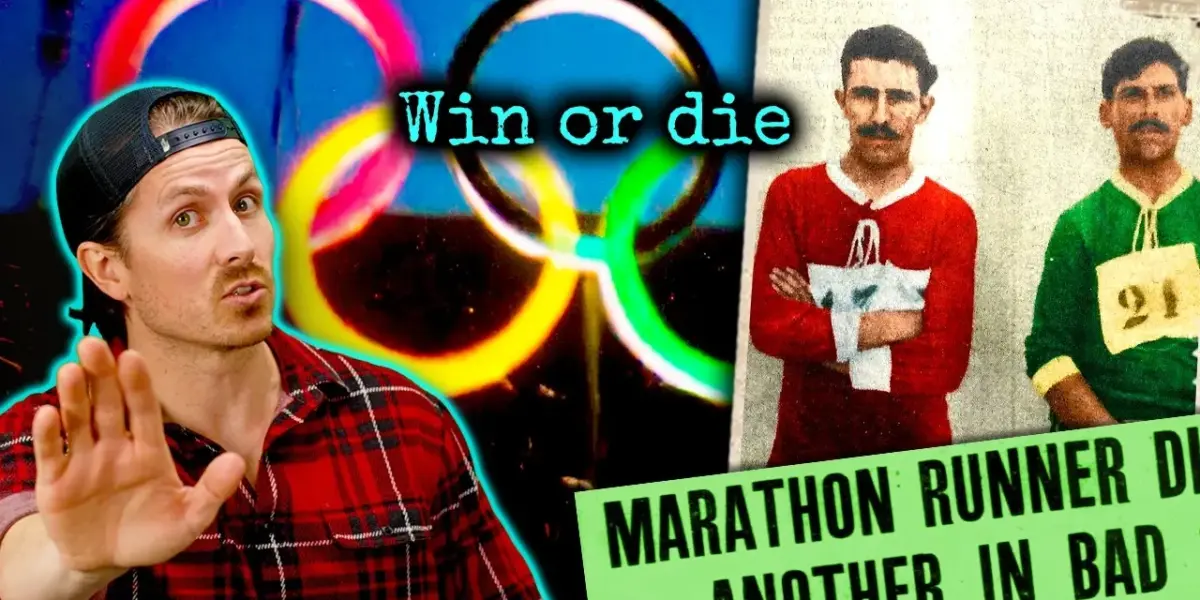
On July 14th, 1912, 21-year-old Portuguese athlete Francisco Lazaro prepared for the Olympic marathon in Stockholm, Sweden. This event marked Portugal’s first-ever participation in the Olympic Games, and Lazaro felt immense pressure and confidence as one of the few Portuguese athletes. He believed he had the best chance of winning a medal for his country.
Lazaro was an elite runner, having already won three major marathons in Portugal. He had meticulously prepared for the Olympics, training for months, undergoing medical exams, and carefully planning his nutrition and gear. He saw the predicted hot weather not as a hindrance, but as an advantage, as he was accustomed to warmer climates than Sweden.
He dressed in specific, carefully chosen clothing and ate a light, balanced meal. As he left his hotel, he was confident in his preparation and his ability to perform well, even in the anticipated heat. He was ready to compete on the world stage and make history for Portugal.
Arriving at Stockholm’s stadium around 1:45 p.m., Lazaro joined 67 other competitors. The temperature in the shade was already 90 degrees Fahrenheit, creating a sweltering atmosphere. While other runners appeared flushed and visibly stressed by the heat, Lazaro felt unfazed and remarkably composed, not even sweating.
Standing at the starting line under the intense sun, Lazaro felt the roar of the thousands of spectators. He took a moment to appreciate the significance of the occasion, certain that his name would soon be known worldwide. He had even confidently told a nearby reporter, “I win or I die.”
As the starting gun fired, Lazaro and the other runners surged forward. He was pushed back into the middle of the pack, initially surprised by the fast pace. However, he remained calm, relying on his extensive knowledge of the course and his belief that his endurance would prevail in the heat, unlike his competitors who were less accustomed to such conditions.
For the first hour and a half, Lazaro maintained a steady pace at the back of the pack, conserving his energy. He observed other runners struggling, some stopping altogether, while he continued to move past them. He felt he was running the race of his life, exactly as his training had prepared him.
Around the 19-mile mark, however, Lazaro’s condition drastically changed. His legs felt heavy, and his vision began to blur.
He tried to convince himself it was normal late-race fatigue, a common struggle around the 20-mile point of a marathon. He pushed forward, motivated by the thought of the cheering crowds and the potential victory.
Shortly after, his legs gave out completely, and he collapsed to the ground, his body convulsing. He was rushed to a local hospital, where doctors noted his severe symptoms, including delirium and a dangerously high temperature of 106.7°F. Despite immediate treatment with water and ice, Lazaro’s condition worsened overnight.
The next morning, Francisco Lazaro died. The attending physician, puzzled by the severity of Lazaro’s heatstroke compared to other runners, ordered further tests. The results revealed the cause of his tragic demise.
Lazaro’s meticulous preparation had included applying a thick layer of a substance called ‘sewit,’ an animal fat often used for skincare, as a powerful sunscreen. While he believed it would protect him from the sun, the thick substance clogged his pores, preventing his body from sweating and cooling itself down. His body essentially overheated, leading to fatal organ failure.
Over 20,000 people attended a memorial service for Lazaro. Though he did not achieve the fame he sought through victory, his name remains a part of Portuguese culture, used to describe someone who looks unwell or bedraggled.
Source: His confidence became the death of him (YouTube)

Related Articles


Man Kills Himself with Chainsaw in Protest
David File, the last tenant in a decaying apartment complex, protested his eviction by rigging a chainsaw trap. Police discovered his severed head after the device activated upon their forced entry, a final desperate act against losing his home.

True Crime’s Darkest Secrets Revealed
Explore the chilling realities of true crime with shocking facts about notorious serial killers like the DC Snipers, Hillside Stranglers, and Ted Bundy. Uncover unsolved mysteries and the disturbing methods that made these criminals terrifying.


Blood, Lies, and a Missing Man: The Zachariah Anderson Case
Rosalio Gutierrez Jr. vanished from his Kenosha apartment, leaving behind a scene of brutal violence. Suspicion quickly turned to his girlfriend's ex-boyfriend, Zachariah Anderson, whose history of obsession and stalking cast a dark shadow over the investigation. The case culminated in a trial marked by conflicting testimonies and a chilling discovery.