Ex-Defense Secretary Slams ‘Bizarre’ Inaction on UK Military Spending
Former Defense Secretary Penny Mordaunt has sharply criticized the government's perceived inaction on defense spending, calling it "bizarre" and "corrosive complacency." Echoing warnings from Lord George Robertson, she argues that Britain's national security is at risk due to a failure to prioritize military investment over welfare. Mordaunt highlights a disconnect between public concern and political will, urging leaders to confront escalating global threats.

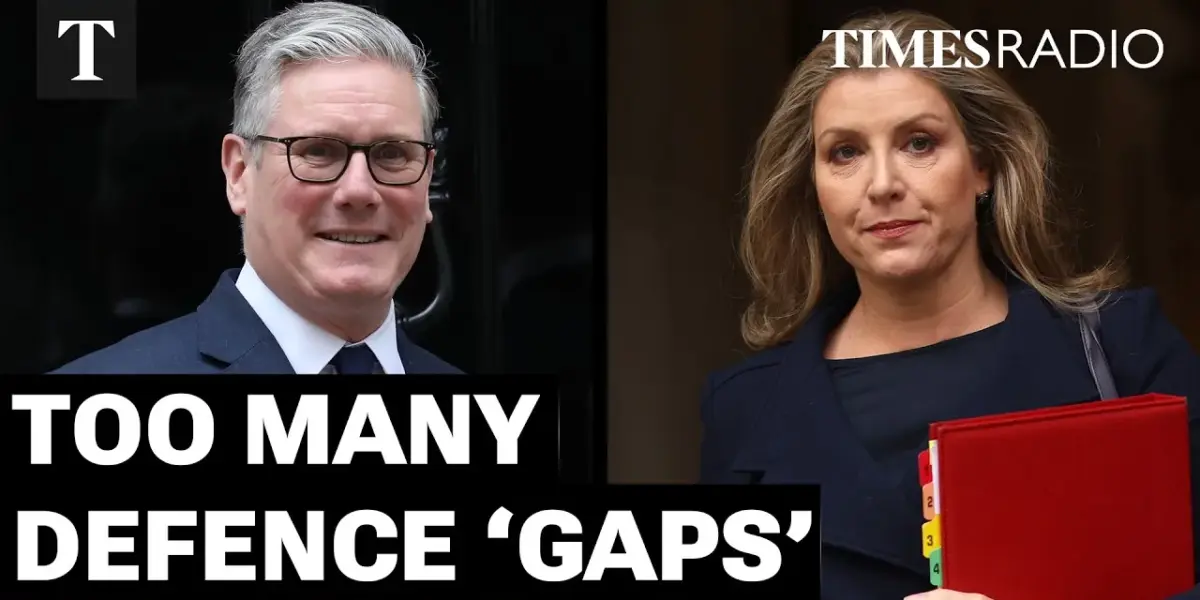
Former Minister Calls for Urgent Action on Defense Budget
Britain’s national security is in peril due to a “bizarre” lack of action on defense spending, according to former Defense Secretary Penny Mordaunt. Speaking recently, Mordaunt echoed strong warnings from Lord George Robertson, a former Labour Defense Secretary and NATO Secretary General, who described the government’s approach as “corrosive complacency.” Robertson stated that the country cannot defend itself with an ever-expanding welfare budget, arguing that defense investment must be prioritized, even if it means cuts elsewhere.
“Shock Therapy” Needed, Says Defense Expert
Lord Robertson, a respected figure in British defense policy, is using his current public remarks to urge the government into action. He authored Britain’s last Strategic Defense Review and has seen the security situation worsen since then, especially with the war in Ukraine. Robertson believes that the current government, and specifically its leader, Keir Starmer, must confront the growing threats. However, there’s a concern that these warnings might be ignored, leading to continued delays in crucial defense planning and investment.
Public Support Outpaces Political Will
Penny Mordaunt highlighted that public opinion strongly favors increased defense spending, with polls showing people understand the urgent need for action. “The public… really understand we’ve got to do something and we’ve got a short space of time to do it in,” she said. This public sentiment stands in contrast to what Mordaunt described as “zero activity and zero reality coming out from Number 10.” She pointed out that the government has the rhetoric, but not the action, to match the perceived threats.
“Britain’s national security and safety is in peril. That is a direct warning.”
Treasury vs. Defense: A Clash of Priorities?
Mordaunt addressed accusations that Treasury officials, who may lack deep defense expertise, are hindering necessary spending. She clarified that while Treasury views on defense spending are often debated, the core issue is the Prime Minister’s failure to act. “The nation elected this Prime Minister. He has stood up and eyeballed the citizens of this country and also the president of the United States and said we need to spend more money on defense,” Mordaunt stated. “And he has not done that.” She added that beyond funding, there are outdated regulations that could be fixed without cost to help defense businesses.
The “Guns or Butter” Debate: Public Choice
When questioned about public willingness to sacrifice other services for defense, Mordaunt invoked the classic “guns or butter” argument. She believes the public now understands that without adequate defense, even essential goods like butter are at risk. “I think the public understand that if you don’t have guns, your butter is in jeopardy. And they can see that now,” she explained. She cited the impact of a single closed sea lane on global trade as an example of how vulnerable supply lines are. Recent research, the Defense Legitimacy and Investment Index, reportedly shows a majority of people want more defense money, with this priority now overtaking the NHS budget for protection.
Finding the Billions: Budgetary Challenges
Increasing defense spending significantly presents a major challenge. Suggestions range from a 50% increase, as proposed by some, to reaching NATO’s guideline of 3.5% of GDP. For the UK, with its current defense budget around £60.2 billion, reaching 3.5% would require an additional £36 billion. Mordaunt noted that past budget decisions, including efficiency savings, have paradoxically led to a falling budget. She emphasized that simply acquiring expensive equipment is not enough; funding is also needed for maintenance, spare parts, and operational readiness.
A Disconnect in Thinking About Modern Warfare
Mordaunt also identified a disconnect between the government’s understanding of defense and the reality faced by those in uniform. She gave the example of drones in Ukraine, which have a shelf life of only six months before countermeasures are developed. This rapid pace of technological change means that traditional, years-long procurement processes are outdated. “You are going to have to completely redo our entire defense industrial base so that you can design, commission, and update these weapons in real time,” she argued. This requires a modern industrial base and secure production facilities.
Strengthening Alliances and National Resilience
The conversation also touched upon the need for greater international cooperation, particularly with European allies, while maintaining strong ties with the United States. Mordaunt supports bolstering European defense capabilities independently but stressed the importance of not losing existing scientific and industrial partnerships. The goal, she stated, is for Britain to be as capable and resilient as possible, able to protect its interests without over-reliance on others. She also pointed out that while NATO has been effective, structures within the EU for defense have lagged.
The Welfare Budget Dilemma
A significant hurdle for increasing defense spending is the size of the welfare budget, which stands at approximately £333 billion compared to the defense budget of £60.2 billion. Convincing Labour MPs to support potential cuts to welfare to fund defense is a major political challenge for Keir Starmer. Mordaunt believes Starmer needs to present the stark reality of the global situation to his party and the public. She suggested that many MPs may not fully grasp the escalating threats, such as Russia’s increasing aggression and its potential impact on critical national infrastructure.
Urgent Need for Leadership
Mordaunt concluded by urging the Prime Minister to recognize the gravity of the situation. If he cannot secure the necessary defense funding due to political constraints within his party, she suggested he may not be capable of fulfilling the role of Prime Minister. “If he cannot do what is required to protect this nation because of how he is perceived in the House of Commons by his own side… then he is not capable of doing the job as prime minister and he needs to reflect on that,” she stated.
Source: Starmer’s Lack Of Initiative With Defence Spending Is ‘Bizzare’ | Penny Mordaunt (YouTube)

Related Articles


Trump’s Erratic Actions Spark New Fitness-to-Lead Debate
Concerns about Donald Trump's psychological fitness to lead have resurfaced following a series of erratic statements and actions, including threats against Iran and controversial social media posts. While defenders claim these are strategic maneuvers, critics worry about the potential dangers of such volatility, especially during times of international conflict. The debate has even led to discussions about the 25th Amendment, though its practical application remains unlikely.


UK Public Reaches Breaking Point Over Economy, Defense
Britons are increasingly frustrated by the UK's economic outlook, with the IMF predicting the lowest growth and highest inflation in the G7. This, combined with worries about national defense, has led to public pressure, as many feel they have already endured years of hardship and sacrifice, making further demands difficult to accept.


Royal Navy’s Weakness Becomes Global Joking Point
Britain's Royal Navy faces criticism for its depleted fleet, with breakdowns leading to public jokes and concerns about national security. A former NATO chief warns of "corrosive complacency" as defense funding lags behind strategic reviews. Experts suggest a shift towards cheaper, more effective weapon systems is needed to counter modern threats.