Stocks Show Volatility as Market Sentiment Shifts
The stock market is exhibiting increased volatility, with a growing emphasis on short-term trading strategies. This shift demands heightened risk management and strategic discipline from investors navigating these dynamic conditions.

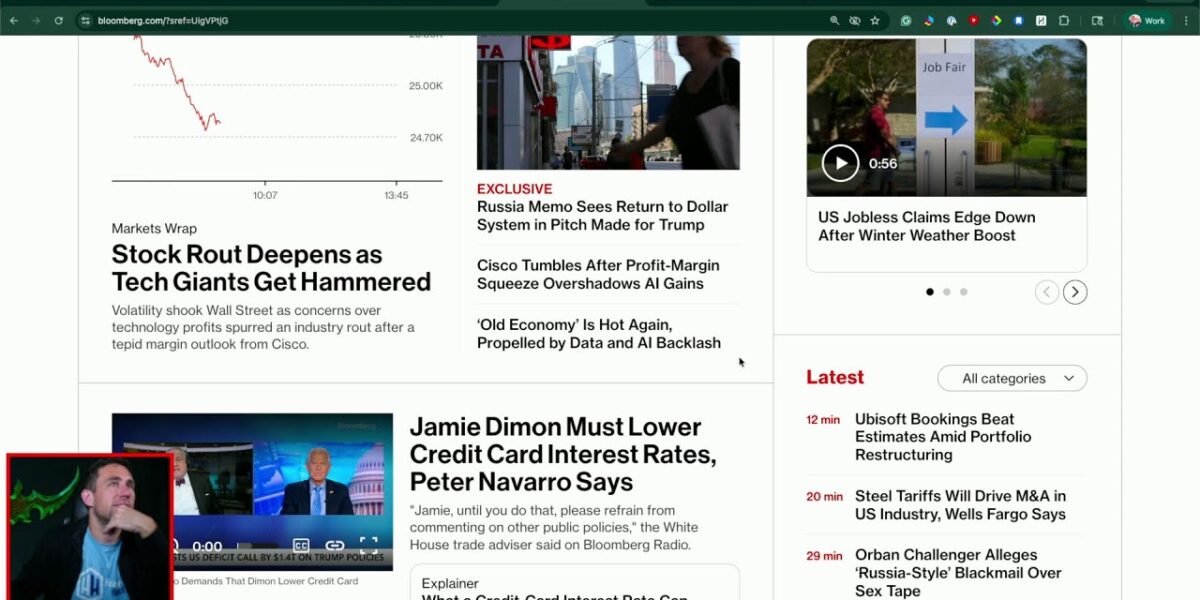
Market Faces Shifting Sands as Investor Sentiment Pivots
The stock market is experiencing a period of heightened volatility, characterized by rapid price swings and a noticeable shift in investor sentiment. While specific percentage movements and index levels were not detailed in the provided transcript, the broad theme points to a market environment where short-term trading dynamics are becoming increasingly prominent. This suggests a departure from longer-term, fundamental-driven investment strategies for some market participants, with a greater emphasis on capitalizing on immediate price action.
The Rise of ‘Flipping’ in Today’s Market
The concept of ‘flipping’ in the context of stock trading, as implied by the source material, refers to a strategy focused on short-term price movements. This involves buying and selling assets rapidly to profit from small price differences.
While not a new phenomenon, the emphasis on such strategies can intensify during periods of market uncertainty or when specific market conditions create opportunities for quick gains. This approach often requires a keen understanding of technical analysis, market momentum, and the ability to react swiftly to news and data releases.
Understanding Market Volatility
Market volatility refers to the degree of variation of a trading price series over time, usually measured by the standard deviation of logarithmic returns. High volatility indicates that prices are subject to large and frequent fluctuations, creating both opportunities and risks for investors. Factors contributing to volatility can include:
- Economic Data Releases: Inflation reports, employment figures, and interest rate decisions can significantly impact market sentiment.
- Geopolitical Events: International conflicts, political instability, and trade disputes can introduce uncertainty.
- Corporate Earnings: Unexpected results from major companies can cause sector-wide or market-wide price movements.
- Investor Sentiment: Fear and greed can drive market behavior, leading to overreactions to news and events.
Sectoral Performance and Index Movements
While the transcript did not provide specific data on which sectors or indices are leading or lagging, a volatile market often sees disparate performance across different areas of the economy. Technology stocks, often sensitive to interest rate changes and growth expectations, can experience sharp swings.
Conversely, defensive sectors like utilities or consumer staples might offer more stability, though they too can be affected by broader market trends. Major indices such as the S&P 500, Nasdaq Composite, and Dow Jones Industrial Average would reflect the aggregate performance of their constituent companies, with their movements indicating the overall health and direction of the market.
What Investors Should Know
The current market environment, characterized by a focus on short-term trading and potential volatility, presents several key considerations for investors:
- Risk Management is Paramount: Short-term trading strategies inherently carry higher risk. Investors must be prepared for rapid losses and have robust risk management plans in place, including stop-loss orders and position sizing.
- The Importance of Due Diligence: Even when focusing on short-term moves, understanding the underlying assets and market catalysts is crucial. This includes monitoring news, economic indicators, and company-specific developments.
- Long-Term vs. Short-Term Strategies: It is essential for investors to distinguish between their long-term investment goals and short-term trading opportunities. A strategy focused on ‘flipping’ may not align with a buy-and-hold approach for retirement planning, for example.
- Emotional Discipline: Volatile markets can trigger emotional responses. Sticking to a well-defined trading plan and avoiding impulsive decisions based on fear or greed is critical for success.
Short-Term Implications
In the short term, the emphasis on rapid trading suggests that market participants are looking to capitalize on immediate price inefficiencies or momentum. This could lead to increased trading volumes and more frequent price adjustments.
For active traders, this environment might offer more opportunities, but it also demands higher levels of skill, capital, and risk tolerance. For longer-term investors, short-term volatility can present buying opportunities if they believe in the long-term prospects of an asset that has been temporarily oversold.
Long-Term Implications
The sustained focus on short-term trading could have broader implications. If a significant portion of market activity shifts towards speculative, short-term plays, it could potentially detach asset prices from their fundamental valuations. This can lead to market bubbles or increased susceptibility to sharp corrections.
However, it could also indicate a maturing market where sophisticated algorithms and high-frequency trading strategies are playing a more dominant role. For long-term investors, the key is to maintain focus on fundamental value and not be overly swayed by the noise of short-term price fluctuations. Diversification across asset classes and a long-term perspective remain crucial strategies for wealth creation and preservation.
Navigating the Current Landscape
The market’s current disposition, as suggested by the focus on rapid trading, highlights the dynamic nature of financial markets. While specific data points were absent, the underlying trend points towards an environment where agility and informed decision-making are paramount. Investors are advised to approach the market with a clear strategy, a strong understanding of risk, and a commitment to their long-term financial objectives, regardless of the prevailing short-term trading dynamics.
Source: Stocks Flipping (YouTube)

Related Articles


Markets Surge on Iran Deal Hopes, Netflix Falls
Stock markets surged on hopes of a de-escalation in Iran following President Trump's claims of a breakthrough deal. Meanwhile, Netflix shares dropped amid uncertainty over leadership changes and content concerns. Investors are closely watching economic indicators for signs of sustained growth.


Crypto Soars as Clarity Bill Nears Passage, Iran Deal Eases Tensions
The cryptocurrency market is experiencing a significant rally, with Bitcoin hitting $78,000, driven by progress on a U.S. crypto Clarity Bill and easing geopolitical tensions. Analysts predict further gains, especially for Ethereum, as institutional interest grows.


Iran Opens Key Oil Route, Stocks Jump Amid Ceasefire Hopes
Iran has reopened the Strait of Hormuz to commercial shipping, leading to a drop in oil prices and a rally in the stock market. This move comes as part of a fragile ceasefire agreement between Lebanon and Israel, with the U.S. heavily involved in brokering peace talks. The situation remains complex, with ongoing discussions about Iran's nuclear program and Hezbollah's future role.