Porsche’s Wireless Charging: No Longer a Gimmick
Porsche's new Cayenne Electric redefines electric car charging with its highly efficient wireless system. Achieving up to 92% efficiency and operating faster than some wired chargers, it offers unmatched convenience and performance.

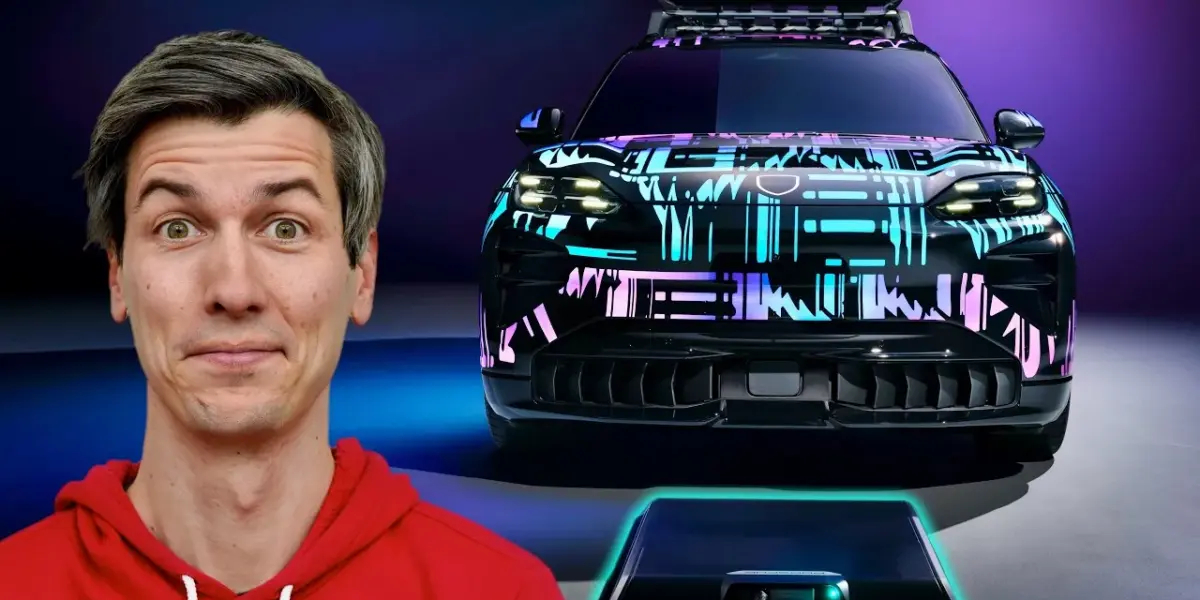
Porsche Cayenne Electric Solves Wireless Charging Woes
For years, the idea of wirelessly charging an electric car sounded cool but impractical. Most systems were slow, wasted a lot of energy, and cost too much.
But Porsche is changing that perception with its latest Cayenne Electric, proving that wireless charging can be efficient and convenient. This isn’t just a fancy feature; it’s a smart solution that might just convince you to ditch the charging cable.
Goodbye, Inefficiency; Hello, Convenience
The biggest hurdle for wireless charging has always been efficiency. Wired charging uses a direct connection, making it straightforward.
Wireless charging, however, relies on magnetic fields to transfer power. This process typically involves several energy conversions, leading to significant power loss, especially when the car isn’t perfectly positioned over the charging pad.
Early tests on smaller devices, like smartphones, showed wired connections were about 70% efficient, while wireless chargers struggled to reach 55%. This meant needing more electricity and taking longer to charge. For electric cars, where energy use is a major concern, this inefficiency seemed like a deal-breaker.
Porsche’s Engineering Breakthrough
Porsche engineers tackled this problem head-on. They found that by carefully designing the system and using high-frequency alternating current (85 kHz), they could achieve impressive efficiency levels with the Cayenne Electric.
The system converts grid power (AC) to direct current (DC), then to high-frequency AC for the charging pad, which creates a magnetic field. This field induces AC in the car’s receiver antenna, which is then converted back to DC to charge the battery.
While this sounds complex, Porsche claims the Cayenne Electric’s wireless charging can reach up to 92% efficiency when the car is perfectly aligned with the pad. Even if the car is slightly off, it still maintains an impressive 89% efficiency. This level meets and exceeds the industry standard’s minimum requirement of 85% efficiency.
Positioning is Key, But Forgiving
To get the best results, the car needs to be within a specific range of the charging pad. Porsche engineers allow for about 4 inches (100 mm) of side-to-side movement and 3 inches (75 mm) of front-to-back adjustment.
As long as the car is within these limits, you’ll get that high efficiency. Interestingly, Porsche states that factors like battery charge level or outside temperature have minimal impact on charging efficiency; it’s all about precise positioning.
Faster and Smarter Charging
In the U.S., the Cayenne Electric’s wireless charger operates at 11 kW, which is actually faster than its standard Level 2 wired charger at 9.6 kW. This means you can get a faster charge without plugging in. For context, older Level 1 wired charging is much slower at 1.44 kW, taking an incredibly long 125 hours for a full charge.
Even when considering the slight efficiency loss compared to wired Level 2 charging, the wireless system is competitive. While Level 2 wired charging might use around 112.5 kWh for a full charge, the wireless system uses about 121 kWh.
This small difference translates to minimal cost increases. At an average U.S. electricity rate of $0.173 per kWh, a full charge using wireless costs about $21, just $1.50 more than the wired Level 2 option.
Long-Term Value and Future Potential
Over the lifespan of a vehicle, say 200,000 miles, the total charging cost difference between wired and wireless Level 2 charging is around $1,000. For a luxury vehicle like a Porsche, this small increase is easily justified by the added convenience.
The initial cost for the wireless hardware is significant, with the ground pad costing about $6,500 and the vehicle receiver adding another $1,650. However, this setup offers a much better experience than the inefficient Level 1 wired charging.
The benefits extend beyond convenience. For future autonomous vehicles, wireless charging is a crucial technology.
Imagine a self-driving car dropping off passengers, then automatically finding and parking over a charging pad without human intervention. This seamless integration is where the true potential of wireless charging lies.
Safety and Compatibility
Porsche has also addressed safety concerns. The charging pad includes radar sensors to detect living beings, automatically shutting off if a person or animal gets too close. It can also detect metal objects, like a dropped wrench, and temperature sensors act as a backup safety measure.
The system is designed for outdoor use, with snow, dirt, or water having little impact on its performance. The charging pad is also durable enough to withstand being driven over.
While the system is paired to a specific vehicle, it uses a common ISO communication standard, meaning other EVs with compatible hardware could potentially use it in the future. This opens the door for broader adoption beyond just Porsche models.
Performance Beyond Charging
Beyond its innovative charging, the Porsche Cayenne Electric is a performance powerhouse. The Turbo Electric model boasts over 1,000 horsepower, achieving 0-60 mph in a blistering 2.4 seconds.
Its battery architecture supports incredibly fast charging, reaching up to 400 kW on 800V systems, allowing for 10-minute pit stops on road trips. The vehicle’s suspension and handling are exceptional, providing a comfortable yet engaging driving experience, even for a large SUV.
The Verdict
Porsche has successfully transformed wireless EV charging from a niche concept into a practical, efficient, and convenient reality. The Cayenne Electric’s system offers near-wired efficiency, added speed, and unparalleled ease of use.
While the initial cost is high, the long-term benefits and futuristic potential make it a compelling option for those seeking the cutting edge in electric vehicle technology. This system isn’t just a step forward; it’s a leap towards a more seamless electric future.
Source: Porsche Actually Solved Wireless Charging (YouTube)

Related Articles
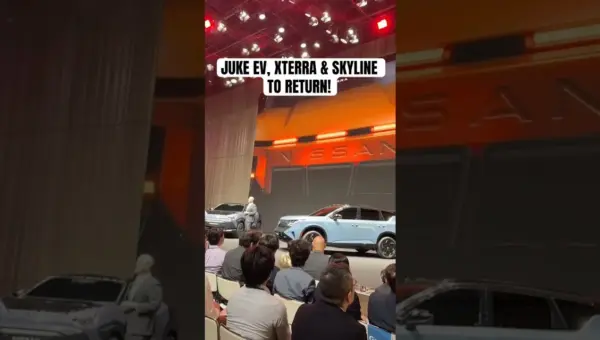
Nissan Unleashes Electric Juke, Rugged Xterra, and New Skyline GT-R
Nissan is electrifying its future with plans for an all-new electric Juke, a rugged Xterra SUV, and a reimagined Skyline GT-R. This signals a strong push into EVs and a renewed focus on performance and adventure.
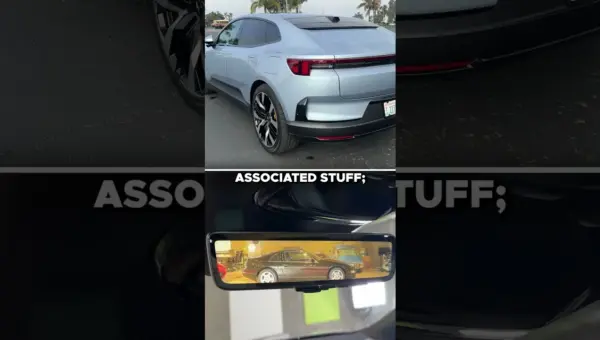
Polestar 4 Dares to Ditch the Rear Window for Space
The 2026 Polestar 4 makes a bold statement by ditching its rear window, opting for a camera-based system instead. This innovative move creates a more spacious and minimalist interior, appealing to buyers seeking cutting-edge design. The car targets those who want to stand out with its unique approach to electric SUV-coupe styling.
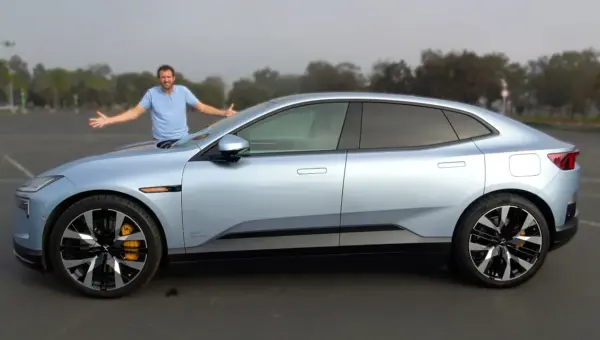
Polestar 4 Ditches Rear Window for Futuristic EV SUV
The 2026 Polestar 4 arrives as a bold electric SUV-coupe, ditching its rear window for a futuristic design and enhanced interior space. With impressive performance, a minimalist luxury cabin, and unique features like planetary-themed ambient lighting, it challenges traditional automotive norms. While its unconventional approach might not appeal to everyone, the Polestar 4 offers a compelling, albeit pricey, glimpse into the future of electric vehicles.