Humanity Will Dominate Solar System, Conquer Space’s Challenges
Humanity is poised to dominate the solar system, driven by economic expansion. Experts discuss the challenges of interplanetary living, favoring rotating space stations over low-gravity planets. The vastness of the universe and the realities of space observation are explored, alongside the crucial lessons learned from ISS missions and the significant hurdles yet to overcome for Mars colonization.

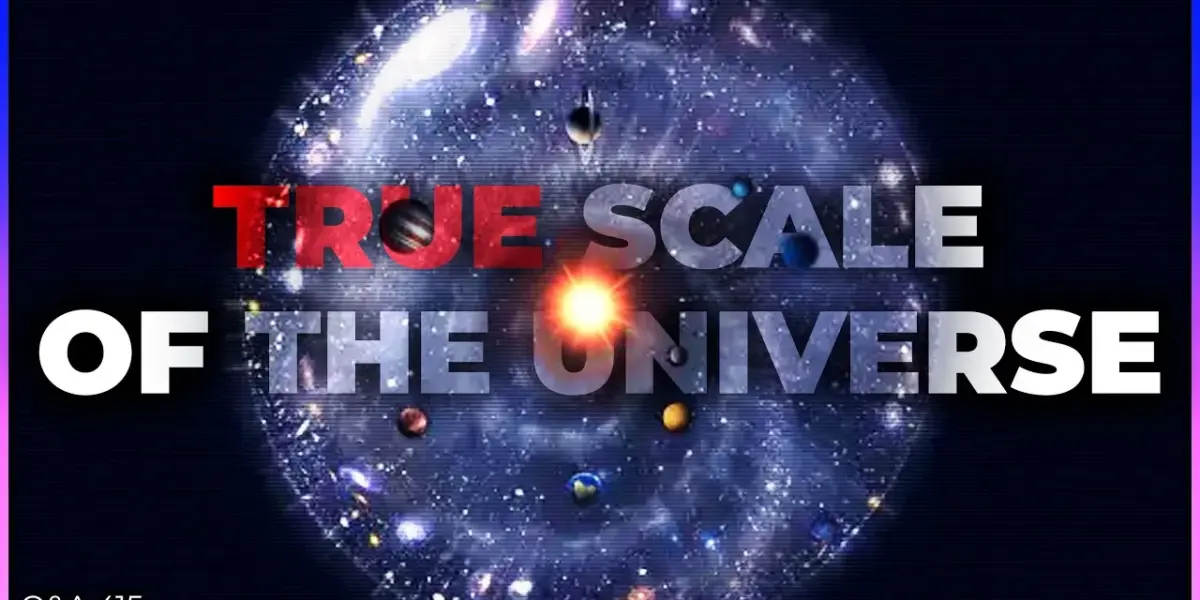
Humanity’s Future Lies Beyond Earth: Experts Predict Solar System Domination
Humanity is on a path to eventually inhabit and utilize the vast resources of our entire solar system. This ambitious vision, while seemingly like science fiction, is presented as an inevitable outcome of our species’ continuous economic growth. Experts suggest that within a few hundred years, our economic needs will outstrip Earth’s capacity, pushing us to expand into space.
This expansion isn’t just about survival; it’s about continued progress. The inner solar system, rich in metals and rock, and the outer solar system, abundant in ice and volatile compounds, both hold essential materials for this growth. The exact form this future takes is uncertain, but the drive to expand is seen as a powerful, ongoing force.
Rethinking Space Habitats: Gravity Wells vs. Rotating Habitats
While some envision living on planets like Mars or the Moon, significant health concerns remain. The long-term effects of lower gravity on the human body, including bone development and reproduction, are not fully understood. Living in environments with only 1/3 or 1/6th of Earth’s gravity could pose serious health risks.
A preferred alternative for long-term habitation involves large, rotating space stations, such as O’Neill cylinders. These structures would allow for artificial gravity, enabling humans to dial in the perfect gravitational pull for health and comfort. This approach could allow planets and moons to remain as protected natural reserves, visited rather than permanently settled.
The Universe’s Immense Scale: A Journey Through Time and Space
Grasping the true scale of the universe is a profound challenge, partly because looking into space means looking back in time. Light from the Moon takes a second to reach us, while light from the Sun takes eight minutes. Even our nearest galaxy, Andromeda, appears as it was 2.5 million years ago.
When we observe the cosmic microwave background radiation, we are seeing the universe as it was just 380,000 years after the Big Bang, a mere 13.8 billion years ago. The locations that emitted this ancient light are now about 46.5 billion light-years away, showcasing the universe’s incredible expansion since its early moments.
Seeing the Cosmos: Real Views vs. Photographic Wonders
The stunning images captured by telescopes like the James Webb Space Telescope show galaxies as they appeared hundreds of millions of years after the Big Bang. Similarly, Hubble images reveal cosmic objects as they were millions of years ago. These are snapshots of the past, not necessarily how these objects appear today.
Our eyes are not equipped to see the universe in the vibrant colors and detail often depicted in popular media. Nebulae, for instance, would appear as faint, diffuse clouds to the naked eye, even when viewed up close. These breathtaking images are the result of long-exposure photography, allowing cameras to collect enough light over minutes or hours to reveal hidden beauty.
ISS Missions: Essential Steps Toward Mars Exploration
Missions to the International Space Station (ISS) are crucial for understanding how to live and work in space, laying vital groundwork for future endeavors like Mars missions. While not direct simulations, ISS missions teach us invaluable lessons about launching, docking, living in weightlessness, and conducting science in challenging environments.
These missions help us develop technologies for recycling air and water, managing waste, and handling medical emergencies far from Earth. They also highlight the psychological challenges of long-duration confinement with a crew. Skills learned on the ISS are broadly applicable, serving as a necessary stepping stone for more ambitious journeys.
The Hurdles of Mars: Beyond Earth’s Embrace
Traveling to Mars presents a unique set of challenges far exceeding those of the ISS. The six-to-nine-month journey involves continuous exposure to radiation and the absence of gravity, with no immediate possibility of return in case of emergency. Medical issues would be critical, as astronauts would be entirely on their own.
Upon arrival, Mars offers 1/3 Earth’s gravity, but radiation exposure remains high. The Martian regolith, or soil, contains toxic perchlorates and gets into everything, requiring constant cleanup. All necessary food, water, and air must be brought along, or produced locally, a complex logistical undertaking.
Simulating Mars: Preparing for the Red Planet
To prepare for Mars, various analog missions are conducted, simulating the Martian environment on Earth. These simulations, like those run by the US and China, involve volunteers living in isolated habitats, donning spacesuits to exit, and experiencing communication delays to mimic Mars’ distance from Earth.
Projects like China’s Lunar Palace and the historic Biosphere 2 experiment in Arizona aim to test closed-loop life support systems. These experiments are vital for understanding how humans can sustain themselves by growing food, recycling resources, and managing a self-contained environment over extended periods. Such research is critical for serious long-term plans for lunar or Martian habitation.
The Future of Space Exploration: Serious Planning Needed
While the focus is often on powerful rockets for Mars missions, the true challenge lies in developing the technologies to keep humans alive there. Serious progress toward Mars colonization will be evident when robust, closed-loop life support systems are successfully operated for years on Earth, in orbit, and on the Moon.
Without this foundational work, sending large numbers of people to Mars would be incredibly dangerous, with high mortality rates. True readiness for Martian settlement hinges on mastering self-sustaining environments, ensuring humanity’s long-term survival and expansion into the cosmos.
Source: Understanding Universe's Scale, Mars Missions, Colonizing Gas Giant Moons | Q&A 415 (YouTube)

Related Articles

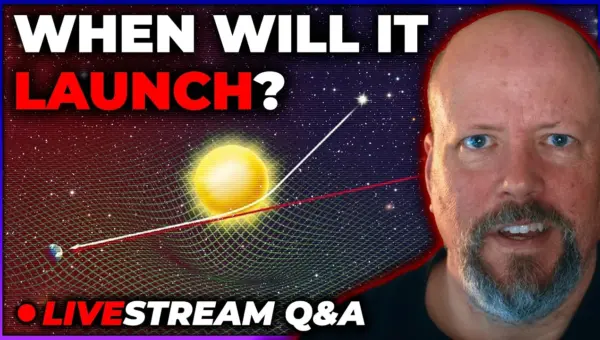
Solar Lens Mission: A 20-Year Journey to Cosmic Magnification
A proposed mission to use the Sun as a giant cosmic magnifying glass, known as the Solar Gravitational Lens, could revolutionize astronomy. Reaching this distant vantage point, however, requires overcoming significant propulsion challenges, with a journey expected to take around 20 years after launch, potentially in the 2070s or 2080s.

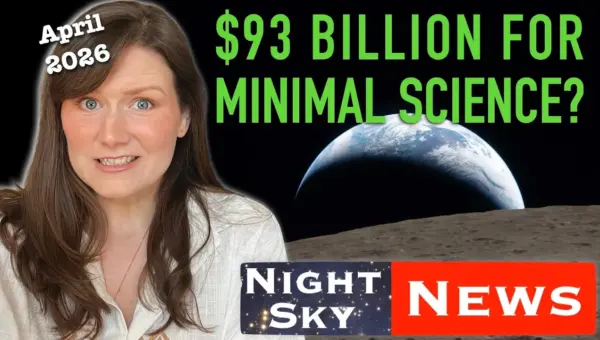
Artemis II Shatters Distance Records on Lunar Flyby
The Artemis II mission achieved a historic lunar flyby on April 1, 2026, sending four astronauts farther from Earth than ever before. Meanwhile, new images from JWST and Hubble offer deeper insights into Saturn's atmosphere, and the mysterious "super-puff" exoplanet Kepler 51D continues to baffle scientists.

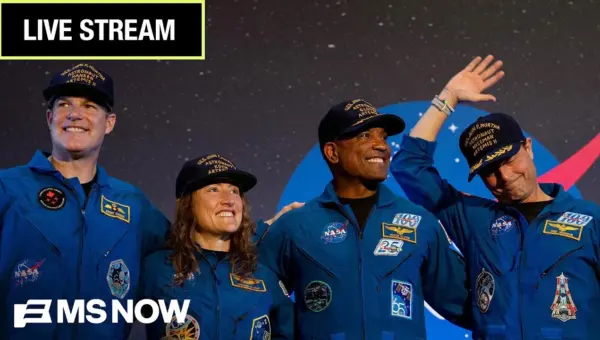
Artemis II Crew Shares Mission Highlights and Future Hopes
The Artemis II crew detailed their successful 10-day mission around the Moon during a press conference today. Astronauts shared awe-inspiring views and highlighted the exceptional performance of the Orion spacecraft. The mission's success provides vital data and momentum for future deep space exploration efforts.