PM Faces Fury Over Ambassador Vetting Scandal
Prime Minister Keir Starmer faces calls for resignation over the appointment of Peter Mandelson as UK ambassador to the US, who allegedly failed security vetting. Starmer expressed fury at not being informed, while Number 10 points fingers at the Foreign Office. The controversy highlights deep issues with government communication and security protocols.

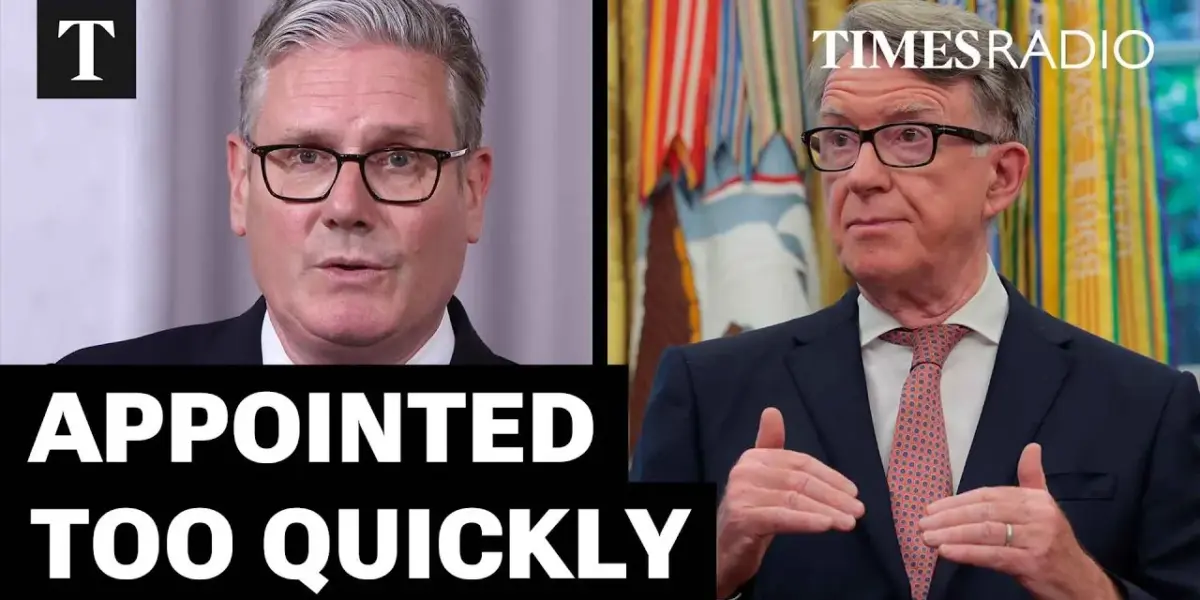
Prime Minister Under Fire After Ambassador Appointment Controversy
Prime Minister Keir Starmer is facing intense pressure and calls for his resignation following a major controversy surrounding the appointment of a UK ambassador to the US. The issue centers on Peter Mandelson, who was reportedly appointed despite failing a crucial security vetting process. This revelation has sparked outrage, with critics questioning the prime minister’s knowledge and competence in handling the situation.
Security Vetting Process Explained
The standard process for vetting individuals for sensitive government roles, especially ambassadorships, is called Developed Vetting (DV). This is an exhaustive and lengthy procedure, typically taking four to six months, and sometimes longer.
It involves in-depth interviews, background checks extending to family history, and examination of finances, lifestyle, and beliefs. The goal is to ensure the highest level of security clearance for individuals handling sensitive information.
“Usually this process takes four to six months or even longer. So it’s pretty unlikely I think that the DV process would have been complete in time for Mandelson to start work.”
The Mandelson Appointment: A Rush Job?
Peter Mandelson’s appointment as UK ambassador to the US appears to have bypassed the usual timeline for security checks. The appointment was announced in December and he took up his post in February, a period of just six to seven weeks.
This rapid timeline raises serious questions about whether the DV process could have been completed. Some suggest it might have been possible to appoint him pending the vetting outcome, but this detail has not been confirmed.
Starmer’s Fury and Parliament’s Reaction
Prime Minister Keir Starmer has expressed strong anger over not being informed about Mandelson’s failure to pass the security vetting. He stated, “I wasn’t told that he failed security vetting when I was telling Parliament that due process had been followed is unforgivable.” Starmer plans to address Parliament to provide a full account of the events. The leader of the opposition has called for Starmer’s resignation, arguing that the Prime Minister is either lying or unfit to govern due to incompetence.
Conflicting Accounts and Blame Game
Number 10, the Prime Minister’s office, claims that officials within the Foreign Office did not adequately inform them about Mandelson’s vetting issues. They are attempting to shift the focus onto the Foreign Office’s handling of the matter. However, the opposition argues that journalists were aware of Mandelson’s vetting problems as early as September of the previous year, suggesting Number 10 was indeed informed.
The Role of Senior Civil Servants
Sir Ollie Robbins, the Foreign Office’s top official at the time, has reportedly lost his job over the controversy. Some reports suggest that information from the vetting process is deliberately not passed to ministers by senior civil servants due to its highly personal nature. A civil servant friend of Robbins indicated that the Prime Minister might not grasp the mechanics of government, as sensitive vetting details are kept confidential.
However, others argue that the process is not a simple pass or fail, but rather a compilation of information leading to recommendations. The department then decides whether to proceed, considering if any risks are manageable.
“The issue that number 10 have got I think um is sort of a little bit more broad than just this one thing. It’s the fact that um you know over several months now the government has found itself embroiled in you know things not coming across the prime minister’s desk officials making decisions sort of this decision about Peter Mandlesson as a whole.”
Questions About Robbins’ Decision
A key question is whether Robbins, a career civil servant, felt political pressure to approve Mandelson’s appointment, given it was a political nomination by the Prime Minister. Some speculate that the decision to grant security clearance, despite the vetting outcome, might have involved political considerations or a deliberate withholding of information. Number 10 maintains they were unaware of the vetting failure and are still investigating the timeline of decisions.
Ministerial Code and Correcting the Record
The ministerial code requires ministers to correct the record in Parliament if they have inadvertently misled the House. Starmer has stated he will do this on Monday. Previously, he had told Parliament that all due process was followed.
The fact that Number 10 would not repeat this phrase suggests Parliament may have been misled. The Prime Minister’s office is still gathering facts and will continue its internal review over the weekend.
Expert Analysis on the Scandal
Former Foreign Office civil servant Lee Turner described the situation as a “mess” and a “cataclysm,” highlighting the unusual nature of appointing a non-diplomat to such a role. He emphasized the intrusive and time-consuming nature of Developed Vetting.
Turner suggested it would be obvious when the vetting process was complete and whether Mandelson passed or failed. He also questioned who saw the information about the failure and found it unlikely that officials would knowingly let someone proceed after failing vetting, especially without informing higher authorities.
Political Fallout and Future Steps
The controversy adds to a string of issues that have plagued the government, impacting its ability to communicate its successes. Labour MP Clive Efford suggested that while Starmer has high integrity, there might be incompetence within his team or a failure to provide him with timely information.
He stressed the importance of correcting the parliamentary record on Monday. Efford also voiced concerns about civil servants potentially attempting to withhold documents from Parliament, which had unanimously requested their release.
Looking Ahead
As Prime Minister Starmer prepares to address Parliament on Monday, the focus will be on the details he provides and whether they satisfy his critics. The ongoing internal investigations into who knew what and when will continue, with the government hoping to contain the damage. The outcome of Monday’s statement will be crucial in determining the immediate political future of the Prime Minister and the government’s credibility.
Source: The “Speed” Of Mandelson’s Appointment Was The Problem (YouTube)

Related Articles


UK Govt Faces Global Crises, Aid Cuts Spark Outcry
Former UK Foreign Secretary David Miliband warns that governing is tougher than ever amidst escalating global conflicts and significant humanitarian needs. He highlights the widening gap between aid requirements and global funding, citing IRC's "New World Disorder" report. Miliband also discusses the geopolitical implications of the Iran conflict and draws historical lessons for effective governance.

PM’s Ambassador Row Derails “Good Week” Momentum
Prime Minister Keir Starmer faces calls to resign after a scandal involving the vetting of Peter Mandelson for the US ambassador role. The controversy has derailed a week previously seen as a success for Starmer, raising questions about government transparency and the Prime Minister's credibility.


PM Faces ‘Incompetent’ Accusations in Mandelson Vetting Scandal
Prime Minister Rishi Sunak is facing accusations of incompetence and misleading Parliament following revelations that Peter Mandelson, appointed UK ambassador to Washington, failed security vetting. The scandal has led to the resignation of top civil servant Sir Oliver Robbins and sparked debate over government transparency and the appointment process.