US Blockades Strait of Hormuz, Shifting Global Oil Tensions
The United States has initiated a naval blockade of the Strait of Hormuz, aiming to cut off Iran's oil exports and pressure Tehran back to negotiations. This move escalates regional tensions and is expected to significantly impact global oil prices, particularly affecting major importers like China. The strategy involves naval assets positioned to intercept vessels, while Iran has responded with accusations of piracy and threats of regional escalation.


US Blockades Strait of Hormuz, Shifting Global Oil Tensions
In a significant escalation of Middle East tensions, the United States has initiated a naval blockade of the vital Strait of Hormuz. This move, ordered by President Trump, aims to counter Iran’s strategy of economic pressure by halting oil shipments from Iranian ports. The blockade took effect this morning, with U.S. warships positioned to prevent any vessels from entering or leaving Iranian waters. This action directly targets Iran’s primary oil customers, most notably China, and signals a new phase in the ongoing conflict.
Trump Administration’s Strategy
President Trump stated that the blockade is a necessary response to Iran’s alleged “economic blackmail” of the world. The administration believes this tactic will force Iran back to the negotiating table. “We can’t let a country blackmail or extort the world,” President Trump said, emphasizing his administration’s commitment to preventing Iran from acquiring nuclear weapons. This pressure tactic follows the failure of 21 hours of peace talks held in Pakistan over the weekend. Vice President J.D. Vance suggested that the Iranian negotiators could not finalize a deal without approval from their new supreme leader, indicating a potential for future negotiations, though the U.S. insists Iran must first meet its red lines on nuclear enrichment.
Iran’s Response and Global Market Impact
Iran has publicly denounced the U.S. blockade, labeling it an act of “piracy.” Tehran has also threatened to target other ports in the region, raising concerns about further regional instability and potential worsening of the global oil shortage. Despite these threats, President Trump expressed confidence that Iran is privately seeking peace and a deal. This optimism, coupled with the U.S. action, appears to have had a mixed effect on financial markets, with the S&P closing in the green today. However, the price of Brent crude oil remains elevated, settling just below $100 a barrel, significantly higher than the pre-conflict price of around $70. Average gasoline prices across the U.S. are also high, around $4.13 per gallon.
Expert Analysis on Economic Warfare
- Economic Pain as a Weapon: Analysts suggest this is a high-stakes test of wills, with both Iran and the U.S. using economic hardship as a primary tool. Iran’s chief negotiator warned of a return to high gas prices, while Iran itself may be prepared to endure severe economic pain for its population to resist.
- Global Oil Supply: The blockade could remove an additional 1.5 to 2 million barrels of oil per day from the global market. This, added to existing supply disruptions, could push oil prices much higher, with some anticipating prices could reach $175 per barrel.
- China’s Position: A significant portion of Iran’s oil exports, around 40%, goes to China. While China has substantial strategic oil reserves, it will likely need to draw them down or compete for limited global supplies. Analysts believe China will likely avoid directly challenging the U.S. blockade due to its larger economic interests in other Gulf nations and lack of military supremacy in the region.
Naval Operations and Historical Context
The U.S. Navy is employing multiple strategies to enforce the blockade. Guided missile destroyers have been moved into the Arabian Gulf to monitor and intercept vessels, supported by additional ships positioned outside the strait. Underwater drones are reportedly being used to detect and clear potential Iranian mines. This strategy echoes historical naval blockades, where the U.S. Navy has utilized various methods, including warning shots and boarding operations, to enforce maritime control. The effectiveness of Iran’s mine-laying capabilities remains unclear, but the U.S. is planning for the worst-case scenario.
Domestic Political Developments
Separately, two members of Congress announced their resignations: Democrat Eric Swalwell of California and Republican Tony Gonzales of Texas. Swalwell resigned amid accusations of sexual assault, which he denies but acknowledges past “mistakes in judgment.” His departure impacts the California gubernatorial race. Gonzales is retiring after admitting to an affair with a staffer who later died by suicide. These resignations highlight ongoing issues of misconduct in Washington and have led to discussions about the political fallout and potential shifts in congressional dynamics.
Global Impact: Why This Reshapes the World Order
The U.S. blockade of the Strait of Hormuz represents a direct confrontation with Iran’s ability to influence global energy markets. By seizing control of this critical chokepoint, the U.S. is attempting to fundamentally alter the balance of power in the region. This move could lead to significant economic repercussions worldwide, particularly for energy-dependent nations like China. The strategy of using economic pressure through naval blockade, rather than direct military intervention, signals a calculated approach to de-escalation while simultaneously applying maximum pressure. The success of this tactic will depend on the endurance of economic pain on both sides and the willingness of international actors, like China, to navigate the disrupted energy landscape. This situation underscores the interconnectedness of global energy security and geopolitical stability, with actions in the Strait of Hormuz having ripple effects far beyond the immediate region.
Source: Trump blockades Strait of Hormuz; congressional resignations | Vargas Reports Full Episode 4/13 (YouTube)

Related Articles


US Navy Blockades Hormuz, Oil Prices Spike Amid Iran Tensions
The US Navy has implemented a blockade of the Strait of Hormuz, causing oil prices to spike and international concern. This action occurs as two US Congressmen resign amid misconduct allegations. Meanwhile, a stepbrother is charged in a cruise ship murder, and a contractor with nuclear access goes missing.

IMF Warns: Global Growth Faces Major Setback
The International Monetary Fund (IMF) has significantly downgraded its global growth forecast for 2026, citing the ongoing conflict in Iran as a major shock. The IMF warns of potential widespread economic slowdown, renewed inflation, and even a global recession if the situation deteriorates.
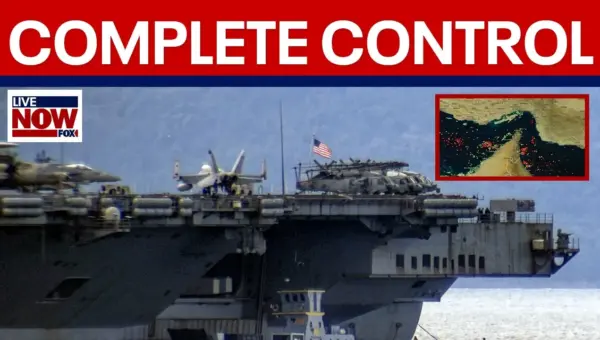
US Claims Maritime Dominance in Hormuz Strait Amid Iran Conflict
CENTCOM has declared "maritime superiority" in the Strait of Hormuz, implementing a blockade on Iranian ports. National security analyst Mark Chandler explained the US is targeting vessels connected to Iran while allowing other traffic. The US faces logistical challenges and potential threats from advanced missiles.