Ex-General: Push Unemployed Youth Into Military Service
Retired Major General Tim Cross warns of a serious defense funding crisis in Britain, blaming "corrosive complacency." He proposes enlisting unemployed youth into the military as an alternative to welfare, arguing the nation must prepare for a dangerous world.

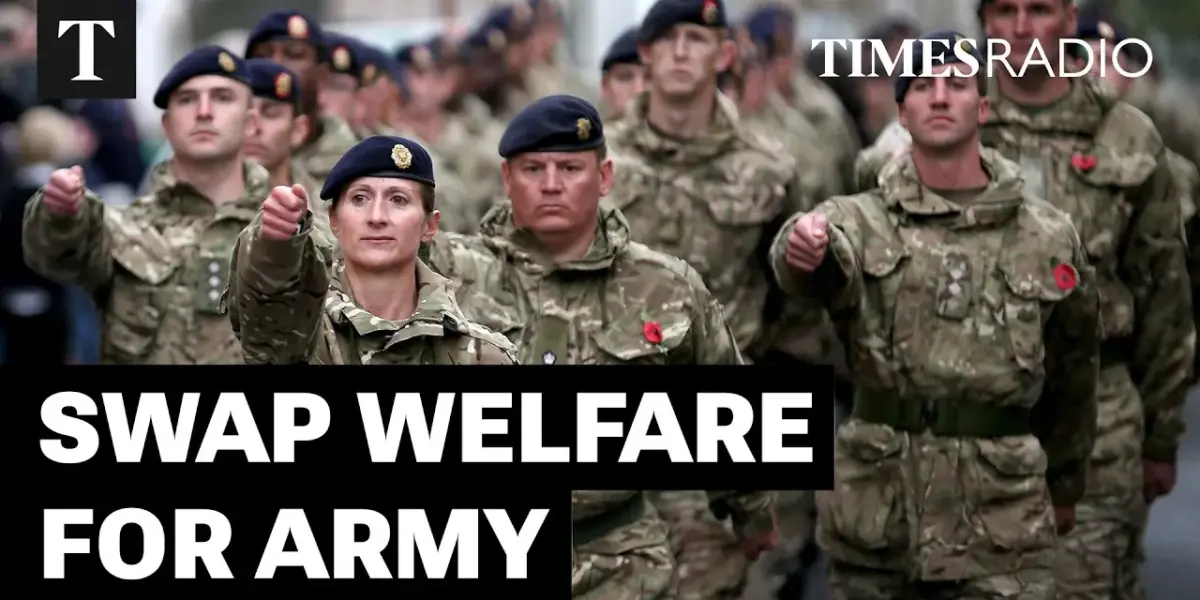
Ex-General Warns of Defense Funding Crisis, Proposes Military Service for Unemployed
Britain faces a serious threat due to declining military funding and a “corrosive complacency” among political leaders, according to retired Major General Tim Cross. He argues that the nation is unprepared for a dangerous world and suggests a radical solution: enlisting unemployed young people into the armed forces instead of providing welfare benefits.
Deepening Defense Shortfall
Lord Robertson, a former Labour defense minister, recently went public with his concerns about the state of Britain’s military spending. He stated that the country cannot defend itself with an ever-growing welfare budget. The Times newspaper reported that current proposals to increase defense spending by less than 10 billion pounds over four years fall far short of a reported 28 billion pound shortfall.
Major General Cross echoed these worries, calling the situation “very serious.” He noted that the government accepted recommendations from a strategic defense review last year but has not fully implemented them. “George Robinson has been speaking privately for the last few months about his concerns over this, and the fact that he’s gone public is a recognition of the seriousness of the situation,” Cross said. He described Robertson’s comment about “corrosive complacency” as “pretty hard-hitting.”
Decades of Cuts and Misplaced Assumptions
Cross emphasized that the current government is not solely to blame for the defense funding issues. He pointed to “decades of cuts” based on a “naive assumption” that the world was becoming universally peaceful and democratic after the Cold War. “The reality is that not is is not the case,” he stated, citing Russia, the Middle East, and Ukraine as examples of ongoing global instability.
He acknowledged that making choices about defense spending is difficult for any government. However, Cross expressed a sense that current leaders are “out of their depth” and have made decisions they later had to change. “The chancellor is in a mess, and we’re probably going to have to pay more for defense, and other things are going to have to suffer.
That’s just the reality,” he explained. “Every other generation has had to do it, and we’re good generations going to have to do it.”
Understanding the Numbers
The discussion touched on the complexity of defense budget figures. Major General Cross explained that statistics can be misleading.
For instance, the defense budget now includes the cost of nuclear submarines and personnel pensions, which weren’t always accounted for. This makes it difficult to accurately gauge spending on conventional defense capabilities needed for modern warfare.
He addressed the reported 28 billion pound shortfall and potential cuts, suggesting they might be part of broader efficiency drives across government departments. However, Cross stressed the urgent need to increase defense spending to about 3.5% of GDP “pretty quickly.” He dismissed the idea of waiting until the mid-2030s as unrealistic.
Tough Choices Ahead
Cross agreed that increasing defense spending means other areas will have to be cut. “You have to stop doing something if you’re going to spend more on defense,” he stated.
He also presented an alternative: if the government does not wish to engage as a major global power, it should publicly state so. However, he believes Britain has no choice given the current global threats.
Defense spending, he argued, acts as a deterrent. “It’s a deterrent to say to your potential enemies, look, we have the capability, so please do not do what it is you may be thinking about doing,” Cross explained. He mentioned threats like potential Russian actions in the Baltic States, underwater cables, and missile threats.
Rethinking National Service
The conversation shifted to how the public perceives the military and global threats. Major General Cross noted that his generation grew up with a clear understanding of war and military service, having lived through World War II. In contrast, his grandchildren, who have not experienced major conflict, find it harder to grasp these issues.
He highlighted a significant point: there are around 800,000 young people aged 18-25 in Britain who are not in work, education, or training. “We are short of soldiers, sailors, and airmen,” he observed. “What are we doing paying these youngsters welfare money when we could be saying to them, you’re going to join the military?”
Cross proposed a form of national service, not necessarily conscription in the old sense, but a system where unemployed youth could join the military. “If you’re not in a job, you’re not in training, you join a service,” he suggested. He acknowledged that the current military infrastructure might struggle to accommodate a large influx of young people, but argued that “we can do something and we can begin that process.” This, he believes, would also help educate the nation about the realities of the world.
Public Reaction and Alternative Views
Listeners reacted strongly to Major General Cross’s proposal. Some agreed with the idea of national service and cutting welfare, citing complacency and the need for a “war footing.” One listener suggested adopting the Finnish model of mandatory training.
Others offered different perspectives. One individual, aged 63, offered to serve in a non-manual role despite being told he was too old by the Royal Navy.
Another listener argued that the defense weakness is not the fault of those relying on welfare or food banks. Instead, they pointed to decisions like Brexit and the former Prime Minister Liz Truss’s budget as reasons for the funding shortfall.
Looking Ahead
The debate highlights a critical juncture for Britain’s defense policy. As global instability persists, the nation faces difficult decisions about resource allocation.
The proposal to link welfare with military service for unemployed youth, while controversial, reflects a growing concern about national security and the need for a more engaged citizenry. Future discussions will likely focus on finding a sustainable funding model for defense and redefining the relationship between citizens and the armed forces in an uncertain world.
Source: Push Unemployed To Military Instead Of Welfare Handouts | Maj Gen Tim Cross (YouTube)

Related Articles

Iran’s War Strategy Outlasts US Patience
Iran's strategy of prolonging conflict to outlast US patience is a key factor in current Middle East tensions. While President Trump seeks an end, Iran aims to inflict economic pain. This analysis explores the military warnings, political fallout, and economic vulnerabilities shaping the standoff.


Army Leaders Face Tough Questions on Budget and Readiness
Army Secretary Daniel J. Driscoll and General Christopher D. LaNeve faced sharp questions from the House Appropriations Subcommittee on Defense regarding the Army’s fiscal year 2025 budget. Lawmakers focused on funding for modernization, readiness challenges, and personnel retention. The leaders defended the budget request, highlighting investments in new technologies and efforts to maintain a ready fighting force amidst global instability.


Trump Threatens UK Trade Deal, Fuels Defense Spending Debate
Former U.S. President Donald Trump has threatened to revise the trade deal with the UK, drawing criticism for his unpredictable approach. Meanwhile, UK Chancellor Rachel Reeves has labeled the Iran conflict a mistake, citing economic instability and a lack of clear objectives. The nation also faces an intensifying debate over defense spending amid rising global tensions and a need for a clear investment strategy.