Miller’s Fox News Rant Undermines Trump’s Worldview
Stephen Miller's recent appearance on Fox News defending Trump's foreign policy, particularly regarding the Strait of Hormuz, has drawn criticism. His arguments about a "woke" international order and a "checkmate" move against Iran are contrasted with a view that such actions have weakened U.S. alliances and global standing.

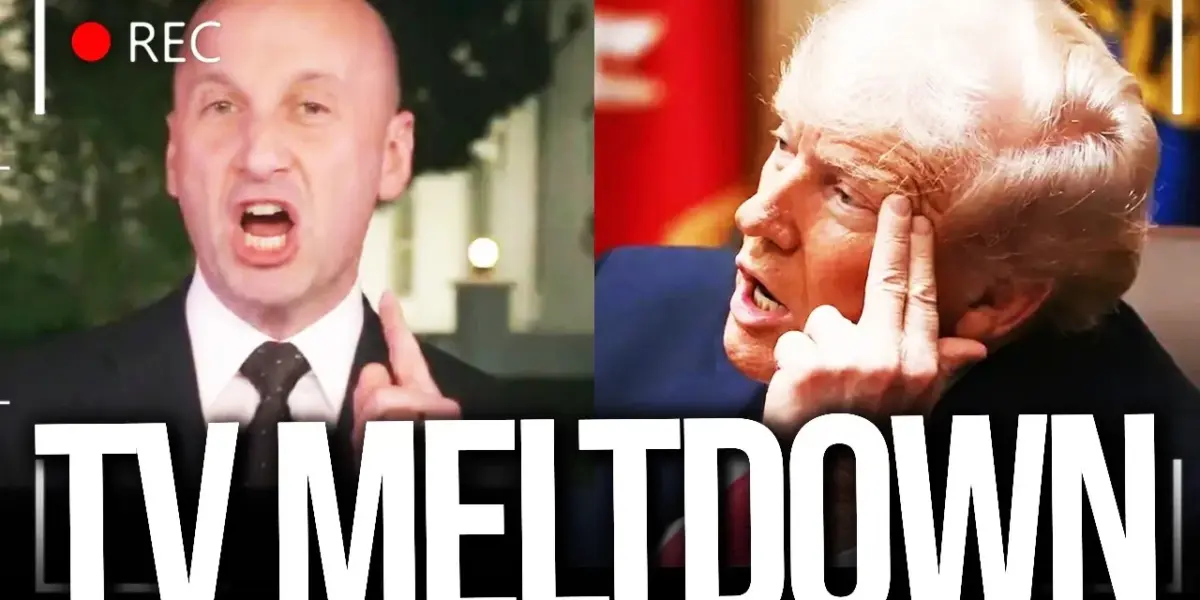
Miller’s Fox News Rant Undermines Trump’s Worldview
Stephen Miller, a key figure in the Trump administration, recently appeared on Fox News to defend the former president’s foreign policy. However, his arguments, particularly regarding the Strait of Hormuz and the post-World War II international order, seemed to falter under scrutiny. This analysis looks at Miller’s claims and contrasts them with a different perspective on global affairs.
The Hormuz Standoff: A Different Take
Miller, speaking on Jesse Watters’ show, presented a triumphant narrative about President Trump’s actions concerning the Strait of Hormuz. He suggested that Trump’s strategy was a brilliant geopolitical move that put Iran in a “checkmate” position.
According to Miller, Iran’s options were limited: either agree to a deal beneficial for the world or face economic isolation through a blockade. He claimed this strategy would lead to new energy routes and supply chains, making Iran a “footnote” in history.
However, this portrayal clashes with reports of the United States struggling to find allies willing to support the blockade. Instead of a decisive victory, it appeared the U.S. was scrambling to maintain freedom of navigation.
Critics pointed out that Iran continued to control the strait, even imposing tolls on ships. This situation, rather than weakening Iran, seemed to enrich it, as oil sanctions were lifted and new revenue streams opened up.
The idea that the U.S. Destroyed significant Iranian military assets was questioned. The transcript notes that Iran’s air force and navy were decades old, gifted by the U.S. In the past. The core issues, such as Iran’s nuclear program and its funding of regional proxies, remained unaddressed, and Iran’s leverage over the Strait of Hormuz persisted.
Attacking the ‘Woke’ World Order
A significant part of Miller’s argument involved attacking the international order established after World War II. He labeled this system, which promoted peace, global cooperation, and respect for national sovereignty, as “woke” and “politically correct.” Miller suggested this order had weakened America by sending jobs, wealth, and industry overseas, allowing other countries to compete unfairly.
He argued that President Trump’s policies, using trade, energy, manufacturing, and military power, were designed to restore American dominance for the next century. This perspective frames international relations as a zero-sum game where one nation’s gain is another’s loss. Miller implied that a more assertive, nationalistic approach was necessary to counter the perceived decline caused by globalist policies.
Challenging the ‘Revisionist’ Narrative
This view directly contrasts with the idea of “status quo” versus “revisionist” countries. From this viewpoint, countries like the United States historically benefited from the existing world order, which fostered trade, alliances like NATO, and relative global peace.
This stability allowed for economic growth and technological advancement. The argument is that by acting as a “revisionist” power, aiming to radically change the global structure, Trump actually destabilized the system and weakened America’s position.
The transcript suggests that this disruption has led to allies like Canada turning more towards China, and the European Union distancing itself from the U.S. Mexico also reportedly became less willing to trade. This outcome contradicts Miller’s claim of renewed American strength, instead pointing to damaged alliances and a less secure global standing.
A Question of Values and Leadership
The discussion also touched upon the nature of political discourse and leadership. Miller’s rhetoric, described as increasingly “vitriolic,” was contrasted with a yearning for “moral leadership.” The speaker expressed a desire for an administration characterized by “good, upstanding people,” referencing the Obama administration as an example of such leadership.
The transcript also highlights a critique of Miller’s handling of the Jeffrey Epstein case and his comments on Congressman Eric Swalwell. Miller’s approach to these sensitive issues was characterized as conspiratorial and dismissive of victims. This was seen as further evidence of a “disgusting and despicable” approach to politics, driven by personal attacks rather than substantive policy debates.
Why This Matters
Stephen Miller’s Fox News appearance highlights a fundamental debate about America’s role in the world. Is global engagement and cooperation a source of strength and prosperity, or a drain on national power?
Miller’s “America First” rhetoric, focused on challenging existing international structures, is presented as a path to renewed dominance. However, the counter-argument is that such actions can isolate the U.S., damage crucial alliances, and ultimately undermine the stability that benefits everyone, including America.
Implications and Future Outlook
The tension between Miller’s worldview and the perspective presented in the transcript reflects a significant division in American foreign policy thinking. If the U.S. Continues to prioritize unilateral action and transactional relationships over multilateral cooperation, it risks alienating allies and creating a more volatile global environment. The long-term consequences of such a strategy remain a subject of intense debate.
The future outlook suggests a continued struggle between isolationist and internationalist approaches. The effectiveness of “America First” policies in achieving lasting security and prosperity is being tested.
As global challenges like climate change, pandemics, and economic instability grow, the need for international cooperation becomes ever more apparent. Whether future administrations will lean towards rebuilding alliances and strengthening global institutions, or continue down a path of nationalistic assertion, will shape the geopolitical landscape for decades to come.
Historical Context
The post-World War II era saw the creation of international institutions like the United Nations, NATO, and global trade agreements. These were designed to prevent the kind of devastating conflicts that had plagued the first half of the 20th century. This “international order” fostered a period of relative peace and unprecedented economic growth for many nations, including the U.S. Miller’s critique, however, echoes historical arguments for protectionism and national sovereignty, suggesting a desire to roll back these post-war arrangements in favor of a more nationalistic agenda.
Source: Stephen Miller Accidentally Bombs Trump's Plan on TV (YouTube)

Related Articles

Speaker Johnson Cancels Votes Amidst GOP Turmoil
House Speaker Mike Johnson canceled votes amid internal GOP pressure, fueled by poor polling for Donald Trump and fears of electoral defeat. Democrats criticize the rebranding of a tax bill and question executive funding decisions, highlighting deep divisions within the Republican party.
UK Leader Challenges Trump on Iran War Decision
British Chancellor Rachel Reeves has criticized the US decision to end talks with Iran and enter into conflict, calling it a "folly" without a clear exit plan. Experts suggest countries should "call Trump's bluff," citing European examples of asserting independence amid global tensions and potential economic fallout.
Trump’s Desperate Bid for a Win Amidst Global Tensions
President Trump is seeking a decisive win amidst a public feeling of unease and a complex foreign policy challenge with Iran. The Strait of Hormuz standoff and China's role add significant global tension. Analysts debate perception versus reality, while the upcoming midterms loom.