Mandelson’s Putin Lobbying Sparks Judgment Concerns
Lord Mandelson is facing scrutiny for lobbying Russian President Vladimir Putin in 2017 on behalf of a Russian company, AFK Sistema. While his actions were not illegal, critics question his judgment given Russia's adversarial stance towards the UK at the time. Mandelson received significant financial compensation for his role, adding another layer to the controversy.

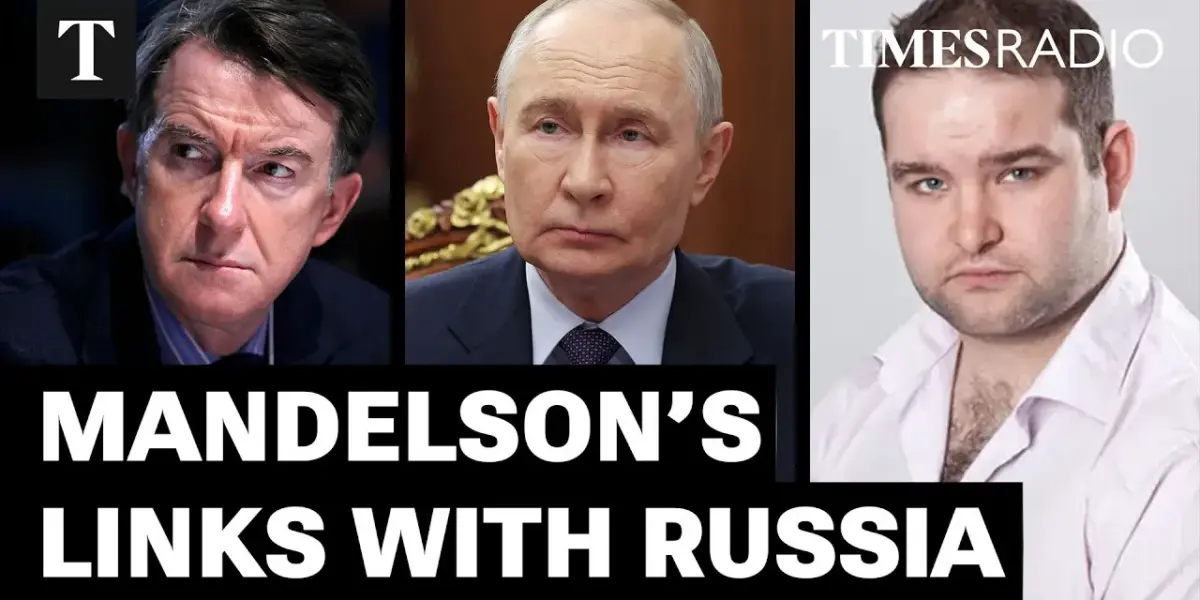
Lord Mandelson’s Russian Dealings Under Fire
Former UK minister Lord Mandelson is facing criticism over his past work for a Russian company, specifically his decision to lobby President Vladimir Putin in 2017. While there are no claims that his actions were illegal, questions have been raised about his judgment in engaging with Russian interests, especially after Russia’s seizure of Crimea from Ukraine. This situation highlights a broader debate about public figures working with entities from countries considered strategic adversaries.
Details of the Russian Conglomerate and Legal Dispute
The company in question is AFK Sistema, a large Russian conglomerate with diverse business interests, including consumer goods and, at the time of Mandelson’s involvement, defense companies. Mandelson served as a non-executive director for Sistema starting in 2013. He remained with the company even after Russia’s invasion of Crimea and its actions in eastern Ukraine.
In 2017, a significant legal dispute arose between AFK Sistema and the state-owned oil giant Rosneft. Rosneft had acquired a company called Bashneft from Sistema. However, reports suggest this was a coercive action, as the head of Sistema was reportedly placed under house arrest and faced money laundering charges, which were dropped after the transfer of Bashneft to Rosneft.
Mandelson’s Direct Appeal to Putin
As part of this complex situation, Lord Mandelson, along with other non-executive directors of AFK Sistema, wrote directly to President Vladimir Putin. The letter urged Putin to intervene and halt Rosneft’s actions against Sistema. This direct appeal to the Russian president for a domestic legal matter has become a focal point of the criticism.
George Greenwood, investigations correspondent for The Times, noted that while Mandelson’s actions were not illegal, they raise serious questions about his judgment. He stated, “questions of judgment about why you would want to involve yourself in Russia given even at that point it was becoming more and more a strategic adversary of the UK.”
Criticism from Opposition and Campaigners
The leader of the opposition, Keir Starmer, referenced Mandelson’s role in the House of Commons, questioning the vetting process for individuals with known links to the Kremlin. He suggested that such connections should have been disqualifying, particularly for roles requiring impartiality.
Bill Browder, a prominent critic of the Kremlin and founder of the campaign group the Global Magnitsky Justice Campaign, was highly critical of Mandelson’s involvement. Browder described the situation as “horrible,” “greedy,” and “disgusting,” stating, “He shouldn’t have done it.” He further commented on Mandelson’s willingness to work for a Russian company at that time, saying it “tells you a lot about this individual.”
Mandelson’s Defense and Financial Gain
Lord Mandelson has defended his actions, asserting that he was acting as a responsible non-executive director representing his company’s interests. He claimed that he faced pushback from Putin himself, leading to the suspension of his visa and ultimately forcing him to leave the company due to the unsustainable situation.
However, financial records show that Mandelson was compensated handsomely for his role. While he stated that shares he received were not sold at a high value, calculations suggest the value of shares issued to him in 2017 alone would have been nearly £300,000 if sold at face value. He also received a salary for his position.
Broader Concerns About Conflicts of Interest
Critics argue that even if Mandelson’s actions were legal, the fundamental issue lies in his decision to lobby a powerful leader like Putin over a domestic business dispute. This occurred at a time when Russia was increasingly seen as a geopolitical adversary by the UK, making the engagement ethically questionable for a public figure.
Bill Browder also pointed out potential conflicts of interest, noting Mandelson’s past involvement with a lobbying company that had significant corporate clients in China. Browder suggested that there would likely be significant conflicts between Russian and Chinese business interests and those of the UK, especially for someone holding a position in the House of Lords.
The Wider Issue of Lobbying and Influence
Browder extended his criticism beyond Mandelson, suggesting that such practices are not isolated. He indicated that many individuals in the House of Lords engage in similar lobbying activities for foreign interests. He pointed out that even the current shadow attorney general works for Roman Abramovich, implying a widespread issue across the political spectrum.
The core of the criticism remains focused on the ethical judgment of public figures engaging with regimes and companies from countries that pose strategic challenges to the UK. The case of Lord Mandelson’s lobbying efforts highlights the ongoing debate about transparency, influence, and the potential for conflicts of interest in international business dealings involving political figures.
Future Scrutiny and Accountability
The controversy surrounding Lord Mandelson’s past dealings with Russian interests is likely to continue to be a topic of discussion. As geopolitical tensions remain high, the scrutiny of public figures’ connections to countries like Russia is expected to intensify. Future appointments and roles involving individuals with such international business histories may face even more rigorous vetting and public examination.
Source: Mandelson Lobbying Putin Raises ‘Questions Of Judgment’ | George Greenwood (YouTube)

Related Articles
Fox News Spins Falsehoods as Trump’s Iran Deal Collapses
Donald Trump's Iran deal efforts reportedly collapsed, leading to conflicting narratives from media outlets. While some promoted a strong negotiation, others claim the deal failed due to Trump's actions, with Fox News accused of spreading false information about a coup in Iran to mask the outcome.
Kremlin Admits Economic Crisis Amidst War Strain
Prominent Russian propagandist Vladimir Solovyov and President Vladimir Putin have publicly acknowledged a severe economic crisis facing Russia. The war's immense cost is straining military production and leading to declining GDP. The U.S. ending sanctions exemptions for Russian oil further exacerbates the situation, while Putin appeals to oligarchs for funding.

Trump’s Iran Stance: Bold Strategy or Tactical Retreat?
The debate over Donald Trump's handling of Iran centers on whether his extension of a ceasefire was a strategic masterstroke or a sign of weakness. Supporters argue he's playing a long game, leveraging Iran's economic woes for a better deal. Critics contend this approach forfeits crucial leverage, allowing Iran to delay indefinitely.