Living Single vs. Friends: Why 90s Hit Still Resonates
On the latest "Clock It" episode, Symone Sanders Townsend, Eugene Daniels, and Geoff Bennett compared "Living Single" and "Friends." They explored why the 90s sitcom "Living Single" continues to resonate culturally today due to its authentic portrayal of Black life in New York City.

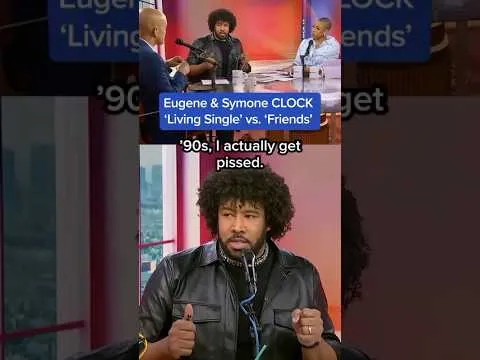
‘Living Single’ Debate Ignites on ‘Clock It’
A lively discussion on the latest episode of “Clock It” compared two iconic 90s sitcoms: “Living Single” and “Friends.” Host Symone Sanders Townsend and Eugene Daniels, joined by PBS anchor Geoff Bennett, explored why “Living Single” continues to hold cultural significance today. The conversation, featured on MS NOW, highlighted the lasting impact of the show’s authentic portrayal of Black life in New York City.
Setting the Scene: Harlem vs. Greenwich Village
The hosts and guest debated the different settings and characters that defined each show. “Living Single” centered on a group of ambitious Black professionals living in a Brooklyn brownstone, navigating careers, relationships, and friendships. In contrast, “Friends” followed a predominantly white group of young adults living in Manhattan’s Greenwich Village, often focusing on their romantic entanglements and quirky personalities.
Authenticity and Representation
Bennett emphasized that “Living Single” offered a groundbreaking depiction of Black characters that felt real and relatable. The show explored themes of career ambition, community, and the unique challenges and joys of Black urban life.
This authenticity, he argued, is a key reason for its enduring appeal and cultural relevance decades later. It showed Black excellence in a way that was aspirational yet grounded.
“Living Single’s portrayal of Black characters was groundbreaking. It felt real and relatable, exploring career ambition, community, and the joys and challenges of Black urban life.”
Sanders Townsend added that “Living Single” presented a diverse range of Black experiences. The characters were not stereotypes but fully realized individuals with distinct personalities and goals.
This representation allowed a wide audience to see themselves reflected on screen. It was a mirror for many who had rarely seen such nuanced portrayals.
Cultural Impact and Legacy
The discussion touched on how “Living Single” enabled future shows featuring diverse casts. Its success demonstrated a clear audience appetite for stories centered on marginalized communities.
The show’s influence can be seen in its ability to spark conversations about identity, belonging, and representation in media. It created a blueprint for authentic storytelling.
Daniels noted that while “Friends” achieved massive global success, “Living Single” holds a special place for many viewers due to its honest portrayal of Black culture. The show’s humor and heart resonated deeply, fostering a sense of connection and shared experience. It offered a view into a specific community that felt both personal and universal.
Enduring Themes
The core themes of friendship, love, and career aspirations in “Living Single” continue to connect with audiences. The show’s ability to balance humor with meaningful storylines made it a standout.
Viewers found comfort and inspiration in the characters’ journeys. They saw themselves in the everyday struggles and triumphs depicted.
Bennett concluded that the show’s legacy is cemented by its honest depiction of Black life. It provided a platform for stories that were often overlooked by mainstream television.
This commitment to authenticity remains its strongest asset. The show’s impact is proof of the power of representation.
What’s Next?
The conversation on “Clock It” highlights the ongoing importance of diverse storytelling in television. Future discussions will likely continue to explore the impact of shows like “Living Single” on culture and media representation. Fans can look forward to more in-depth analyses of classic and contemporary television on MS NOW.
Source: Eugene & Symone CLOCK 'Living Single' vs. 'Friends' (YouTube)

Related Articles

Artemis II Mission Sparks Cosmic Debate: Are We Alone?
Artemis II mission's upcoming journey sparks conversations on space exploration and the possibility of extraterrestrial life. Hosts Symone Sanders-Townsend and Eugene Scott discussed the mission's significance and the vastness of the universe, questioning humanity's solitude among the stars.

90s Black Sitcoms: A Revolution in American Comedy
A new book, "Black Out Loud," explores how 1990s Black sitcoms like "Martin" and "The Fresh Prince of Bel-Air" revolutionized American comedy. Author Jeff Bennett discusses how these shows, driven by Black creators, offered authentic reflections of Black life and opened doors for diverse storytelling.

Dime Redesign Sparks Questions on Harriet Tubman $20 Bill
The recent redesign of the U.S. dime has brought renewed attention to the delayed introduction of the Harriet Tubman $20 bill. Hosts Eugene Daniels and Symone Sanders Townsend discussed the contrast between the new dime and the stalled progress on the $20 bill, questioning when Tubman's portrait will finally appear on currency.