Ukraine Develops Air-Launched Ballistic Missile
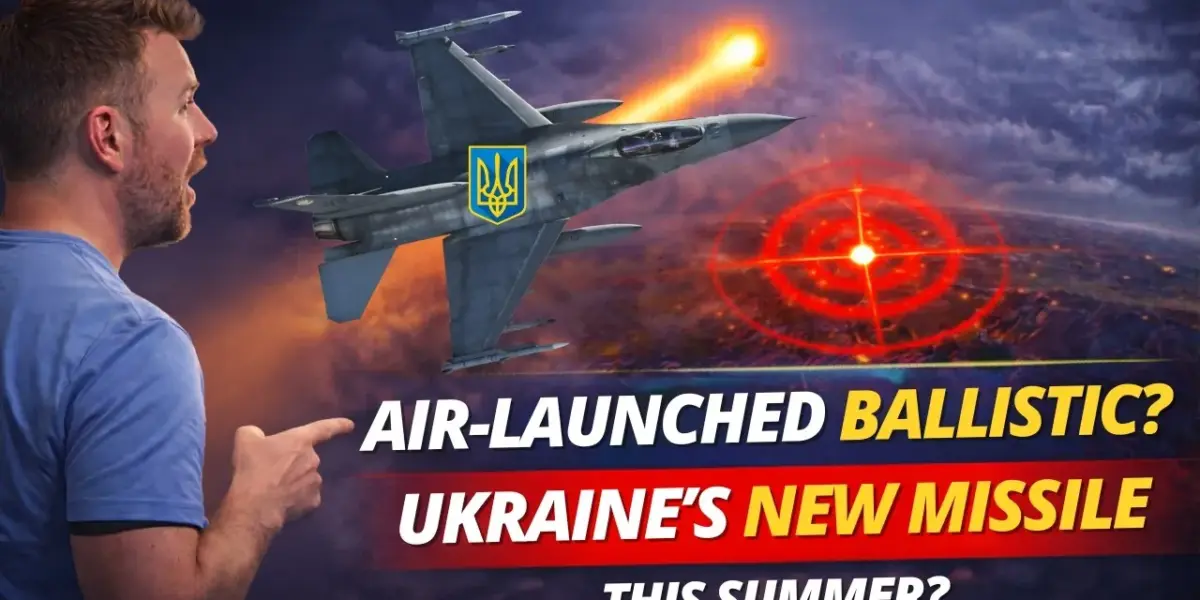
Ukraine is developing a new air-launched ballistic missile based on its FP9 system. This weapon could allow Ukraine to strike deep into Russia from unpredictable angles, challenging Russian air defenses. The development signifies a major advancement in Ukraine's domestic defense capabilities.

Ukraine Develops Air-Launched Ballistic Missile
Ukraine is reportedly developing a new air-launched ballistic missile that could significantly alter the strategic balance of the conflict with Russia. The missile, being developed by a Ukrainian company called Firepoint, is based on their existing FP9 ballistic missile. If successful, this weapon could allow Ukraine to strike deep into Russian territory from greater distances and unpredictable angles.
The FP9 missile is described as a supersonic ballistic weapon with a range of approximately 850 kilometers, capable of carrying an 800-kilogram warhead. Adapting this missile for air launch means it would be released from an aircraft already at high speed and altitude. This provides a significant energy advantage compared to a ground launch, where the missile must overcome gravity, drag, and inertia from a standstill.
Missile Technology Explained
Launching a missile from an aircraft already in motion and at altitude is like getting a head start in a race. The aircraft provides the initial speed and height, meaning the missile doesn’t need to use as much of its own fuel just to get airborne and gain speed.
This conserved energy can then be used for greater range, a heavier payload, or a faster speed when it reaches its target. For Ukraine, this means potentially reaching targets previously out of reach without risking aircraft flying directly into heavily defended Russian airspace.
Strategic Implications: A New Threat Geometry
Beyond just extending range, the air-launched nature of the missile presents a new challenge for Russian defenses. Ground-launched ballistic missiles typically originate from predictable locations, allowing Russia to map potential launch sites and position its radar and air defense systems accordingly. However, an air-launched ballistic missile can be released from virtually anywhere the aircraft flies, creating a much larger and more unpredictable threat envelope.
This forces Russia to monitor a far greater expanse of sky from multiple directions. When a threat appears from an unexpected angle or location, it can cause delays in detection and response. In the context of fast-moving ballistic threats, even a few extra seconds of reaction time can be the difference between an interception and a successful strike.
NATO’s Air-Launched Missile Landscape
The development is significant as true air-launched ballistic missiles (ALBMs) are rare. The United States and the United Kingdom explored such weapons during the Cold War, like the U.S. AGM-48 Skybolt, intended for bomber forces to strike targets outside Soviet air defenses. However, the program was canceled in the 1960s, and NATO has not pursued a direct ALBM tradition since.
More recent U.S. programs, like the AGM-183 Air Launched Rapid Response Weapon (ARRW), focused on hypersonic boost-glide capabilities rather than traditional ballistic trajectories. France’s strategic missiles, like the ASMP-A and the upcoming ASN4G, are ramjet or scramjet-powered, making them fast air-launched weapons but not ballistic missiles in the classic sense.
Russian Precedents and Ukrainian Adaptability
Russia does have an operational equivalent in the Kh-47M2 Kinzhal, which is derived from the ground-launched Iskander ballistic missile. This mirrors Ukraine’s apparent approach of adapting an existing ground-based ballistic missile for air launch. The Soviet Union also developed air-launched ballistic missiles like the Kh-15 (NATO designation AS-16 Kickback) during the Cold War.
Ukraine’s strength in this endeavor lies in its demonstrated ability to rapidly integrate Western weapons onto Soviet-era aircraft. This adaptability suggests that integrating a domestically produced missile like Firepoint’s FP9, designed from the outset for Ukrainian aircraft, could be a much smoother process. This domestic development bypasses many of the integration challenges typically faced when fitting foreign systems onto existing platforms.
Future Outlook and Broader Impact
While the exact timeline for fielding an air-launched version of the FP9 remains unclear, and details about its performance are limited, the potential is substantial. If Firepoint meets its stated goals, Ukraine could possess a domestically produced ballistic missile capable of threatening targets like Moscow by the summer. This would dramatically increase the pressure on Russia, forcing it to defend against a more complex and unpredictable set of threats.
Beyond the missile itself, Firepoint is also reportedly developing lower-cost air defense interceptors. This indicates a broader strategy of building an integrated defense system, potentially positioning the company as a key player in Ukraine’s future defense industry, comparable to major Western defense contractors.
The development of an air-launched ballistic missile by Ukraine signifies more than just a new weapon; it represents a significant leap in Ukrainian defense capabilities. It challenges Russian strategic assumptions, stretches its air defenses thinner, and introduces a new level of uncertainty into the conflict. The ability to strike from unexpected directions and speeds compresses the decision-making window for defenders, making targets deep within Russia more vulnerable.
Source: Ukraine's Ballistic Breakthrough Puts Russia in Crisis Mode (YouTube)

Related Articles


Russia’s Donbas Deadline Seen as Bluff Amid Shifting Alliances
Analysts view Russia's deadline for Donbas withdrawal as a bluff amid global distractions caused by the Iran conflict. Ukraine faces difficult choices over territorial compromise, seeking security guarantees in return. Ukrainian strikes on Russian energy infrastructure aim to raise war costs, while broader escalation risks remain low.
Germany Pledges Deeper Ukraine Ties Amid Shifting Global Support
Germany and Ukraine have announced a new strategic partnership, signaling a deeper commitment beyond traditional aid. This move comes as Ukraine showcases its own defense industry and as global attention is divided by ongoing conflicts. Experts discuss the need for Europe to increase its own defense production and support Ukraine more robustly, especially amid concerns about shifting US priorities.


Russia Replaces Local Forces in Occupied Ukraine
Russia is replacing local security forces with Russian personnel in occupied Ukrainian territories. This move includes intensified surveillance, mobile device checks, and regular "filtration measures" in towns and villages. The Kremlin aims to suppress pro-Ukrainian sentiment and intelligence gathering.