Earth’s Core Exhibits New Matter State, Baffling Scientists
New research suggests Earth's solid inner core may exist in an exotic 'superionic' state, a blend of solid and liquid properties. This groundbreaking discovery helps explain puzzling seismic data that defied previous models of the planet's heart. Experiments are now validating this theory, potentially reshaping our understanding of Earth's deep interior.

Earth’s Core Exhibits New Matter State, Baffling Scientists
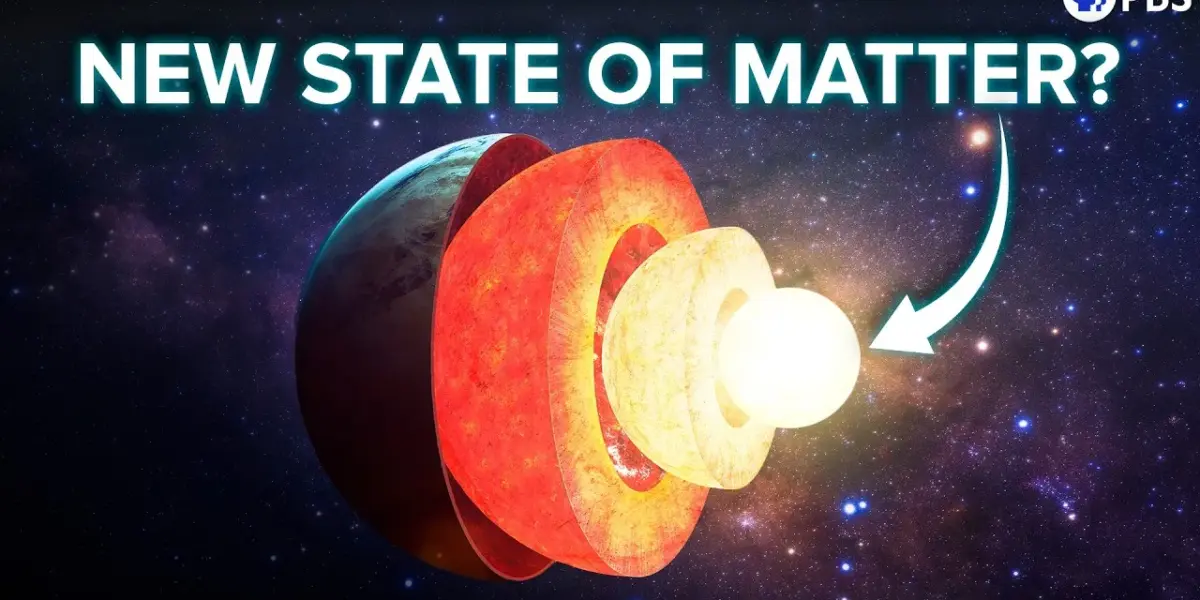
Scientists are uncovering astonishing new details about the very heart of our planet. For decades, we understood Earth’s core to have a solid inner core surrounded by a liquid outer core.
However, recent seismic data suggests the inner core possesses properties that defy this simple model. New research points to a potential exotic state of matter, dubbed the ‘superionic state,’ which could explain these puzzling observations.
Exploring Earth’s interior is far more challenging than studying distant galaxies. We can send probes across billions of light-years, but reaching Earth’s center, about 6,400 kilometers deep, is impossible with current technology. Instead, scientists rely on seismology, listening to earthquake waves and analyzing how they bounce through our planet.
A History of Unraveling Earth’s Secrets
The study of Earth’s structure through seismic waves began in 1909. Andrija Mohorovičić discovered the boundary between the crust and mantle by observing how seismic waves changed speed.
Later, in 1914, seismologists identified Earth’s molten outer core when they noticed certain waves were blocked. Then, in 1936, Inge Lehmann discovered the solid inner core by observing waves that reflected off it.
This layered model—crust, mantle, liquid outer core, and solid inner core—has long explained many of Earth’s phenomena, like volcanism and the magnetic field. The inner core is thought to be mostly iron and nickel, similar to the outer core.
Cracks in the Model Appear
As seismic monitoring became more advanced, subtle discrepancies emerged. Seismic waves travel faster through the inner core along its polar axis than along its equator. This suggests a crystalline structure where wave speed depends on orientation, aligning with Earth’s spin.
More puzzling is the behavior of ‘S-waves,’ or shear waves, which can only travel through solids. While S-waves are blocked by the liquid outer core, they can be generated within the inner core. However, these core S-waves travel much slower than expected for solid iron and lose energy rapidly.
The ‘Squidgy’ Core Mystery
This unusual S-wave behavior implies the inner core is less resistant to shearing than pure crystalline iron. Scientists have a term for this: a high Poisson’s ratio, similar to rubber, making the material seem ‘squidgy.’ This is a significant departure from the expected stiff, crystalline iron.
Initial ideas included alloying the iron with lighter elements like hydrogen or carbon, or making the core ‘grainy’ with small, misaligned crystal structures. However, these explanations don’t fully account for the observed seismic data without making the core too fluid or too solid.
Introducing the Superionic State
The superionic state offers a potential solution. In this state, atoms of one element form a rigid crystal lattice, while atoms of another element move freely within it, behaving like a liquid. This state is known to occur in some materials, such as superionic ice.
For Earth’s core, scientists propose that iron and nickel form a solid lattice, while lighter elements like carbon move through it. Molecular dynamics simulations suggest that at the extreme pressures and temperatures of Earth’s core, iron-carbon alloys could enter this superionic state. This state would allow the core to be both crystalline and fluid simultaneously, explaining the slow S-waves and high Poisson’s ratio.
Laboratory Experiments Validate the Theory
A recent study by Huang, He, Zhang, and colleagues took this theory a step further. They created an iron-carbon alloy and subjected it to immense pressure and high temperatures using a light gas gun and particle accelerators. This experiment simulated the conditions within Earth’s inner core.
By studying vibrations on the sample’s surface, researchers could infer its properties, finding results consistent with the superionic state and the seismic data from Earth’s core. While the experiment did not replicate the full pressure and temperature of the core, it provided the first experimental validation of the superionic state in an iron-carbon alloy.
What Comes Next?
If the superionic hypothesis is correct, it could explain not only the core’s unusual seismic properties but also phenomena like the difference in wave speed between the poles and equator. It might even play a role in generating Earth’s magnetic field.
This discovery highlights how much we still have to learn about our own planet. Future research will focus on refining these simulations and experiments to better understand the complex physics at play deep within Earth.
Source: Earth’s Core Should Be Impossible. A New State of Matter Explains It. (YouTube)

Related Articles

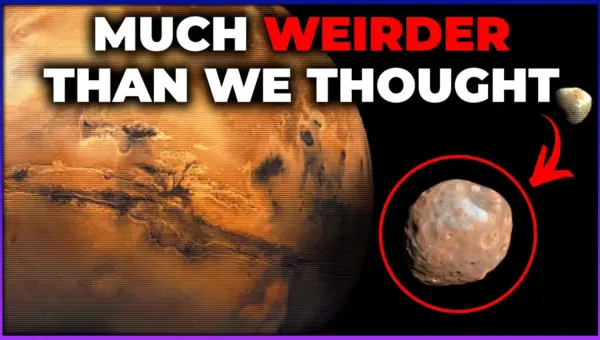
Mars Moon Phobos Could Be a Rebuilt Cosmic Wreck
New research suggests Mars's moon Phobos, a rubble pile asteroid, may have been destroyed and reformed multiple times due to Mars's tidal forces. This challenges our understanding of celestial body evolution and highlights the dynamic nature of the solar system.
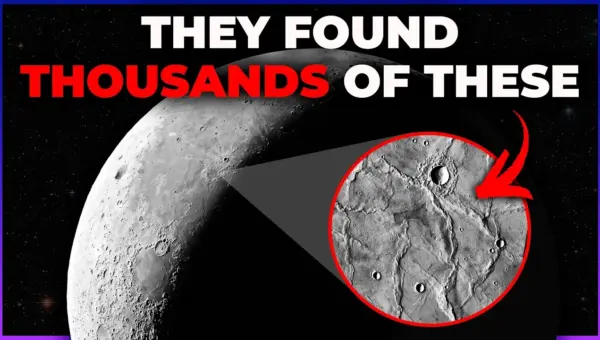
Moon’s Shrinking Core Creates Vast Scarps on Surface
Thousands of newly identified scarps on the Moon reveal that its interior is actively cooling and shrinking, causing the lunar crust to fracture. This ongoing geological activity, driven by global contraction, results in these massive cliff-like features and suggests the Moon is more geologically active than previously thought.

Juno Probe Uncovers Jupiter’s Fuzzy Core and Hidden Secrets
NASA's Juno mission has revealed that Jupiter's core is "fuzzy," challenging theories of planetary formation. The probe also captured stunning images of polar cyclones, analyzed atmospheric composition, and provided new insights into Jupiter's powerful magnetic field and auroras.