US Faces Choice: Inflationary QE or Banking Bailout
The Federal Reserve faces a critical choice between two forms of Quantitative Easing (QE). Type 1 QE aims to stabilize banks without broad inflation, while Type 2 injects money into the economy, risking significant price increases. The latter approach, likely to be chosen, could lead to stagflation.


US Faces Choice: Inflationary QE or Banking Bailout
The United States is approaching a critical decision on how its central bank, the Federal Reserve, will inject money into the economy. This process, known as Quantitative Easing (QE), has two distinct forms, each with vastly different impacts on inflation and asset prices. The choice the Fed makes could significantly influence the cost of goods and the value of investments in the coming years.
Type 1 QE, seen in 2008, was designed to be non-inflationary. During the 2008 financial crisis, banks were burdened with toxic assets, essentially worthless mortgage-backed securities.
The Federal Reserve stepped in and bought these bad assets directly from the banks. This action cleaned up the banks’ financial statements without introducing new money into the wider economy.
Think of it like a doctor cleaning a patient’s infected wound. The infection is removed, but no new healthy tissue is immediately grown.
This approach primarily benefited the banking system by stabilizing it. Because the money stayed within financial institutions and didn’t flow into everyday commerce, it did not cause a significant rise in consumer prices, despite the Fed’s actions.
Type 2 QE, however, took a dramatically different path in 2020. Instead of buying assets directly from struggling banks, the Fed purchased assets from a broader range of entities.
This included corporations, pension funds, and other financial institutions. When these entities sold their assets to the Fed, they received cash, which they then deposited into their bank accounts.
This created new money within the general economy. Banks were compelled to create new deposits to match these inflows, effectively increasing the overall money supply. This increased buying power for individuals and businesses, but the amount of goods and services available in the world did not increase at the same pace.
The result was a predictable, albeit delayed, surge in inflation. The Fed conducted significant Type 2 QE in March 2020.
About 12 to 18 months later, inflation reached a high of 9%. Economists who originally developed the concept of QE had warned that such actions could lead to inflation, but these warnings were largely ignored by the public and media at the time.
BlackRock’s Role and Future Implications
Financial giant BlackRock presented a strategy very similar to Type 2 QE at the Jackson Hole Conference. About six months after this presentation, the Fed implemented such a policy. This suggests a potential blueprint for how monetary policy might be shaped by major financial players.
Looking ahead, the Federal Reserve appears likely to choose the Type 2 QE approach again. This means injecting new money into the broader economy, rather than solely cleaning up the banking system. The potential consequence is a significant spike in inflation, possibly exceeding the 9% seen previously.
This scenario could lead to stagflation, an economic condition where growth slows down while prices continue to rise rapidly. This creates a difficult environment for both businesses and consumers, as purchasing power erodes and economic activity stagnates.
Market Impact
The choice between Type 1 and Type 2 QE carries significant weight for investors. Type 1 QE, focused on stabilizing banks, historically had less direct impact on broad market asset prices. Type 2 QE, by injecting cash into the wider economy, tends to boost demand and asset values, but at the cost of inflation.
If the US opts for Type 2 QE, investors might anticipate further increases in the cost of living and a potential decrease in the real value of their savings and fixed-income investments. Stocks in sectors that can pass on increased costs, like energy or consumer staples, might perform differently than those facing price pressures.
The lag effect observed previously, where inflation followed QE by 12 to 18 months, suggests that the full impact of any new money printing may not be immediately apparent. Investors may need to monitor economic data closely for signs of rising consumer prices and slowing economic growth.
What Investors Should Know
Understanding the difference between these two forms of QE is crucial. Type 1 is a banking system repair, while Type 2 is a direct infusion of money into the economy. The latter carries a much higher risk of causing significant inflation.
The potential for stagflation, characterized by low growth and high inflation, presents a challenging investment environment. Investors typically seek assets that can preserve or grow their value during such periods, often including inflation-protected securities or certain commodities.
The historical precedent of Type 2 QE leading to high inflation 12 to 18 months later suggests that proactive planning is necessary. Investors should consider how rising prices and potentially slower economic activity could affect their portfolios over the medium term.
The Federal Reserve’s next policy meeting will be closely watched for any indications regarding its preferred approach to monetary easing.
Source: How They Will Print Money (YouTube)

Related Articles
Trump Threatens Powell, Demands Fed Probe Halt
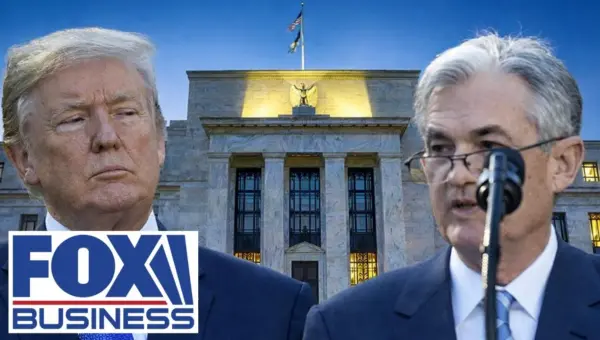
President Trump is threatening to fire Federal Reserve Chair Jerome Powell if he doesn't resign, while pushing for Kevin Warsh's confirmation. Meanwhile, a critical crypto regulation bill faces a deadline, and House Republicans are focused on passing Homeland Security funding.


AI Slashes Grocery Waste, Boosts Sales by 27%
New AI tools are helping grocery chains like Kroger reduce food waste and increase sales. By using dynamic pricing for items nearing their expiration date, grocers have cut revenue loss by an average of 27%. This technology offers a way to combat inflation and improve profit margins.


Middle East Ceasefire Holds, US Economy Faces Inflation
A fragile ceasefire has been reached between Israel and Lebanon following weeks of conflict, with the U.S. playing a mediating role. Domestically, the U.S. economy faces rising inflation and consumer prices, while Congress grapples with surveillance authority and the Department of Homeland Security sees leadership changes. The nation is also experiencing extreme weather contrasts, from severe storms to unseasonable heat.