Iran War Escalates: US Admits More Casualties, Allies Consider Joining
The Pentagon has warned of more U.S. casualties as the conflict with Iran escalates, drawing in Hezbollah and potentially European allies. Amidst reports of friendly fire incidents and unverified casualty claims, the U.S. faces strategic challenges in countering Iran's asymmetric tactics.

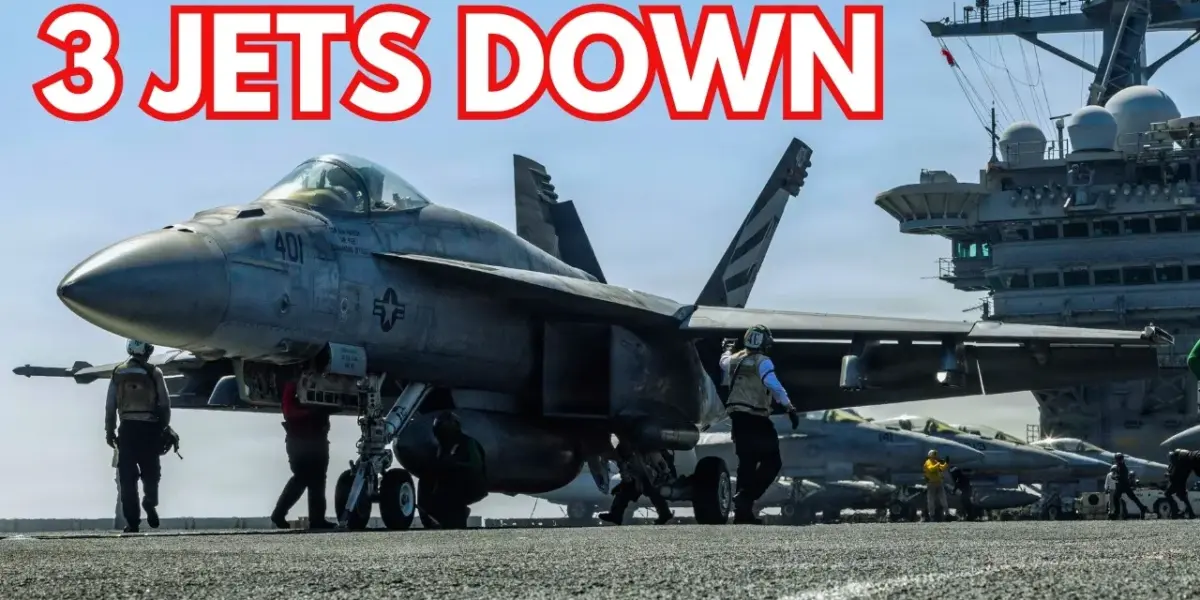
Pentagon Brace for Extended Conflict as Iran War Spreads
The United States has officially entered a new phase of conflict, acknowledging that the “objectives will take some time to achieve” and that “additional losses” are expected. This stark admission comes from General Kaine, Chairman of the Joint Chiefs of Staff, during a recent Pentagon briefing, marking the first public statement following the commencement of U.S. Operations in Iran.
In tandem with these warnings, additional U.S. forces are being deployed to U.S. Central Command (Centcom) areas. The situation is rapidly evolving, with reports indicating that Hezbollah has joined the conflict on Iran’s behalf, and several European allies are reportedly considering involvement.
A War of Congested Skies and Friendly Fire
The conflict’s expansion has been marked by a series of alarming incidents. Three U.S. F-15E Strike Eagles participating in “Operation Epic Fury” were downed over Kuwait. U.S. Central Command attributed this to a “friendly fire incident” during active combat, which involved simultaneous attacks from Iranian aircraft, ballistic missiles, and drones.
Kuwaiti air defenses reportedly mistook the U.S. Aircraft for hostile targets in what is described as a “very congested airspace.” General Kaine acknowledged the reality of such occurrences in large-scale combat operations, stating, “Friendly fire happens. It’s a reality, especially when you’re looking at a very congested airspace.” Fortunately, all six aircrew members ejected safely and were recovered in stable condition. An investigation into the incident is ongoing.
Rising U.S. Casualties and Unverified Claims
The human cost of the escalating conflict is also becoming more apparent. The Pentagon confirmed that a fourth American service member has died during Operation Epic Fury, succumbing to wounds sustained during Iran’s initial wave of attacks, reportedly in Kuwait.
The U.S. has not yet released details regarding the service member’s name, branch, or unit. Secretary Hegsth indicated that the casualties occurred in a tactical command center when an unidentified projectile, possibly a drone or missile, penetrated defenses.
Amidst the official reports, claims from Iran’s Islamic Revolutionary Guard Corps (IRGC) have emerged, alleging 560 American casualties so far. However, the transcript explicitly states there is “no evidence to support that, not even close.” While acknowledging the prevalence of this unsubstantiated number in public discourse, the analysis emphasizes its origin within IRGC media, highlighting the importance of understanding enemy messaging, even when it is propaganda.
Strategic Objectives and Iranian Tactics
President Trump has stated that hundreds of targets in Iran have been hit, including the destruction of nine Iranian ships. He reiterated that combat operations would continue until all objectives are met, and that more U.S. Casualties are likely. He also called on Iranian citizens to “take back their country,” asserting, “America is with you.” However, the claim that the “entire Iranian military command is gone” is met with skepticism, with the analysis pointing to continued effective movement and missile launches as evidence of ongoing command and control, albeit with potential fractures.
A significant challenge highlighted is Iran’s use of mobile, truck-mounted missile launchers, which are deployed from underground facilities. This tactic creates a “cat and mouse” game for U.S. and Israeli forces, requiring constant surveillance and rapid strike capabilities to intercept launchers before they can fire. The strategy of targeting underground facilities to bury entrances is also noted as a potential U.S. Focus, particularly with the use of heavy munitions.
Israeli Operations and Hezbollah’s Entry
Israel has reported achieving air superiority over Iran and has conducted a large-scale wave of strikes targeting Iranian military command centers, intelligence headquarters, and internal security facilities. These strikes are said to have significantly degraded Iran’s command and control capabilities.
Israel has also continued to target Iranian ballistic missile launchers and defense systems. Footage has emerged of Israel intercepting Iranian drones approaching its airspace, with hundreds of drones having been launched.
The conflict has further escalated with the entry of Lebanese Hezbollah, which has launched rockets into northern Israel. Hezbollah claimed responsibility, citing retaliation for the death of Ali Ham and in defense of Lebanon.
Israel has responded with retaliatory strikes across Lebanon, with its Northern Command stating that strikes will continue and intensify. While Hezbollah’s leadership was significantly degraded in previous operations, its underground missile, rocket, and drone arsenal remains a potent threat, potentially capable of targeting U.S. Bases in the region.
Diplomatic Stalemate and Information Warfare
Despite potential U.S. Attempts to pressure Iran back to the negotiating table through strikes, Iran’s Supreme National Security Council Secretary, Ali Larjani, has stated, “We will not negotiate with the United States.” The analysis suggests that Iran may be “doubling down” due to past experiences where negotiations were preceded by strikes, leading to a perception that talks do not yield favorable outcomes.
The IRGC’s claims about U.S. Naval bases in Kuwait and Bahrain being out of operation, along with alleged damage to American maritime infrastructure and oil tankers, are presented as examples of information warfare. While acknowledging that some impacts on U.S. Bases are evident, the analysis cautions against accepting the IRGC’s casualty figures or operational impact assessments without independent verification.
Broader Regional Impact and Allied Considerations
The conflict is creating widespread chaos across the Middle East. Iranian munitions have reportedly hit a UK air base in Cyprus, UAE oil rigs, Saudi oil fields, tankers in the Strait of Hormuz, and an Amazon AWS facility in Saudi Arabia.
This disruption has led to increased insurance rates for shipping in the region. The broad Iranian strategy appears to be the creation of chaos to pressure allies of the U.S. and Israel to demand a de-escalation.
Consideration is being given to European allies joining offensive operations. The United Kingdom has reportedly opened its air bases for U.S. Use, with Diego Garcia potentially being utilized. France and Germany are also reportedly considering involvement.
The Interceptor Dilemma and Future Outlook
A critical factor in the conflict’s trajectory is the strategic balance of interceptors versus incoming missiles. The U.S. Possesses finite and expensive interceptors (like those for Patriot and THAAD systems) to counter Iran’s cheaper, mass-produced missiles and drones.
The concern is whether U.S. Stockpiles are sufficient to sustain prolonged defensive operations without depleting resources or requiring diversion from other theaters. The effectiveness of interceptors is not always one-to-one, and a shortage could force the U.S. To narrow the areas it can protect.
Pentagon officials, including Secretary Hegsth, are framing the operation as a decisive mission to “finish” the war, distinct from previous conflicts like Iraq. They emphasize a no-nonsense approach, avoiding nation-building or politically correct warfare.
However, timelines remain deliberately vague, with officials declining to specify durations, hinting at a potentially protracted engagement. General Kaine highlighted the opening wave involved over a hundred aircraft and underscored the coordination between U.S. intelligence and Israeli operations, suggesting a trigger event linked to the killing of Ham may have initiated the response.
Why This Matters
The escalating conflict in the Middle East presents a multi-faceted crisis with profound implications. The acknowledgment of impending U.S. Casualties and the deployment of additional forces signals a commitment to a protracted engagement, moving beyond a limited punitive strike scenario. The involvement of regional proxies like Hezbollah and the potential for broader European participation indicate a significant regionalization of the conflict, with the risk of wider conflagration.
The strategic challenge of balancing missile defense with offensive operations, coupled with Iran’s asymmetric tactics and information warfare, creates a complex and dangerous environment. The economic impact on global energy markets and shipping, as seen with rising insurance rates, highlights the conflict’s global reach. The Pentagon’s framing of the war as a decisive, non-traditional operation suggests a departure from past military engagements, but the uncertainty surrounding timelines and objectives leaves the ultimate outcome perilously unclear.
Implications, Trends, and Future Outlook
The current trajectory points towards a sustained period of hostilities. The U.S. and its allies face the daunting task of degrading Iran’s military capabilities while managing escalating regional involvement and an unpredictable enemy.
Key trends to watch include the effectiveness of U.S. and Israeli efforts to neutralize Iran’s mobile missile launchers and underground facilities, the strategic depletion of missile defense interceptors, and the potential for further escalation by Iran through its proxies. The future outlook is one of high uncertainty, with the possibility of a prolonged conflict that could redraw regional alliances and further destabilize global security and economic markets.
Historical Context and Background
The current confrontation is rooted in decades of complex geopolitical tensions between the U.S. and Iran, including the 1979 revolution, the Iran-Iraq War, and ongoing disputes over Iran’s nuclear program and regional influence. The involvement of Israel, a key U.S. Ally, further complicates the historical context, drawing on the long-standing animosity between Israel and Iran, and its proxies like Hezbollah.
The use of asymmetric warfare, including drone and missile attacks, and the targeting of critical infrastructure, are tactics that have been employed by various state and non-state actors in the region for years, reflecting a shift in modern warfare. The current operation, “Epic Fury,” appears to be a direct response to specific provocations, but it unfolds against a backdrop of persistent regional instability and proxy conflicts that have characterized the Middle East for decades.
Source: Pentagon Warns: More US Casualties Ahead as Iran War Spreads (YouTube)

Related Articles


Congress Ducks Iran War Vote as Ceasefire Deal Reached
Congress has failed to pass a resolution limiting the President's war powers regarding Iran, amidst a newly announced 10-day ceasefire between Israel and Lebanon. Heated debate marked the vote, with lawmakers divided on national security and political strategy. The ceasefire offers a potential de-escalation, though significant issues remain unresolved in broader peace efforts.


Army Secretary Faces Scrutiny Amidst Pentagon Power Struggles
Army Secretary Christine Driscoll testified amidst growing concerns over Defense Secretary Mark Hegseth's leadership. The hearing focused on Hegseth's alleged pattern of blocking promotions for minority and female officers and the controversial dismissal of General George. Lawmakers expressed alarm over the internal conflicts, questioning their impact on military readiness and morale.


Democrat Slams Trump, Vance for Attacking Pope Over Iran War
Democratic Congressman Greg Landsman calls attacks on Pope Francis by President Trump and Senator J.D. Vance "insane" amid the ongoing Iran conflict. Landsman, who now supports a War Powers Resolution, criticized the president's lack of clear communication and failure to build a coalition. He urged more people of faith to speak out against the war, echoing the Pope's call for peace.