Beijing’s Paranoia: Is Xi Jinping Losing Control?
The CIA's unprecedented public recruitment campaign in China, evidenced by 115 million video views, coincides with unsettling arrests and loyalty tests within Beijing's elite. The regime's deepening paranoia suggests internal fractures may pose a greater threat than external adversaries.

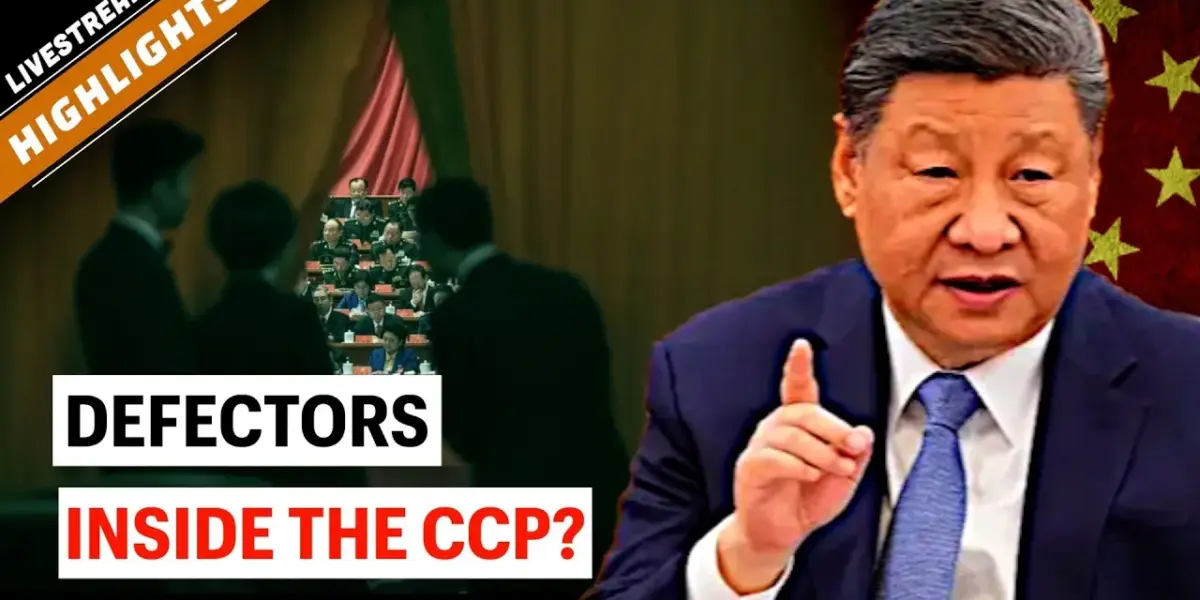
Beijing’s Shadow Play: A Crisis of Trust or Controlled Panic?
Recent events surrounding high-profile figures connected to Beijing have cast a stark light on the internal machinations of the Chinese Communist Party (CCP). With reports of arrests and unsettling accusations, the question arises: is the greatest threat to the regime an external enemy, or is it festering from within? The unprecedented visibility of the CIA’s recruitment efforts targeting Chinese officials, evidenced by staggering online view counts for their recruitment videos, suggests a growing unease, or perhaps an opportunity, in the geopolitical landscape.
The Digital Siren Song: 115 Million Views and Counting
The Central Intelligence Agency has embarked on a remarkably public campaign to cultivate sources within China. In 2024, the agency released four videos in Mandarin, specifically designed to encourage Chinese officials to make contact. The viewership numbers for these videos are nothing short of astonishing.
While typical CIA channel videos garner thousands to just over a hundred thousand views, these Mandarin-language productions have exploded. Two videos released last April, titled “Reasons to Choose Cooperation: Become the Master of Your Destiny” and “Reasons to Choose Cooperation: Create a Bright Future,” aimed at senior CCP officials, garnered 20 million and 15 million views respectively. A more recent “Secure CIA Contact Guide,” released just a month ago and targeted at any Chinese speaker, has amassed a staggering 64 million views.
Another video, “Reasons to Step Forward to Save the Future,” aimed at CCP military officers, secured 16 million views three weeks prior to the video’s recording. In total, these four videos have accumulated 115 million views in approximately ten months.
Translating these view counts into actual viewers suggests a significant reach. If each view represents a unique individual, this could mean anywhere from 10 to 20 million actual viewers. To put this into perspective, China’s government system, encompassing all levels of officials, state employees, educators, healthcare workers, and the military, employs roughly 44 to 54 million people.
This implies that potentially one in every three individuals within the Chinese governmental apparatus may have encountered at least one of these CIA recruitment videos. Crucially, these are not casual internet browsers; accessing such content requires actively circumventing China’s sophisticated firewall, indicating a deliberate effort by the viewers to seek out this information.
The Unsettling Arrest: A Double Agent in the Inner Sanctum?
While view counts alone do not equate to defections, the sheer scale is indicative of a potential vulnerability. This trend coincides with a deeply unusual political arrest reported in Beijing. The chief of staff to a vice-state level Chinese leader—individuals equivalent to Politburo members—was reportedly taken away not by the party’s anti-corruption body, the Central Commission for Discipline Inspection, but by the Ministry of State Security.
The official is allegedly being held under the guise of “assisting with the investigation” and is accused of being a double agent for both the United States and Russia. This accusation, whether factually grounded or not, speaks volumes about the current atmosphere within the highest echelons of power.
The notion of a single individual acting as a double agent for two geopolitical rivals like the US and Russia raises eyebrows. However, the significance may lie less in the plausibility of the charge and more in what it reveals about Xi Jinping’s mindset.
It suggests a profound paranoia, extending beyond distrust of the West to include concerns about Russia, despite the public declaration of a “no limits” partnership between Beijing and Moscow. With Russia potentially pivoting away from its allies, the accusation against the high-ranking official could be a signal, a potent and dangerous loyalty test aimed at rooting out perceived foreign influence within the Politburo and the Central Military Commission.
The Chilling Effect: Loyalty Tests and Hostage Situations
The internal security apparatus is reportedly tightening its grip. An order issued by the General Office of the Central Committee, reportedly controlled by Xi’s trusted aide Ding Xuexiang, requires all staff in Zhongnanhai (the Beijing leadership compound) and central government officials to submit detailed reports on their overseas connections, spanning three generations of their families. The focus is particularly sharp on relatives in the United States or Israel.
This directive creates a chilling atmosphere, as nearly every elite Chinese family has connections abroad, whether through education, work, property ownership, or financial assets. What was once an unspoken safety net for officials is now a potential liability.
Further intensifying this climate of suspicion is the reported relocation of Wang Huning’s daughter and her family. Wang Huning, a pivotal ideological strategist who has shaped the political doctrines of three successive CCP leaders, saw his family abruptly moved from Shanghai to Beijing under the pretext of “protecting their safety.” Critics interpret this move not as protection, but as a form of hostage-taking, designed to ensure Wang Huning’s continued loyalty. Xi Jinping may be leveraging Wang Huning’s family as leverage, particularly given Wang’s intellectual prowess and adaptability, qualities that could make him a prime candidate for seeking alternative paths should the regime falter.
Why This Matters
The confluence of increased CIA outreach, high-profile arrests with bizarre accusations, and stringent loyalty tests points to a leadership under immense pressure. The CCP’s focus appears to have shifted from economic management to an internal struggle against perceived threats, both foreign and domestic. This heightened suspicion and control could lead to a more brittle and unstable regime, as internal dissent is suppressed and trust erodes.
Implications, Trends, and Future Outlook
The current situation suggests a trend towards increased internal security and purges within the CCP, driven by Xi Jinping’s growing paranoia. The public nature of the CIA’s recruitment campaign could embolden potential informants and signal to the international community that cracks are appearing within the Chinese system. Conversely, such overtures could also lead to a more severe crackdown within China, making it harder for the CIA to operate.
The strategic partnership with Russia, once portrayed as unshakeable, now appears to be a source of anxiety for Beijing, indicating a complex and shifting geopolitical landscape. The future outlook points towards a more insular and potentially more volatile China, as its leadership grapples with internal dissent and external pressures, potentially sacrificing economic stability for political control.
Historical Context
The CCP has a long history of internal purges and loyalty tests, dating back to Mao Zedong’s era. Periods of political upheaval, such as the Cultural Revolution, were characterized by intense suspicion and the denunciation of perceived enemies within the party.
While the methods may have evolved, the underlying principle of maintaining absolute loyalty and rooting out dissent remains a constant theme. The current focus on foreign influence and internal ideological purity echoes historical patterns, suggesting that Xi Jinping is drawing upon the party’s past to consolidate his power and address perceived threats.
Source: 115 Million Views Later: Is Beijing Facing a Defection Crisis? (YouTube)

Related Articles
Mandelson’s Putin Lobbying Sparks Judgment Concerns
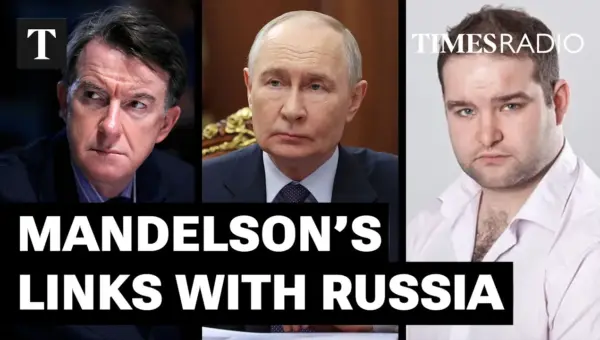
Lord Mandelson is facing scrutiny for lobbying Russian President Vladimir Putin in 2017 on behalf of a Russian company, AFK Sistema. While his actions were not illegal, critics question his judgment given Russia's adversarial stance towards the UK at the time. Mandelson received significant financial compensation for his role, adding another layer to the controversy.
Fox News Spins Falsehoods as Trump’s Iran Deal Collapses
Donald Trump's Iran deal efforts reportedly collapsed, leading to conflicting narratives from media outlets. While some promoted a strong negotiation, others claim the deal failed due to Trump's actions, with Fox News accused of spreading false information about a coup in Iran to mask the outcome.

Trump’s Iran Stance: Bold Strategy or Tactical Retreat?
The debate over Donald Trump's handling of Iran centers on whether his extension of a ceasefire was a strategic masterstroke or a sign of weakness. Supporters argue he's playing a long game, leveraging Iran's economic woes for a better deal. Critics contend this approach forfeits crucial leverage, allowing Iran to delay indefinitely.