US Strike on Iranian School: A Tragic Error or Negligent Targeting?
New evidence suggests a US Tomahawk missile struck an Iranian girls' school, killing 175 people. Investigations by multiple news outlets point to US munitions, while official responses have been slow and contradictory. This analysis explores the evidence, implications, and the critical need for transparency and accountability in warfare.

US Strike on Iranian School: A Tragic Error or Negligent Targeting?
New evidence has emerged, casting a grim light on an incident in Manab, Iran, where a girls’ school was struck, resulting in the deaths of 175 people, predominantly children aged 7 to 12. While initial reports and official responses have been slow to materialize, a growing consensus among international news organizations and investigative bodies points towards a US weapon being responsible for the devastating strike. This analysis digs into the available evidence, official statements, and the broader implications of this tragedy.
Mounting Evidence Points to US Munitions
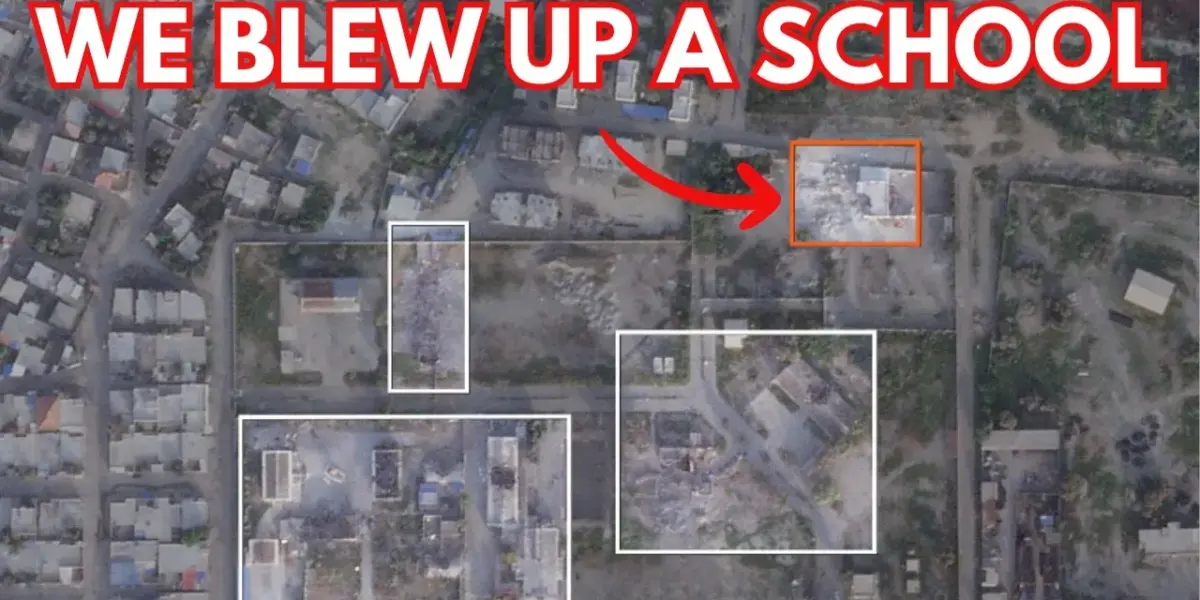
The crux of the emerging narrative centers on newly released footage, geolocated by Bellingcat, which appears to show a US Tomahawk missile impacting an Islamic Revolutionary Guard Corps (IRGC) facility in Manab on February 28th. Crucially, this footage also depicts smoke rising from the vicinity of the girls’ school, which was hit on the same day. Bellingcat’s analysis suggests that the US is the sole known possessor of Tomahawk missiles among the parties involved in the conflict, with Israel not known to have this specific munition.
This photographic evidence, combined with the destruction of nearby IRGC facilities by US forces, strongly suggests a US strike. Major news outlets including the Associated Press, Wall Street Journal, Reuters, CNN, USA Today, The Guardian, and The New York Times have conducted their own investigations, largely corroborating the claim that a US weapon was used.
Official Responses and Contradictions
The official response from the US government has been notably protracted. Eight days after the incident, a definitive statement was still absent. While Secretary of Defense Mark Esper stated an investigation was ongoing, President Trump, when questioned, attributed the strike to Iran, suggesting their munitions are notoriously inaccurate.
“In my opinion, based off of what I’ve seen, that was done by Iran. We think it was done by Iran because they’re very inaccurate with their munitions. They have no accuracy whatsoever.
It was done by Iran,” President Trump stated. This assertion contrasts sharply with the findings of multiple journalistic investigations. White House spokesperson Caroline Levit echoed a similar sentiment, cautioning against falling for “Iranian propaganda” and emphasizing that the US does not target civilians, unlike the “rogue Iranian regime.” However, this stance has been challenged by the detailed reporting from reputable news organizations.
The New York Times Investigation
The New York Times’ analysis provides a detailed account, suggesting the school strike was part of a broader attack on an adjacent naval base where US forces were operating. Their review of social media posts, bystander photos, and videos, corroborated by geolocations, indicates the school was hit concurrently with the naval base. Imagery revealed that multiple precision strikes hit at least six Revolutionary Guard buildings, along with the school.
Four buildings within the naval base were destroyed, and two others showed signs of direct hits consistent with precision strikes. The Times also notes that while the school may have been connected to the naval base in the past, satellite imagery from 2016 onwards shows it partitioned off and no longer part of the base. The presence of a sports field and recreational areas further solidifies its identity as a school.
Debunking Alternate Theories
The transcript addresses and debunks theories suggesting an errant Iranian missile was responsible. The New York Times and other analysts have refuted this, arguing that a single misfired missile could not have caused such precise and widespread damage across multiple buildings.
The Guardian also reported that misinformation circulated online, including claims that footage of the school was old or from Pakistan, which have been debunked. Evidence presented for alleged IRGC missile misfires has been traced to locations hundreds of kilometers away from Manab.
Historical Context and Military Bases
The discussion touches upon the sensitive issue of schools located on or near military facilities. The transcript points out that in the United States, it is common for large military bases to house multiple schools, from preschool to high school. While this practice can be debated, the argument is made that suggesting a school within a US base is a viable military target is unacceptable.
The New York Times investigation indicates that the school in Manab, while previously connected to the naval base, had been officially separated for years. This raises questions about the targeting process and the accuracy of intelligence used.
The Dilemma of Civilian Casualties in War
The analysis digs into the complexities of civilian casualties in modern warfare. The US Central Command (CENTCOM) issued a statement asserting that the Iranian regime uses heavily populated civilian areas for military operations, thereby risking civilian lives and potentially losing protected status under international law. This statement is interpreted not as a warning to the Iranian populace, but as a message to the American public, potentially preempting future incidents.
The transcript acknowledges that under international law, civilian infrastructure used for military purposes can lose its protected status. However, it also highlights the significant moral and public relations challenge this presents, particularly in the current information environment where real-time footage of strikes can quickly go viral.
Possible Scenarios: Mistake or Negligence?
Two primary scenarios are proposed for how the strike might have occurred, assuming US involvement:
- A Munition Malfunction: The transcript draws a parallel to a personal anecdote where a laser-guided bomb missed its intended target by several kilometers due to deployment issues. It suggests that US munitions, while highly accurate, are not infallible and can occasionally miss their mark.
- Negligent Targeting: This scenario posits that the school might have been mistakenly listed as a viable military target due to outdated intelligence. The article suggests that if the school was indeed no longer part of the naval base for a decade, failing to update the target list would be a significant act of negligence. The ease with which the school can be identified as such from publicly available satellite imagery further supports this possibility.
Why This Matters
The implications of this incident are profound. Firstly, it highlights the devastating human cost of conflict, particularly when civilian lives are tragically caught in the crossfire. Secondly, it highlights the critical importance of transparency and accountability from military powers.
The prolonged silence and contradictory statements from the US government risk eroding trust and fueling further suspicion. Thirdly, the incident raises serious questions about the precision and intelligence gathering processes involved in modern warfare. The potential for tragic errors, even if unintentional, demands rigorous scrutiny and a commitment to learning from mistakes.
Finally, the way such incidents are communicated and perceived in the digital age can significantly impact public opinion and the broader geopolitical narrative. The debate over whether a strike was a tragic accident or a result of negligence has far-reaching consequences for international relations and the conduct of future military operations.
Future Outlook
The CENTCOM statement suggests that similar incidents may become more frequent as the conflict continues, with a warning about civilian areas being used for military operations losing protected status. This indicates a potential increase in strikes within or near populated areas, presenting a challenging landscape for civilian protection.
The transcript expresses hope for an eventual acknowledgment of responsibility from US officials and a commitment to preventing future tragedies. The author emphasizes that honesty and a willingness to address such events head-on are crucial for accountability and for honoring the memory of the victims.
“We have to own up. We have to accept what happened here.”
The author concludes that while mistakes in war are sometimes unavoidable, the scale of this tragedy and the delay in official acknowledgment are deeply concerning. The evidence, as presented by multiple credible sources, strongly indicates a US strike, whether by accident or through negligence in targeting. The path forward, it is argued, lies in transparency, accountability, and a renewed commitment to minimizing harm to innocent lives.
Source: New Footage Adds to Evidence That US Struck Iranian Girls School (YouTube)

Related Articles

US Military Sees Surge in Conscientious Objectors
A significant increase in U.S. military members applying for conscientious objector status has been reported, reaching a 25-year high. Driven by events like the bombing of a school in Iran and constant exposure to war's realities via technology, service members cite moral opposition to current conflicts. Organizations are stepping in to help these individuals exercise their rights.


Trump’s Iran Gamble: A Cliffhanger or Catastrophe?
President Trump's Iran policy is at a critical juncture, with a past deadline leaving the outcome uncertain. While a potential deal for inspections and trade route opening could bring benefits, past mistrust of Iran's promises casts a shadow. Even some allies are now questioning Trump's strategy, highlighting the high stakes involved.


Trump Ranks NATO Allies Over Iran Stance
The White House is reportedly categorizing NATO allies into 'naughty' and 'nice' lists based on their support for U.S. actions regarding Iran. This strategy could lead to the repositioning of U.S. troops and bases away from countries deemed uncooperative. The move aims to reward allies who align with U.S. interests, particularly in the Middle East, while potentially isolating those who do not.