Trump’s Iran Strategy: Bravado Hides Deep Fears, Report Says
New reporting from The Wall Street Journal suggests President Trump's aggressive public stance on Iran hides deep fears, particularly regarding American casualties and past U.S. failures like the 1979 hostage crisis. The report details his internal struggle between bold pronouncements and anxieties about military action, highlighting a complex and sometimes contradictory approach to foreign policy.


Trump’s Iran Stance Marked by Fear, Not Just Boldness
New reporting from The Wall Street Journal reveals a complex picture of President Donald Trump’s approach to Iran, suggesting that behind his public displays of strength lie deep-seated fears and anxieties. The Journal’s investigation, based on interviews with White House insiders, paints a portrait of a president grappling with the potential consequences of military action, particularly memories of past American failures. This internal struggle contrasts sharply with his often aggressive public statements on the international stage.
Hours after a mission to rescue two downed airmen over Iran, President Trump reportedly reacted with intense emotion, shouting at aides while viewing images of the 1979 Iranian hostage crisis. This event, considered a significant foreign policy misstep in recent history, has apparently weighed heavily on his mind. The report suggests Trump is personally afraid of sending American troops into dangerous situations, a concern that has influenced his decision-making regarding Iran.
Hesitation on Troop Deployment, Risky Public Statements
Despite his stated concerns about American casualties, President Trump has shown hesitation in committing troops to certain operations. For instance, he resisted a plan to seize Kharg Island, a key hub for Iran’s oil exports. Although advised that capturing the island could provide strategic access to a vital waterway and was likely to succeed, Trump worried about the potential for heavy losses among American soldiers.
Yet, this caution regarding troop deployment has not stopped him from making bold, sometimes unpredictable, pronouncements without full consultation with his national security team. One such instance involved a public statement about destroying Iranian civilization, a remark intended, according to the report, to pressure Iran into negotiations. This approach highlights a pattern of using dramatic, unorthodox tactics in foreign policy, a style that appears even more pronounced when dealing with potential conflict.
Conflicting Approaches in the White House
The Journal’s reporting, co-authored by White House reporter Annie Linske, points to two distinct approaches operating within the White House concerning Iran. During the operation to rescue the airmen, security officials reportedly kept Trump at a distance, concerned his involvement might complicate matters. This was happening even as the president himself was posting messages on social media about ending civilizations or invoking religious phrases, actions that seemed to occur on a separate track from the official operation.
These social media posts, including one on Easter Sunday that referenced Allah, were not discussed with his national security team beforehand. Aides read them as they were posted, much like the public.
While Trump later inquired about the public reaction and criticism, his staff confirmed he was facing scrutiny. Some national security members saw these pronouncements as a way of communicating with Iran in a manner they believed the Iranians might understand, drawing parallels to Iran’s own harsh rhetoric towards the U.S.
“We’ve never witnessed this type of sort of impulsive and his sort of desire to appear chaotic during that was what we were trying to show and the reporting target that we had for this piece.”
Annie Linske, The Wall Street Journal
“Madman Theory” and Regional Perceptions
Some regional leaders and diplomats have expressed a surprising acceptance, even approval, of Trump’s unconventional communication style. They suggest that his unpredictable nature makes him seem more unpredictable than Iranian leaders, potentially unsettling the current regime. This perspective, while not shared by all, indicates a view that Trump’s approach, however chaotic it appears to some, might serve a strategic purpose in dealing with Iran.
This strategy, sometimes referred to as the “madman theory,” relies on unpredictability to create fear and compel opponents to negotiate. While some in Washington view this with anxiety, others point to outcomes like Iran agreeing to a cease-fire as evidence that the approach can yield results. The report notes that despite this perception, Trump himself remains deeply concerned about the political fallout from American casualties, a factor that continues to influence his decisions.
Historical Parallels and Future Uncertainty
President Trump has reportedly drawn parallels between his current situation and the presidency of Jimmy Carter, specifically Carter’s struggles with Iran and the failed 1980 Operation Eagle Claw rescue attempt. This historical parallel highlights his awareness of past failures and his deep concern about repeating them. His hesitation to commit troops is described as a real fear that he has voiced privately and publicly.
While advisors maintain that military action remains an option, Trump’s personal apprehension about putting American lives at risk is a significant factor. The outcome of ongoing negotiations and the broader conflict with Iran remains uncertain, with the potential for escalation still on the table. The Journal’s reporting highlights the complex interplay of public posturing, private anxieties, and historical context shaping President Trump’s foreign policy decisions regarding Iran.
The Wall Street Journal’s full report is available online. The situation in Iran continues to develop, with future actions by the Trump administration and Iran’s response being closely watched.
Source: Trump grapples with his own fears behind the bravado: WSJ (YouTube)

Related Articles
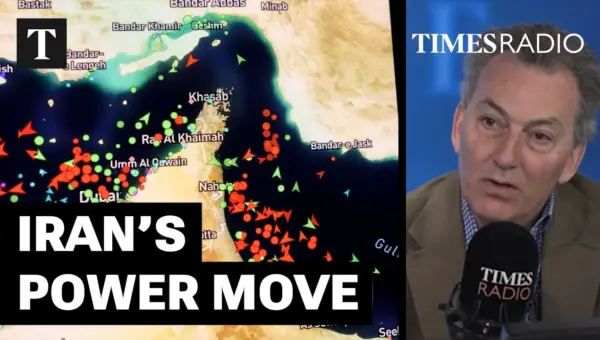
Iran Leverages Strait of Hormuz for Reconstruction Funds
Iran is reportedly leveraging its control over the Strait of Hormuz with a 'toll booth' strategy to fund post-conflict reconstruction. This tactic emerges amidst rising tensions in the Gulf, with U.S. forces seizing an Iranian cargo ship and Iran vowing retaliation. Internal divisions within Iran complicate potential peace talks, while the nuclear program and regional conflicts remain key negotiation points.

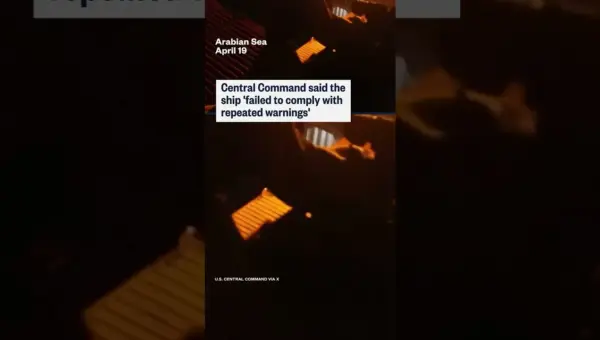
US Navy Seizes Iranian Ship in Red Sea Operation
The U.S. Navy seized an Iranian-flagged cargo ship in the Red Sea carrying a large cache of advanced weaponry. The operation targeted the M/V Behshad, suspected of smuggling Iranian-made missiles and drone parts. This action is part of broader efforts to counter arms trafficking and destabilizing activities in the region.

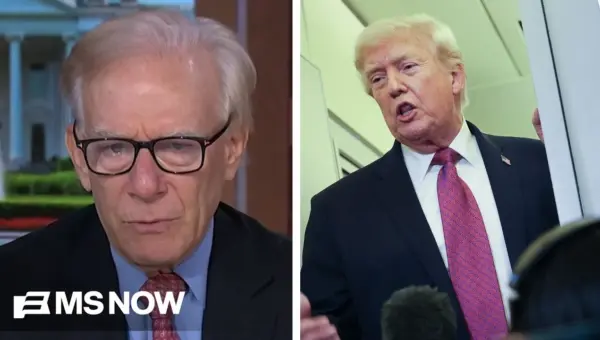
Trump Struggles to End Iran War Amid Shifting Tactics
Tensions between the U.S. and Iran escalate as a fragile ceasefire comes under pressure, marked by accusations of violations and the seizure of an Iranian cargo ship. President Trump faces challenges in ending the conflict, with public opinion leaning against U.S. involvement and Iran reportedly feeling emboldened.