Iran Leverages Strait of Hormuz for Reconstruction Funds
Iran is reportedly leveraging its control over the Strait of Hormuz with a 'toll booth' strategy to fund post-conflict reconstruction. This tactic emerges amidst rising tensions in the Gulf, with U.S. forces seizing an Iranian cargo ship and Iran vowing retaliation. Internal divisions within Iran complicate potential peace talks, while the nuclear program and regional conflicts remain key negotiation points.

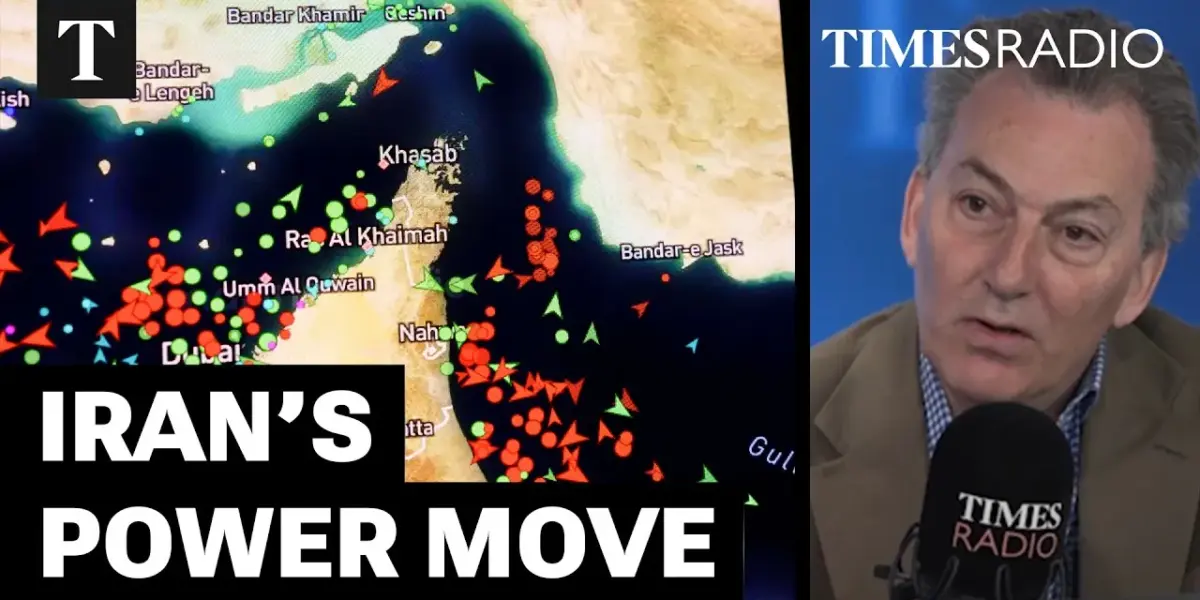
Iran’s ‘Toll Booth’ Strategy in Hormuz Strait
Iran is reportedly using its control over the vital Strait of Hormuz as a form of leverage, a tactic described as a ‘toll booth’ strategy. The goal appears to be generating funds needed for the country’s reconstruction once current conflicts conclude. This approach aims to capitalize on Iran’s demonstrated power in the region to secure resources for rebuilding.
Mark Urban, a foreign policy and defense analyst, discussed this strategy. He explained that Iran might be using its demonstrated power advantage in the Strait of Hormuz to help pay for the extensive rebuilding efforts anticipated. This suggests a long-term financial plan tied directly to controlling this critical global shipping lane.
Tensions Rise in the Gulf Amidst Negotiations
The situation in the Gulf remains tense, with diplomatic efforts underway but facing significant challenges. A U.S. delegation was reportedly sent to Pakistan for a second round of negotiations. However, it remained unclear if there would be willing participants from Iran, highlighting the fragile nature of the talks.
Adding to the friction, U.S. forces recently seized and bombed an Iranian cargo ship, the Motor Vessel Tosco. This action followed the U.S. imposition of a counter-blockade on Iranian ports. Iran has vowed retaliation, though it has not yet followed through on similar threats made previously.
Urban noted that the enforcement of the U.S. embargo was delayed, allowing some Iranian ships to pass. The U.S. decision to take more forceful action may be an attempt to call Iran’s bluff, especially after Iran threatened to close the Bab-el-Mandeb strait. This escalation places the region at a critical juncture, with potential for further conflict.
Internal Divisions in Iran Over Peace Talks
Within Iran, there appears to be a significant struggle over how to respond to the current crisis and potential negotiations. While some Iranian officials, like Parliament Speaker Mohammad Bagher Ghalibaf, have made conciliatory remarks, suggesting a possible deal might be beneficial after making their point, hardline elements are reportedly pushing back.
Ghalibaf, who has ties to the Revolutionary Guard Corps, emphasized Iran’s success in confronting America while acknowledging U.S. power. This suggests a pragmatic approach favored by some within the Iranian leadership. However, other hardline factions are said to oppose any settlement, preferring to continue the ‘Hormuz toll booth’ strategy to fund reconstruction.
This internal division creates uncertainty for international mediators like Pakistan. The outcome of this struggle within Tehran will likely determine whether meaningful talks can proceed. The conflict’s resolution hinges on navigating these complex internal politics.
Unraveling the Complex Issues on the Table
The potential negotiations involve a wide array of deeply intertwined issues, making a comprehensive settlement a formidable task. Key topics include Iran’s nuclear program, the lifting of sanctions, regional conflicts, and reparations for damages. The sheer volume and complexity of these demands have been compared to a bowl of spaghetti, with many strands to untangle.
Urban suggests that the most promising starting point for negotiations is Iran’s nuclear policy. Both sides have shown some flexibility on issues like uranium enrichment, and the U.S. has acknowledged Iran’s right to nuclear power for peaceful purposes. This area represents a potential key to unlocking progress on other fronts.
However, new strands have been added to the conflict, particularly the Israeli campaign against Hezbollah in Lebanon. Moderate Iranian officials now want this conflict included in any ceasefire and resolution. This adds another layer of complexity, as Iran views Hezbollah as a crucial deterrent.
Hezbollah’s Role as an Iranian Deterrent
The relationship between Iran and Hezbollah is a critical factor in regional stability. Senior Israeli military officers have noted that Hezbollah’s limited initial involvement in conflicts after October 7th indicated its primary role as an Iranian deterrent. Hezbollah appears poised to act more forcefully only if Iran itself faces an imminent attack.
When Iran was attacked in February, Hezbollah became more involved. Both sides have seemingly tried to limit actions on behalf of the other, though Hezbollah did fire rockets into Israel after the February attacks. Their interests, while not identical, are closely aligned, making them a significant strategic bloc.
Strait of Hormuz Control and Regional Stability
The control of the Strait of Hormuz remains a central issue, with the potential for Iran to implement a ‘toll booth’ system charging tankers. Such a move would create significant problems for Gulf Arab states, who rely heavily on oil exports through the strait. Iran has reportedly allowed Saudi Arabia to bypass Hormuz by shipping oil via the Red Sea to manage this tension.
This accommodation highlights Iran’s strategic thinking. By allowing Saudi Arabia, a key player in the Gulf Cooperation Council, to find alternative routes, Iran aims to prevent a more unified regional stance against it. This demonstrates that Iran is sensitive to alienating its neighbors, especially given its future need for trade and capital to rebuild its economy.
Historically, Iran has relied on financial hubs like Dubai and Saudi Arabia for economic activity. Therefore, any strategy to end the current conflict must consider its long-term relationships with these regional partners. Rebuilding Iran’s economy will require access to capital and trade, making regional stability a crucial factor.
Internal Stability Post-Conflict
The question of Iran’s internal stability after the current conflict is a significant concern. While the U.S. initially dangled the prospect of regime change, President Trump’s messages also urged Iranians to stay indoors during bombing and emerge only after it stopped. This suggests an understanding that internal challenges may intensify once the conflict subsides.
Major economic issues, including unemployment caused by bombing damage to industrial sites like steel mills, will likely fuel unrest. Access to capital for reconstruction will be difficult, and rebuilding the economy will take considerable time. Therefore, a period of internal struggle and potential renewed unrest remains a distinct possibility for Iran once the current crisis is resolved.
Source: Iran Using Strait Of Hormuz As Leverage In ‘Toll Booth’ Strategy To Rebuild Country | Mark Urban (YouTube)

Related Articles

US Navy Seizes Iranian Ship in Red Sea Operation
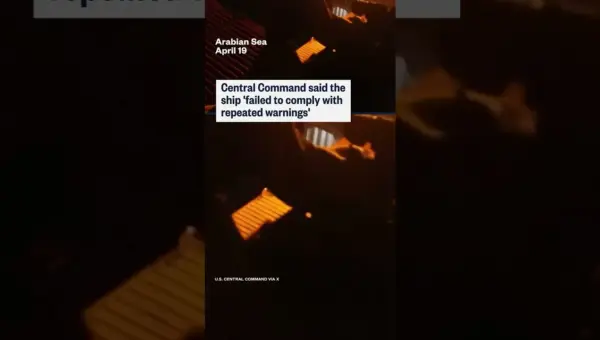
The U.S. Navy seized an Iranian-flagged cargo ship in the Red Sea carrying a large cache of advanced weaponry. The operation targeted the M/V Behshad, suspected of smuggling Iranian-made missiles and drone parts. This action is part of broader efforts to counter arms trafficking and destabilizing activities in the region.

Trump: US Navy Blockade Closed Strait of Hormuz
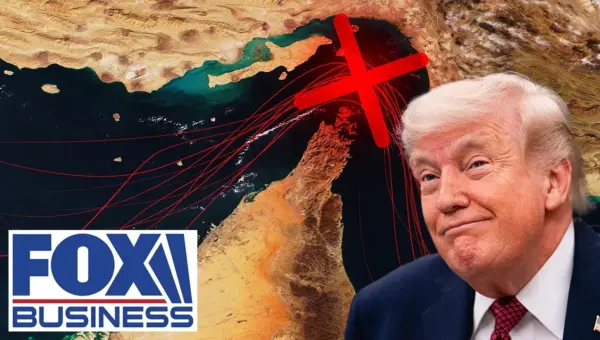
President Trump asserted that the U.S. Navy's blockade, not Iran's claims, has closed the Strait of Hormuz amid rising U.S.-Iran tensions. U.S. intelligence also suggests China may be considering supplying Iran with advanced radar systems, though Beijing denies sending weapons. Skepticism surrounds China's reported economic growth figures, with experts pointing to inconsistencies.
Trump Struggles to End Iran War Amid Shifting Tactics
Tensions between the U.S. and Iran escalate as a fragile ceasefire comes under pressure, marked by accusations of violations and the seizure of an Iranian cargo ship. President Trump faces challenges in ending the conflict, with public opinion leaning against U.S. involvement and Iran reportedly feeling emboldened.