Sun’s Cosmic Siblings Found Orbiting Milky Way
Astronomers have identified potential siblings of our Sun, stars born in the same cosmic nursery, by analyzing their movements and chemical makeup. The Sun's stellar family may orbit the Milky Way together. The article also touches on the theoretical possibility of black holes acting as time mirrors, the Sun's future evolution, and the ongoing search for Planet Nine.

Sun’s Cosmic Siblings Found Orbiting Milky Way
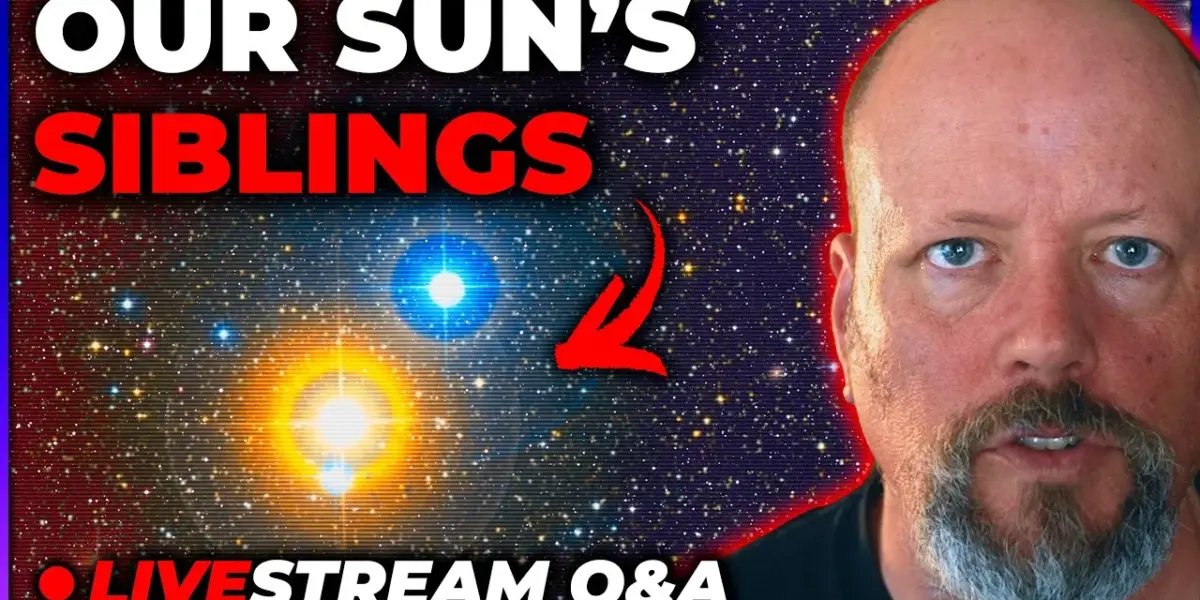
Astronomers believe they have found stars born alongside our Sun in the same cosmic nursery. These potential siblings share a similar path through the Milky Way and possess a matching chemical fingerprint. This discovery helps paint a clearer picture of our solar system’s origins.
Tracing Stellar Family Ties
Identifying stars born together, known as a stellar cluster, requires looking for two main clues. The first is movement.
Stars born in the same cluster tend to follow similar orbits around the galactic center. Thanks to the Gaia telescope, which has mapped the positions and movements of about a billion stars, astronomers have identified many candidates moving much like our Sun.
Over 4.5 billion years, these stars will drift apart, but their general orbital paths should remain similar. They won’t be on wildly different or highly stretched-out orbits. This shared journey through the galaxy is a strong indicator of a common birthplace.
Matching Chemical Fingerprints
The second key clue is chemical composition. When stars form from a giant cloud of gas and dust, called a nebula, they inherit a similar mix of elements. Astronomers refer to elements heavier than helium as ‘metals.’ By analyzing a star’s light through a technique called spectroscopy, scientists can determine its chemical makeup.
Spectroscopy involves splitting a star’s light into a rainbow. Scientists then look for specific patterns, like absorption or emission lines, that match the known signatures of different elements. Finding stars with a similar abundance of elements like carbon and oxygen to our Sun further strengthens the case for them being siblings.
Cross-Referencing the Clues
By combining these two pieces of evidence—similar movement and identical chemical composition—astronomers have found several promising candidates for the Sun’s stellar siblings. These candidates have been reported over the past five years. This ongoing work allows us to connect our Sun to its ancient cosmic family.
Black Holes and Time Mirrors: A Theoretical Possibility
Could light bending around a black hole act as a time mirror, allowing us to see the Sun’s past? Theoretically, yes, but practically, it’s impossible. Light does bend around black holes, as seen in artist’s depictions where light wraps around them.
Just outside a black hole’s event horizon lies the photon ring. Here, light can orbit the black hole.
If a photon from the Sun were to travel to a black hole, enter the photon ring at the perfect angle, and then be emitted in the exact opposite direction, it would act like a mirror. This would allow us to see the Sun as it was when that photon was emitted.
The Practical Impossibility
The challenge lies in the immense distances. To see the Sun as it was millions of years ago, say during the age of dinosaurs, we would need a black hole tens of millions of light-years away. The number of photons making that journey and then perfectly reflecting back is astronomically small.
It is highly improbable that enough photons would return to form a coherent image. While theoretically possible, the chances of observing such an event are virtually zero, making it an impractical method for viewing the Sun’s past.
The Sun’s Future and Titan’s Potential Habitability
Our Sun has a lifespan of about another 5 billion years. As it ages, it will gradually become hotter. In about a billion years, it will heat up enough to boil Earth’s oceans.
The Sun’s temperature will significantly change at the end of its life when it exhausts the hydrogen in its core and begins burning helium. It will swell into a red giant, potentially engulfing Mercury, Venus, and possibly even Earth. The exact fate of Earth remains uncertain.
Habitable Zone Migration
As the Sun expands and heats up, its habitable zone—the region where liquid water can exist on a planet’s surface—will shift outward. Jupiter’s moons, Europa and Ganymede, could enter this zone, potentially developing surface oceans as ice melts. This could last for a few hundred million years.
However, this period won’t be stable, with the Sun undergoing cycles of expansion and contraction, shedding material. While Jupiter’s moons might become temporarily habitable, Saturn, being farther away, is less likely to experience the same conditions, though it would certainly become warmer.
Voyager 2’s Lingering Power
Launched in 1977, the Voyager 2 spacecraft continues to operate thanks to its radioisotope thermoelectric generator (RTG). This device uses the heat from decaying plutonium to generate electricity.
Over the decades, the amount of heat, and thus electricity, has decreased. NASA has systematically shut down instruments to conserve power. While many instruments are no longer needed, the spacecraft still carries essential scientific tools and communication systems to send data back to Earth.
The Final Frontier of Power
Voyager 2 is currently detecting interstellar material and tracking its journey through the outer solar system. However, its power continues to decline. Scientists estimate that the spacecraft likely has less than 10 years of operational life remaining.
Eventually, power will be insufficient to run both scientific instruments and communication systems. At that point, NASA will likely power down the spacecraft. The exact timing remains unknown, but efforts are being made to extract every last bit of science.
Planet Nine: Awaiting New Tools
Despite extensive searches, Planet Nine has not yet been discovered. Astronomers have used the best available tools, but the elusive planet remains hidden.
The upcoming Vera C. Rubin Observatory, set to begin operations soon, offers renewed hope.
This observatory will scan the entire southern sky, including the plane of the ecliptic where Planet Nine is expected to orbit. If Planet Nine exists, the Rubin Observatory is the most likely instrument to find it.
Constraining the Theory
If the Vera C. Rubin Observatory fails to detect Planet Nine after its comprehensive survey, it will place significant constraints on the theories predicting its existence. The search continues, with new technology poised to potentially solve this cosmic mystery.
The Expanding Universe: A Consistent Picture
Astronomers are quite confident that the universe is expanding at roughly the same rate in all directions. This assumption is based on the principle that our location in the universe is not special.
On large scales, the universe appears remarkably uniform. Different regions, billions of light-years across, show similar compositions of galaxies, stars, and dark matter. This uniformity supports the idea that the expansion is consistent everywhere.
Evidence for Uniform Expansion
Observations and calculations consistently reinforce this idea. When astronomers examine large, randomly selected portions of the universe, the variations between them are incredibly small. This suggests that the fundamental forces driving the universe’s expansion—like the momentum from the Big Bang and the influence of dark energy—are acting uniformly across space.
Reflectors in Orbit: A Dim Possibility
The idea of placing a reflector in orbit to extend daylight at night has been explored. Such a reflector could provide more light to regions with limited daylight, like northern latitudes during winter.
While theoretically possible, the benefits are incremental. Launching a massive reflector would be extremely expensive. The added light would primarily be useful during twilight hours, and the financial incentive is not overwhelming.
Potential Downsides and Costs
There are potential downsides, such as confusing wildlife and disrupting natural day-night cycles. Adding a reflector would increase Earth’s overall energy budget, which is a concern given current environmental challenges. The significant cost of space deployment makes such projects challenging to justify against terrestrial solutions.
ESA’s Cosmic Horizons 2040
The European Space Agency (ESA) is developing its ‘Cosmic Horizons 2040’ program. This initiative outlines ESA’s priorities for future space missions and scientific endeavors.
ESA’s program director for Horizons 2040 is currently busy, but an interview is planned for the new year. This program represents ESA’s long-term vision, exploring ambitious ideas for next-generation telescopes and missions.
Sci-Fi Concepts for the Future
The program aims to explore cutting-edge, even science-fiction-like concepts. ESA is considering innovative mission ideas and telescope designs to push the boundaries of space science. These discussions will likely lead to exciting future projects.
The Great Attractor: No Longer a Mystery
The Great Attractor, once a significant cosmic puzzle, is now well understood. It is not an alien mystery but rather a collection of galaxies located behind the Milky Way.
These galaxies are obscured from our view by the gas and dust at the center of our own galaxy, an area known as the zone of avoidance. This dust and gas block visible light, making it difficult to see objects on the far side of the Milky Way.
Infrared Reveals the Hidden
However, infrared telescopes can penetrate this dust cloud. Using infrared observatories, astronomers have mapped many of the galaxies contributing to the Great Attractor’s gravitational pull. This has revealed the positions and masses of these distant galaxies.
Modern infrared astronomy, which has been used for decades to study the galactic center and black holes, has demystified the Great Attractor. What was once a profound mystery is now a well-mapped region of the universe.
Venus and Mars: Habitable Zone Misconceptions
Venus and Mars are sometimes discussed in the context of the habitable zone, but this term has a specific scientific meaning. The habitable zone is defined as the region around a star where liquid water could exist on a planet’s surface.
While Venus and Mars might be considered within the Sun’s historical habitable zone, their current conditions make them uninhabitable. Venus is extremely hot due to a runaway greenhouse effect, and Mars is cold and lacks a substantial atmosphere.
Redefining the Search
The term ‘Goldilocks zone’ refers specifically to the potential for surface liquid water. It does not guarantee habitability, as factors like atmospheric pressure, composition, and stellar activity also play key roles. The search for Earth-like planets around other stars focuses on identifying worlds within this zone, but scientists also consider other factors to assess their true potential for life.
Source: Where Did the Sun Come From? [Q&A Livestream] (YouTube)

Related Articles

Solar Lens Mission: A 20-Year Journey to Cosmic Magnification
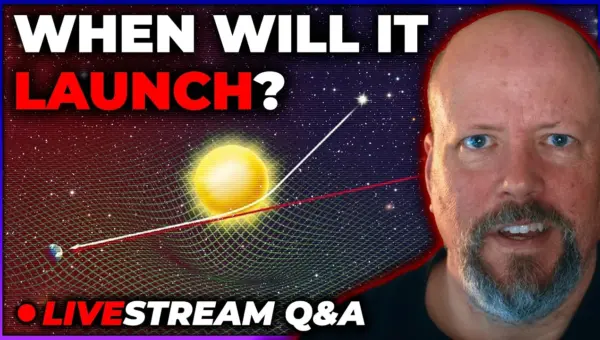
A proposed mission to use the Sun as a giant cosmic magnifying glass, known as the Solar Gravitational Lens, could revolutionize astronomy. Reaching this distant vantage point, however, requires overcoming significant propulsion challenges, with a journey expected to take around 20 years after launch, potentially in the 2070s or 2080s.
New Comet Could Dazzle Skies With Naked-Eye Visibility
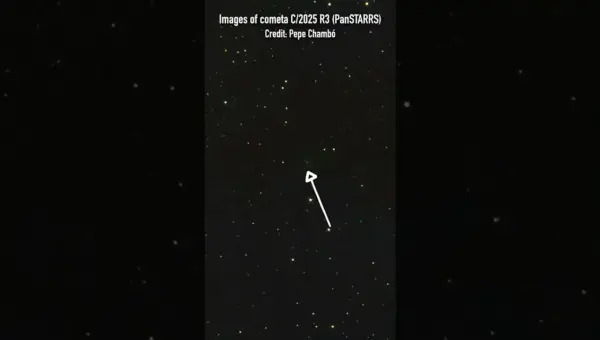
Comet C/2025 R3 (PanSTARRS) is expected to make its closest approach to Earth on April 19th, with predictions suggesting it could become bright enough to be seen with the naked eye. This icy visitor from the outer solar system offers a rare and potentially dazzling celestial display.

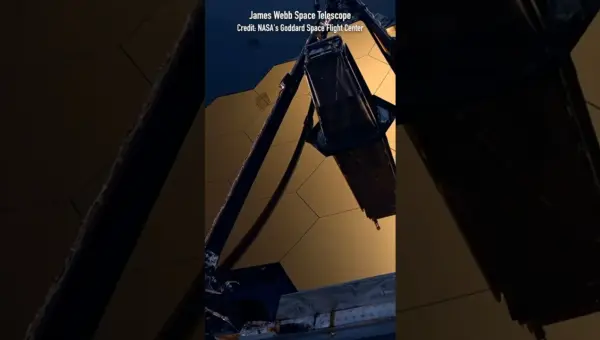
Webb Telescope Reveals New Cosmic Secrets
The James Webb Space Telescope has selected its next batch of scientific projects, promising new insights into alien worlds and the early universe. Researchers will use Webb to study exoplanet atmospheres, investigate distant galaxies, and explore objects within our own solar system.