Iran Uses Swarm Tactics to Threaten Strait of Hormuz
Iran is employing asymmetric warfare tactics, including drone swarms, mines, and coastal missiles, to threaten the critical Strait of Hormuz. The U.S. Navy is developing counter-strategies involving destroyers, robotic mine sweepers, and air power to maintain freedom of navigation.

Iran’s Asymmetric Warfare Targets Key Shipping Lane
Iran is employing a unique strategy of asymmetric warfare to challenge global naval powers, particularly in the vital Strait of Hormuz. Instead of direct confrontation, the Islamic Revolutionary Guard Corps (IRGC) focuses on overwhelming opponents with a coordinated series of rapid attacks using drones, fast boats, and missiles. This approach aims to disrupt shipping and project power despite Iran’s status as a regional force.
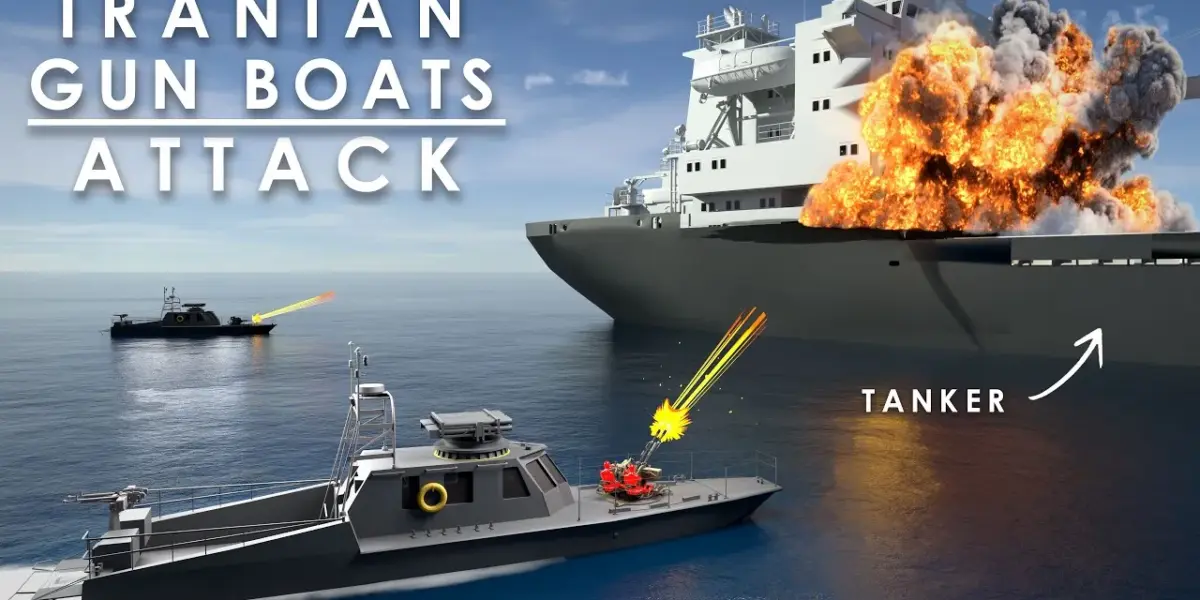
Recent actions, such as the incident involving two gunboats approaching a merchant tanker without warning, highlight this strategy. The IRGC vessels fired on the tanker, not to cause major damage, but to send a clear message of intent and capability. This method bypasses standard maritime protocols, signaling a willingness to escalate tensions.
Key Tactics in Iran’s Naval Strategy
The Swarm Attack
One of Iran’s most notable tactics is the swarm. The IRGC operates hundreds of small, fast attack craft armed with machine guns and missiles. These boats are deployed simultaneously from multiple directions, overwhelming the defensive systems of larger warships by presenting too many targets to track and destroy effectively.
Mining the Strait
Iran possesses thousands of naval mines, including advanced smart mines that can detect specific ship sounds. These mines can be deployed from submarines, small boats, or even disguised civilian vessels into the narrow shipping lanes. The goal is to deny safe passage to naval forces and cause global oil prices to spike, inflicting economic damage.
Coastal Missile Batteries
Iran utilizes its rugged mountainous coastline for mobile missile launchers. Using “shoot and scoot” tactics with truck-mounted systems, they fire ballistic missiles and then quickly relocate to avoid counterattacks. This turns the Gulf into a dangerous “kill zone” where ships face constant threats from land-based launchers.
Submarine Ambush
The shallow waters of the Persian Gulf are ideal for Iran’s fleet of small diesel-electric submarines, such as the Ghadir class. These submarines can lie in wait on the seafloor, undetected by sonar, and launch torpedoes at passing vessels. This ambush strategy is designed to damage high-value targets like aircraft carriers or destroyers.
Drone Warfare
Iran has heavily invested in drone technology, using Unmanned Aerial Vehicles (UAVs) for both surveillance and as loitering munitions, or suicide drones. Launched in large numbers, these drones aim to crash into sensitive ship systems like radar dishes and flight decks. The objective is to blind enemy fleets and halt operations, making them vulnerable to further attacks.
US Counter-Strategies and Challenges
Naval Deployment
To counter Iran’s blockade, the U.S. Navy would likely rely on guided missile destroyers rather than large aircraft carriers in the confined Strait. These destroyers would form a layered patrol, using their radar to create a surveillance dome over the area. U.S. attack submarines would also patrol submerged, ready to intercept Iranian submarines.
Robotic Mine Sweeping
Clearing the thousands of mines Iran could deploy presents a significant challenge. The U.S. uses Independence-class littoral combat ships as platforms for robotic mine-clearing systems.
These ships launch unmanned surface vehicles with sonar to map the seafloor and unmanned underwater vehicles like the KnifeFish to detect and identify buried mines. A separate system uses unmanned surface vehicles to mimic the acoustic and magnetic signatures of a warship, tricking mines into detonating harmlessly.
Air and Helicopter Support
To combat Iran’s fast attack boats, the U.S. employs air power. The A-10 Thunderbolt II aircraft, normally used against tanks, can devastatingly engage small boats with its 30mm cannon and Maverick missiles. Army Aviation’s Apache helicopters, operating from U.S. Navy assault ships, also use Hellfire missiles and their own cannons to pursue and neutralize swarms of enemy craft.
The Strait of Hormuz: A Critical Choke Point
The Strait of Hormuz is only about 21 nautical miles wide at its narrowest point, with tightly controlled inbound and outbound shipping lanes. Iran controls the northern coastline and several islands, which it has fortified with missile launchers and early warning systems. These islands, like Lar, Keshim, and Abu Musa, serve as strategic outposts for launching attacks and enforcing control over the narrow waterway.
Iranian Island Fortifications
Lar Island acts as a choke point enforcer, allowing fast attack boats to quickly reach passing ships. Keshim Island, the largest, functions as a heavy arsenal and military hub, hiding underground bunkers and mobile anti-ship missile launchers. Abu Musa Island is a forward outpost for early warning and extends Iran’s defensive bubble deeper into the Gulf.
Combined Arms Attacks
Iran’s attacks often combine fast boat swarms, suicide drones, and anti-ship missiles. The goal is to overwhelm defenses, blind ship crews, disable engines, and damage the hull. If missiles are intercepted, naval mines can be dropped to physically stop ships.
Offensive Countermeasures
The ultimate countermeasure involves offensive strikes. The U.S. and its allies use surveillance drones to monitor Iran’s coast, identifying mobile missile launchers or mine-laying operations. Allied fighter jets and Tomahawk missiles are then tasked with destroying these threats before they can be used.
Destroying Underground Facilities
To neutralize deeply buried Iranian anti-ship missile sites, U.S. forces employ heavy munitions like the GBU-72, a 5,000lb precision-guided bomb. These bombs are designed to penetrate hardened underground structures, causing massive explosions that wipe out the facilities.
Source: Did Iran Use 2 Gun Boats to Block the Strait of Hormuz | Explained (YouTube)

Related Articles


Iran Nuclear Deal Talks Stall Amid Strait of Hormuz Tensions
Tensions are high over the Strait of Hormuz as conflicting reports emerge regarding Iran's nuclear program and potential peace talks. Despite claims of openness, Iran fired on a tanker, while the U.S. maintains sanctions. Experts are skeptical of a breakthrough, citing Iran's firm stance on enrichment and its regional influence.

US Military Prepares to Board Iran-Linked Ships
The U.S. military is preparing to board Iran-linked ships in international waters as part of a new strategy called 'Economic Fury.' This move aims to cut off funding for the Iranian regime and could lead to the seizure of oil tankers. Experts warn this escalates the conflict, driven by 'zero-sum' demands from both sides.


US Raids Iran Ships as Tensions Skyrocket
The U.S. military is preparing to board Iranian oil tankers amid rising tensions in the Strait of Hormuz. Apache attack helicopters have been deployed, and intelligence suggests the tankers may be armed, increasing the risk of confrontation. Iran has issued defiant warnings, stating the strait remains closed and threatening any vessels associated with its enemies.