Trump: US Navy Blockade Closed Strait of Hormuz
President Trump asserted that the U.S. Navy's blockade, not Iran's claims, has closed the Strait of Hormuz amid rising U.S.-Iran tensions. U.S. intelligence also suggests China may be considering supplying Iran with advanced radar systems, though Beijing denies sending weapons. Skepticism surrounds China's reported economic growth figures, with experts pointing to inconsistencies.

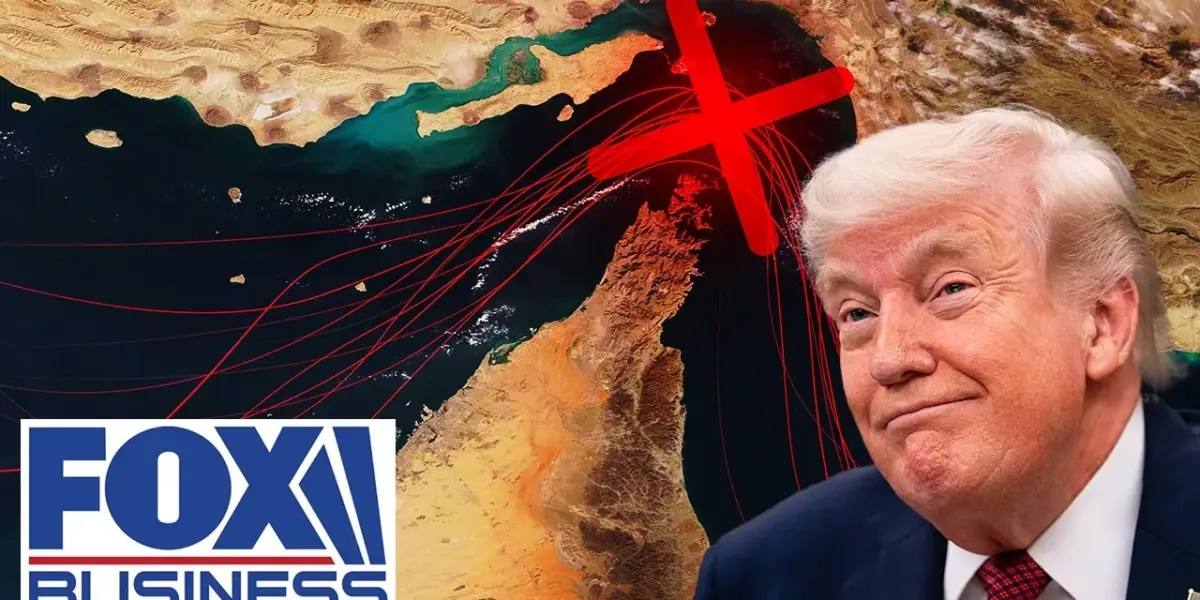
Trump Claims US Navy Blockade Closed Strait of Hormuz
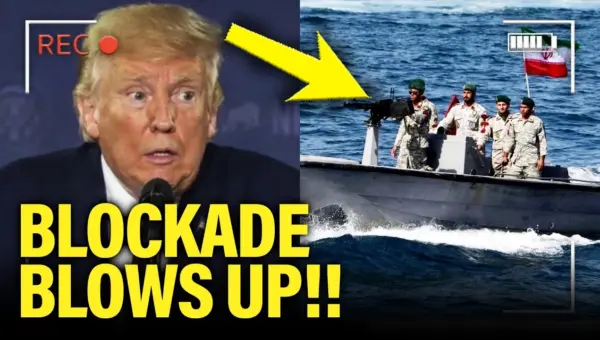
President Trump stated that Iran’s claim to have closed the Strait of Hormuz is false. He explained that the United States Navy had already effectively closed the vital shipping lane with its own blockade. This assertion comes amid heightened tensions between the U.S. and Iran, with questions arising about control over the strategic waterway.
The Strait of Hormuz is a narrow channel between the Persian Gulf and the Gulf of Oman. It is a critical route for global oil shipments, with a significant portion of the world’s oil passing through it daily. Any disruption here can cause major fluctuations in oil prices and impact global markets.
China’s Oil Stockpile and Advanced Radar Systems
Reports indicate China is attempting to increase its oil and gas reserves. In March, China reportedly had a surplus of 2 million barrels per day.
Meanwhile, new U.S. intelligence suggests Beijing is considering providing Iran with advanced X-band radar systems. These systems would greatly enhance Iran’s ability to detect incoming threats, including U.S. naval and air forces.
However, President Trump previously stated that Chinese President Xi Jinping responded to him in a letter. Xi Jinping reportedly assured Trump that China is not sending weapons to Iran and will not do so. This statement contrasts with intelligence suggesting potential radar system transfers.
Seizure of Shipping Vessel Highlights Tensions
Gordon Chang, a Senior Fellow at the Gatestone Institute, commented on the recent seizure of a shipping vessel. The vessel was traveling between Iran and China and was boarded by the U.S. last week. Chang described this as an important move by the United States.
He explained that the ship was heading for an Iranian port, which violates the U.S. naval blockade. Chang believes this action demonstrates the U.S. commitment to its word and sends a message to Beijing. He also noted that Chinese President Xi Jinping acts as a short-term ruler and may not have many options to counter U.S. actions.
Economic Warfare and China’s GDP
The economic impacts of these geopolitical events are being felt across nations. President Trump appears to be employing economic pressure, squeezing Iran and Venezuela, and commenting on Cuba.
Despite these pressures, China reported a GDP growth of 5% in the first quarter, up from 4.5% in the previous quarter. China’s central bank has also maintained steady lending rates for eleven consecutive months.
However, Chang expressed skepticism about China’s reported economic figures. He stated that these numbers do not align with underlying economic indicators or the actions of the Chinese central government.
Chang pointed to new rules designed to penalize foreign companies leaving China, which he believes contradicts an economy growing at 5%. He also noted that while industrial output rose significantly by 6.1%, retail sales and exports saw much smaller increases.
This suggests that any growth may be due to China producing goods it cannot sell, leading to a potential inventory buildup. Chang concluded that the reported Chinese economic numbers are too good to be true.
China’s Leadership in Humanoid Robots
In other technological developments, a Chinese-built humanoid robot reportedly beat a human in a half marathon in Beijing. The robot completed the 13-mile race in 50 minutes, seven minutes faster than the human record. This event highlights China’s advancements in robotics.
Chang stated that China is a world leader in humanoid robots. He described the robot’s performance as unbelievable and noted a significant improvement from previous years.
However, he cautioned that while these robots are impressive, they are not yet a major factor in China’s overall economy. High-tech manufacturing, according to official numbers, accounts for only 6% of China’s GDP.
U.S. Leads in AI and Space Race
Regarding Artificial Intelligence (AI), President Trump believes the U.S. is far ahead of China. He stated that the U.S. is building plants and developing AI at a scale never imagined before, predicting it will be bigger than the internet. He also suggested AI could make banking much bigger, safer, and more efficient.
Chang agreed that the U.S. is ahead in AI, largely due to superior chip technology. He expressed hope that President Trump would prevent the sale of advanced American chips to China, arguing that China can only compete by using U.S. technology. In the space race, Chang believes the U.S. leads in the race to the moon, particularly with reusable rocket technology.
Market Impact
The ongoing geopolitical tensions, particularly concerning the Strait of Hormuz and U.S.-Iran relations, create uncertainty in global energy markets. Any escalation could lead to higher oil prices, impacting inflation and consumer spending worldwide. China’s economic data, if inflated, could mask underlying weaknesses that might eventually affect global trade and investment.
The competition in AI and advanced technology between the U.S. and China is a key factor for future economic growth. Developments in these areas could reshape industries and create new investment opportunities. However, restricting the flow of technology, as suggested by Chang, could also slow down global innovation.
What Investors Should Know
Investors should monitor the situation in the Strait of Hormuz closely, as it directly impacts oil prices and energy sector stocks. Skepticism regarding China’s economic data suggests a need for caution when evaluating investments tied to the Chinese economy. The race for technological dominance, especially in AI and semiconductors, presents long-term strategic implications for global markets.
The U.S. government’s stance on technology export controls to China will be a significant factor. Companies involved in advanced chip manufacturing and AI development in the U.S. could see increased opportunities if they maintain a technological lead. Conversely, geopolitical friction could disrupt supply chains and affect international business operations.
Source: ‘ALREADY CLOSED': Trump drops BOMBSHELL on Hormuz control (YouTube)

Related Articles
Trump Struggles to End Iran War Amid Shifting Tactics
Tensions between the U.S. and Iran escalate as a fragile ceasefire comes under pressure, marked by accusations of violations and the seizure of an Iranian cargo ship. President Trump faces challenges in ending the conflict, with public opinion leaning against U.S. involvement and Iran reportedly feeling emboldened.
Iran Escalates Tensions, Threatens Global Oil Shock
Tensions flare in the Persian Gulf as Iran vows retaliation after a U.S. Navy interdiction of an Iranian ship. The incident has sent oil prices soaring and jeopardized diplomatic talks, with Iran accusing the U.S. of piracy and escalating aggression.
International Force Needed to Keep Strait of Hormuz Open
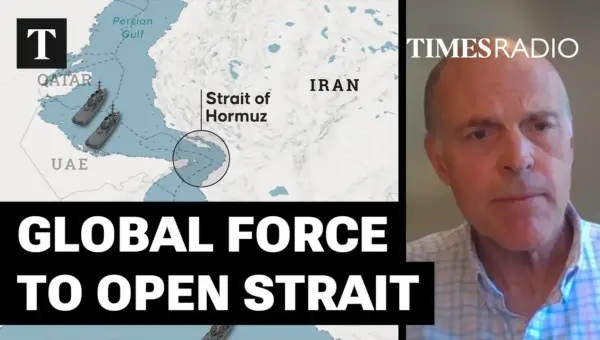
Vice Admiral Duncan Potts advocates for an international force to secure the Strait of Hormuz after a recent US seizure of an Iranian ship. Citing lessons from anti-piracy efforts, he argues a coalition is vital to maintain open passage through this critical global waterway. The move aims to prevent any single nation from controlling this essential trade route.