Prediction Markets: Betting on War or Gathering Intelligence?
Prediction markets are drawing millions in bets on future events, including geopolitical conflicts. Experts question if these platforms offer genuine intelligence or simply profit from global instability. Research indicates most Americans view them as gambling, not investing, with young men driving their increased use.

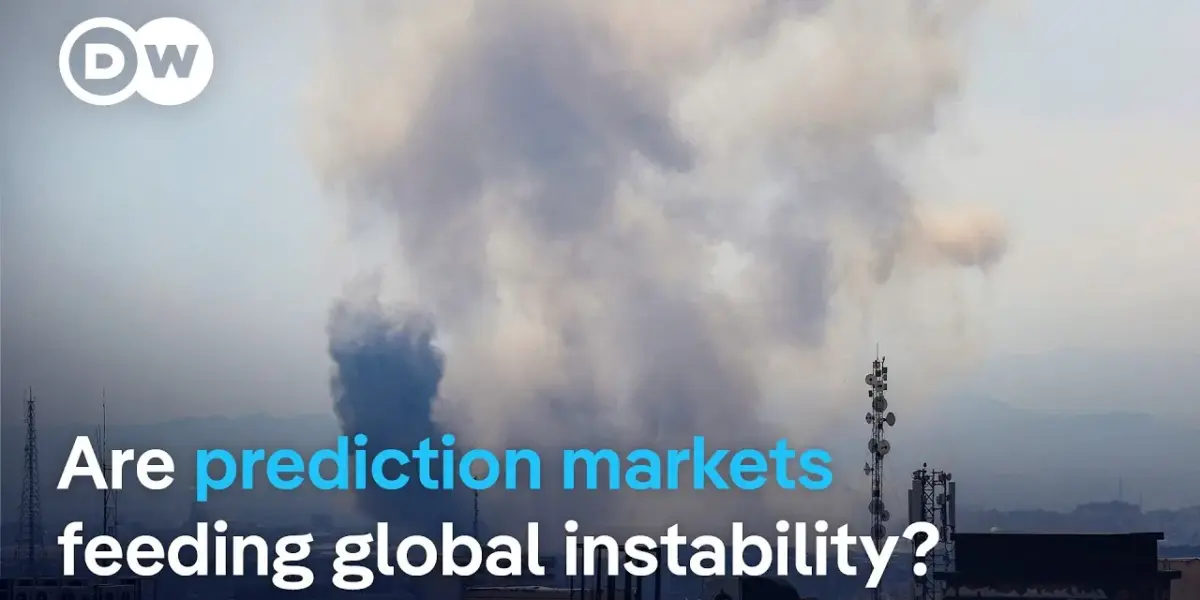
Prediction Markets Draw Millions Amid Geopolitical Turmoil
Platforms like Polymarket and Kalshi are attracting huge sums of money, allowing users to bet on future events, including conflicts like the Iran war. These sites operate in legal gray areas, facing bans in some regions. They raise questions about whether they are a new source of geopolitical intelligence or a high-stakes casino profiting from global instability.
Users can wager on outcomes ranging from the return of Jesus Christ by 2027 to the results of political events. Well-timed bets related to the Iran conflict have prompted calls for investigations by U.S. lawmakers, fueling concerns about potential insider trading. These activities highlight the growing influence of prediction markets and their impact on politics and society.
A Gambling Mindset Reshaping Truth and Power
Jonathan Cohen, Director of Gambling Policy for the American Institute for Boys and Men and author of “Losing Big,” argues that this trend is more than just betting. He believes a gambling mindset is fundamentally changing how we understand truth, risk, and power.
“It wasn’t just a few years ago that gambling was a bit of an oddity and was a bit hard to find,” Cohen explained. “It’s evolved from gambling on sports and gambling mechanics built into video games to now we have this with the rise of prediction markets – sort of the next natural evolution of it.” He added that if platforms allow betting on real-world events, people will inevitably try to profit from them, even conflicts like wars.
Polymarket: Truth Machine or Uncertainty Monetizer?
Polymarket’s CEO has described the platform as a “truth machine,” suggesting it harnesses the wisdom of crowds. The idea is that individuals willing to invest money in their opinions are more informed than pundits or journalists. However, Cohen points out significant flaws in this argument.
“We have a lot of evidence recently that the wisdom of the crowds is actually not particularly wise,” Cohen stated. Furthermore, he noted that these platforms technically prohibit individuals with inside information – the very people who could offer the most accurate insights – from betting. This contradicts the core claim that prediction markets are a source of truth.
Prediction Markets Function Like Gambling, Research Shows
New research from the American Institute for Boys and Men indicates that most Americans view prediction markets as more akin to gambling than investing. While legally classified as investment platforms in the U.S. to operate, their practical function is that of a gambling platform.
“The thing that people are actually using prediction markets for, it’s not geopolitics, it’s not oil prices, it’s not Taylor Swift album sales, it’s sports,” Cohen revealed. Sports account for 80-90% of trading volume on U.S. prediction markets. Regardless of legal definitions, Cohen concluded, “they look and act and even if they don’t talk like a gambling platform, they are one.”
Young Men Driving Betting Platform Growth
Data shows that young men are the primary users driving the increase in betting platforms, including prediction markets and online sports betting. Cohen attributes this trend to several factors.
“Young men being willing to embrace risky behavior sort of more generally speaking, not sort of helped in the fact by many of them have undeveloped prefrontal cortex,” he explained. This is compounded by a sense of financial precarity. Many young men face lower labor market and educational attainment, leading them to see gambling as a potential, albeit slim, chance to achieve significant financial gains.
Regulatory Challenges and Enforcement Gaps
Polymarket is blocked in several countries, including Germany. This raises questions about whether regulators see these platforms as dangerous or if the law simply hasn’t kept pace.
Cohen described Polymarket’s situation as unusual. Unlike many gambling platforms that appear first and are regulated later, Polymarket faced issues in the U.S. and had to meet certain criteria to operate again. “I think all indications are that actually Polymarket is on the cusp of sort of more fully re-arriving in the United States, maybe in Germany as well,” he noted, suggesting regulators are beginning to focus on minimal criteria for these markets.
However, the effectiveness of these restrictions is questionable. “Yes, anyone with a who’s a little bit tech-savvy and who wants to use the platform will certainly be able to find a way to do so,” Cohen admitted, referencing tools like VPNs. This ease of access makes enforcement difficult and risks pushing platforms further underground, a common issue with gambling activities.
Geopolitical Anxiety and the Normalization of Risk
Cohen suggests that prediction markets may not only respond to instability but also feed off and amplify geopolitical anxiety.
“If there’s a 25% chance, last time I checked, that there’s going to be a nuclear bomb in the next year,” Cohen pondered, “Am I supposed to think that if Jesus Christ returns, the first thing I’m going to do is go to my Polymarket wallet and cash out?” He questioned whether these platforms, by quantifying the likelihood of catastrophic events like nuclear war or the return of Christ (currently at 4% odds on Polymarket for 2026), might actually exacerbate nihilism and encourage riskier behavior.
The potential for insider trading, as seen with bets placed before the Iran conflict, remains a significant concern. While companies claim to prohibit such activity, the allure of profiting from sensitive information creates a difficult tension. This brings into question whether these platforms can ever truly be regulated sources of truth while operating in a space that inherently encourages betting on uncertain, and sometimes dire, future events.
What’s Next for Prediction Markets?
As prediction markets continue to attract substantial sums and operate in regulatory gray areas, their influence on public perception of risk, truth, and geopolitical events is likely to grow. Future developments will likely involve ongoing debates about regulation, the potential for insider trading, and the broader societal impact of monetizing uncertainty and risk, particularly among younger demographics.
Source: Prediction market accounts bet millions on Iran war | DW News (YouTube)

Related Articles

Truman Confronts Alien Reality After Roswell Crash
Newly revealed documents suggest President Truman received a detailed report on the 1947 Roswell crash, confirming non-human technology and bodies. This revelation reportedly shocked the president and his scientific team, marking a secret turning point in U.S. history and potentially global understanding.


US Faces Naval Warfare Risk in Strait of Hormuz Blockade
The U.S. Navy faces significant risks in the Strait of Hormuz due to its current blockade strategy, according to retired General Barry McCaffrey. Conflicting reports emerge on the blockade's effectiveness, while Iran's strategic position and nuclear program remain central to ongoing international negotiations.

US Foreign Policy Stumbles Amidst Gaffes and Failed Diplomacy
Recent U.S. foreign policy has been marred by public gaffes and stalled negotiations with Iran. Critics question the administration's priorities and strategy, pointing to controversial remarks and inexperienced negotiating teams. Disturbing reports of child recruitment by Iran add to concerns about escalating regional conflict.