Pope Challenges Trump’s Grip on Narrative
A surprising public confrontation has erupted between former U.S. President Donald Trump and Pope Francis. Trump's provocative social media posts and AI-generated religious imagery clashed with the Pope's calm, value-based response. This incident highlights differing styles of leadership and the complex intersection of faith, politics, and digital media.

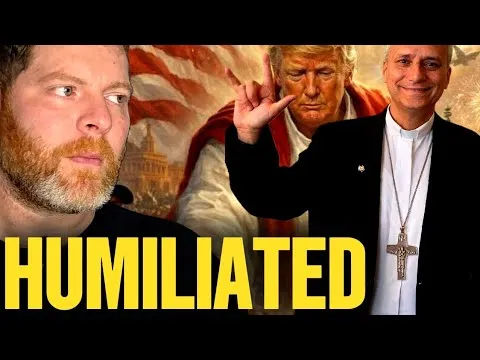
Pope Challenges Trump’s Grip on Narrative
A peculiar public clash has emerged between former U.S. President Donald Trump and Pope Francis, revealing a surprising dynamic in how global influence is wielded. This unusual conflict centers on differing approaches to public discourse and moral authority. It highlights a deep divide in American cultural and political life.
Trump’s Provocations and AI’s Role
The conflict began when Donald Trump, known for his assertive communication style, made critical remarks about Pope Francis. Trump posted on his social media platform, True Social, suggesting the Pope was “weak on crime.” This statement was met with widespread surprise, as the Pope’s role is spiritual, not judicial or law enforcement. Critics pointed out the absurdity of comparing the head of the Catholic Church to a district attorney.
Adding to the controversy, an AI-generated image depicted Donald Trump as Jesus Christ. This image, which appeared to show Trump in religious robes performing miracles, was shared by Trump. It featured symbols like bald eagles, fighter jets, and the Statue of Liberty. This AI creation quickly drew strong reactions, even from within Trump’s own supporter base. Many saw it as a step too far, bordering on blasphemy.
The AI image was reportedly removed after a short time due to the backlash. This suggests that even some of Trump’s most loyal followers drew a line at equating him with religious figures. The use of AI to generate such content also raises questions about the authenticity and intent behind political messaging in the digital age. Trump’s reliance on AI, according to critics, allows him to project powerful, often exaggerated, self-images without direct creative input.
The Pope’s Measured Response
In contrast to Trump’s provocative posts, Pope Francis offered a calm and measured response. While traveling on the papal plane, he was asked about the situation. Instead of directly engaging with Trump’s criticisms, the Pope simply stated, “Blessed are the peacemakers.” He did not mention Trump by name, a move seen by many as a subtle but powerful way to dismiss the former president’s attempts to draw him into a public spat.
This contrasts sharply with Trump’s style, which often involves direct confrontation and personal attacks. The Pope’s approach, characterized by its quiet dignity and focus on core values, highlighted the difference between spiritual leadership and political combat. It suggested that true influence can come from moral authority rather than aggressive rhetoric.
Motivations and Interests
Donald Trump’s actions appear driven by a desire to maintain relevance and project strength. By attacking a globally recognized figure like the Pope, he seeks to capture attention and rally his base, many of whom are religious. His use of AI images can be seen as an attempt to create a messianic image, appealing to followers who view him as a savior figure. His own statements suggest he believes he is responsible for many positive events, indicating a deep-seated narcissism.
Pope Francis, on the other hand, is motivated by his role as the spiritual leader of over a billion Catholics worldwide. His primary interest is promoting peace, compassion, and dialogue. He seeks to steer clear of partisan politics while upholding the Church’s moral teachings. His response to Trump aimed to de-escalate the situation and reaffirm his commitment to Christian values, rather than engaging in personal conflict.
Historical Context and Global Impact
Historically, the relationship between religious leaders and political figures has often been complex. Popes have historically wielded significant moral and sometimes political influence. However, direct public confrontations between a Pope and a former U.S. president, especially involving AI-generated religious imagery, are unprecedented. This event reflects the current era’s fusion of digital technology, political polarization, and religious identity.
The incident also speaks to broader trends in American society. The “cultural feeding trough” remark in the transcript suggests a feeling of moral decline. The clash touches on debates about faith, politics, and the role of leaders in a secularizing world. The fact that atheists are reportedly rallying behind the Pope, as mentioned in the transcript, shows how this conflict transcends religious lines, becoming a broader cultural statement.
Economic and Social Dimensions
While the transcript doesn’t detail specific economic figures or sanctions, it alludes to the Vatican’s financial resources, noting, “the Vatican has some serious money.” This financial standing contributes to the institution’s global influence. Conversely, Trump’s political career has been marked by business dealings and, at times, controversial fundraising efforts, such as selling gold-painted sneakers to cover legal fees.
The social impact is significant. The controversy highlights the deep divisions within the United States, particularly regarding political identity and religious belief. The AI image event suggests a potential shift in how supporters perceive their leaders, with some willing to embrace even overtly religious claims. The Pope’s response, meanwhile, reinforces his image as a unifying, principled figure, contrasting with Trump’s divisive persona.
Future Scenarios
Several future scenarios are possible. Trump may continue to use provocative rhetoric and imagery to energize his supporters, potentially leading to further clashes with religious figures or institutions. Pope Francis will likely maintain his stance of promoting peace and moral values, avoiding direct engagement but continuing to offer a counter-narrative of compassion and humility.
The use of AI in political messaging is also likely to increase, posing challenges for discerning truth and intent. This incident could serve as a cautionary tale about the blurring lines between reality and digital manipulation in the political sphere. Ultimately, this exchange underscores the ongoing struggle for narrative control and moral authority in the 21st century, with global implications for how faith and politics intersect.
Source: Trump Fights The Vatican & Gets Destroyed (YouTube)

Related Articles
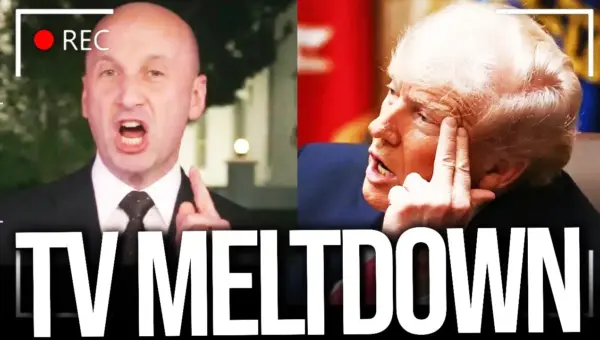
Miller’s Fox News Rant Undermines Trump’s Worldview
Stephen Miller's recent appearance on Fox News defending Trump's foreign policy, particularly regarding the Strait of Hormuz, has drawn criticism. His arguments about a "woke" international order and a "checkmate" move against Iran are contrasted with a view that such actions have weakened U.S. alliances and global standing.

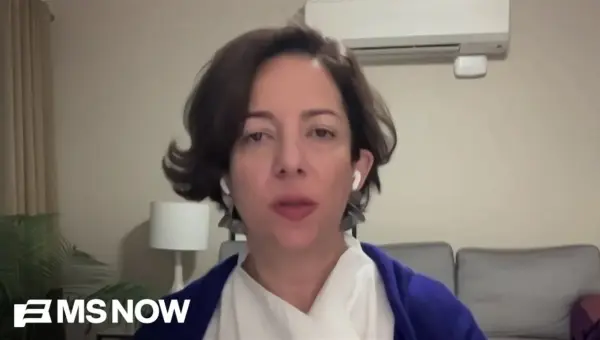
Iran Faces Pressure as Blockade Aims to Force Negotiation
An economic blockade is being employed to pressure Iran into negotiations amid ongoing conflict. While proponents believe this strategy will force Iran to the table, regional allies express concerns about potential escalation and the impact on global trade routes. The current situation remains uncertain, with no clear resolution in sight.
Trump’s Iran Standoff: Claims of Victory Mask Growing Weakness
Claims of U.S. victory in its standoff with Iran are being challenged by maritime data and Iran's defiant response. While the Trump administration boasts of maritime superiority, evidence suggests ships continue to move through the Strait of Hormuz, raising questions about the effectiveness of the blockade.