US Blockade Tightens Grip: Iran Faces Painful Economic Squeeze
The Strait of Hormuz is a critical shipping lane now under a complex U.S. naval blockade targeting Iranian oil exports. While the U.S. aims to squeeze Iran economically, Tehran's high pain tolerance and control over escalation present significant challenges. The situation risks global trade disruption and economic shocks.

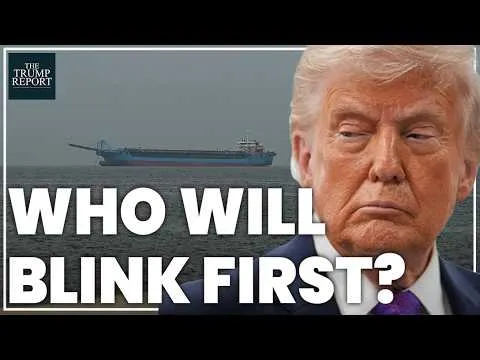
US Blockade Tightens Grip: Iran Faces Painful Economic Squeeze
The Strait of Hormuz, a critical global shipping lane, has become the stage for a high-stakes standoff between the United States and Iran. At its heart is a complex naval blockade, creating a “shin kicking contest” where both sides aim to inflict maximum pain while enduring as much as possible.
Freedom of Navigation Under Threat
For years, Iran has exerted control over the Strait, disrupting the “freedom of navigation” that is vital for global trade. This has manifested in various ways, from threatening traffic to actively moving shipping lanes into Iranian waters and demanding tolls. This situation has severely limited the flow of goods, with only a small percentage of pre-war traffic managing to pass through.
The U.S., under President Trump, has responded with its own naval blockade. This action, however, has added another layer of complexity and uncertainty.
Instead of easing the situation, the American blockade targets ships that have either been in Iranian ports or have received permission to pass through Iran’s own blockade. This means that a handful of vessels attempting to navigate the waters are now subject to being boarded and detained by the U.S. Navy.
“The United States has actually made it worse at this point for maritime traffic. They’ve injected another layer of uncertainty over what was already a pretty static situation.”
A Strategy of Economic Pressure
The U.S. Strategy appears to be an economic squeeze. By preventing Iran from exporting its oil by sea, Washington hopes to cripple Tehran’s economy and force concessions.
This approach is akin to turning off the oil “at the wellhead,” a move that can be difficult and expensive to reverse. The goal is to make Iran’s continued oil exports unsustainable, thereby pressuring the government to change its behavior on issues like the nuclear deal or regional conflicts.
Iran’s High Pain Tolerance
However, Iran has demonstrated a remarkable tolerance for pain. This resilience is partly due to the nature of the regime, where decision-makers may not directly feel the economic hardship imposed by sanctions.
Analysts compare the situation to a contest where one side can endure immense pain while the other is eager for a resolution. Iran’s strategy seems to be one of endurance, waiting for adversaries to grow impatient.
Iran can stop its aggressive actions in the Strait in a few ways: they can choose to do so, they can be pressured by allies like China to cease, or they can be forced. Forcing Iran to stop has proven extremely difficult.
Their military capabilities have been developed over decades specifically to be hard to strike. Therefore, persuading Iran through diplomacy, pressure, or a combination of both is seen as a more viable path.
Complicating Factors and Risks
The U.S. Navy has the capability to enforce the blockade. However, the execution is fraught with complexities.
Identifying the correct ships to intercept is a major challenge, especially with tactics like AIS spoofing, where ships deliberately transmit false information to evade detection. The presence of Chinese-flagged vessels adds another layer of risk, as boarding such ships could escalate tensions significantly.
Maritime law itself adds to the complexity. Blockades must be declared, proven effective and impartial, and limited to enemy territory. While the U.S. Believes it is complying with these rules, the ambiguity inherent in international maritime law means that interpretations can vary widely, potentially leading to disputes in international courts years later.
The worst-case scenario for Iran involves escalating its attacks. This could include targeting infrastructure in neighboring countries, potentially forcing them to pressure the U.S. To de-escalate.
The silence from the Houthi rebels in Yemen, who are allied with Iran, is notable. Their potential to disrupt shipping in the Bab el-Mandeb strait, another critical chokepoint, remains a significant threat that Iran could unleash if it chooses.
Why This Matters
This standoff directly impacts global energy prices and the stability of international trade. The Strait of Hormuz is a vital artery, and any disruption there sends ripples throughout the world economy.
Economists warn of significant price shocks, even if the conflict were to end today, due to the backlog of goods and the ongoing uncertainty. The situation highlights the delicate balance of power in the Middle East and the complex interplay between economic sanctions, military action, and diplomatic negotiations.
The Strait Itself: A Dangerous Arena
Tom Sharpe, with extensive experience in the Royal Navy, describes the Strait of Hormuz as a challenging operating environment. It is narrow, with warm, murky waters that degrade sonar and radar performance.
Visibility is often poor, and the area is incredibly busy with hundreds of commercial vessels, smuggling craft, and military vessels. The constant threat of attack, including missile launches and fast-attack craft rushes from Iran’s Islamic Revolutionary Guard Corps (IRGC), keeps naval forces on high alert.
Future Outlook
The path forward remains uncertain. The U.S. has the capability to enforce the blockade, but its effectiveness in achieving its strategic goals is debatable.
Iran, with its high pain tolerance and control over escalation, appears poised to play a long game. Without a clear diplomatic resolution, the risk of miscalculation and further escalation remains high, potentially leading to significant global economic disruption.
Source: Trump’s in a ‘shin kicking contest’ with Iran. Who can take the most pain? | Tom Sharpe (YouTube)

Related Articles
Gas Prices May Hit $3 by Labor Day
Scott Bessent predicts gas prices could fall to $3 per gallon by Labor Day, between June 20th and September 20th. However, supply chain disruptions, particularly in the Strait of Hormuz, present significant challenges. Mike Summers of the Petroleum Institute cautions that peak summer demand could keep prices higher, especially around the Fourth of July.
Iran Nuclear Talks Collapse: Blockade Looms, Prices Soar
U.S.-Iran nuclear talks have failed, leading President Trump to announce a naval blockade of the Strait of Hormuz. The breakdown centers on Iran's commitment to nuclear non-proliferation. This action is expected to cause significant increases in global fuel and air travel prices.
US Signals Readiness to Strike Iran’s War Machine
The U.S. military has issued a stern warning to Iran, stating that all their movements are being watched and that America is ready to restart combat if needed. Officials highlighted Iran's limited ability to repair its military, contrasting it with America's growing strength and superior intelligence.