Trump’s Iran Standoff: Claims of Victory Mask Growing Weakness
Claims of U.S. victory in its standoff with Iran are being challenged by maritime data and Iran's defiant response. While the Trump administration boasts of maritime superiority, evidence suggests ships continue to move through the Strait of Hormuz, raising questions about the effectiveness of the blockade.

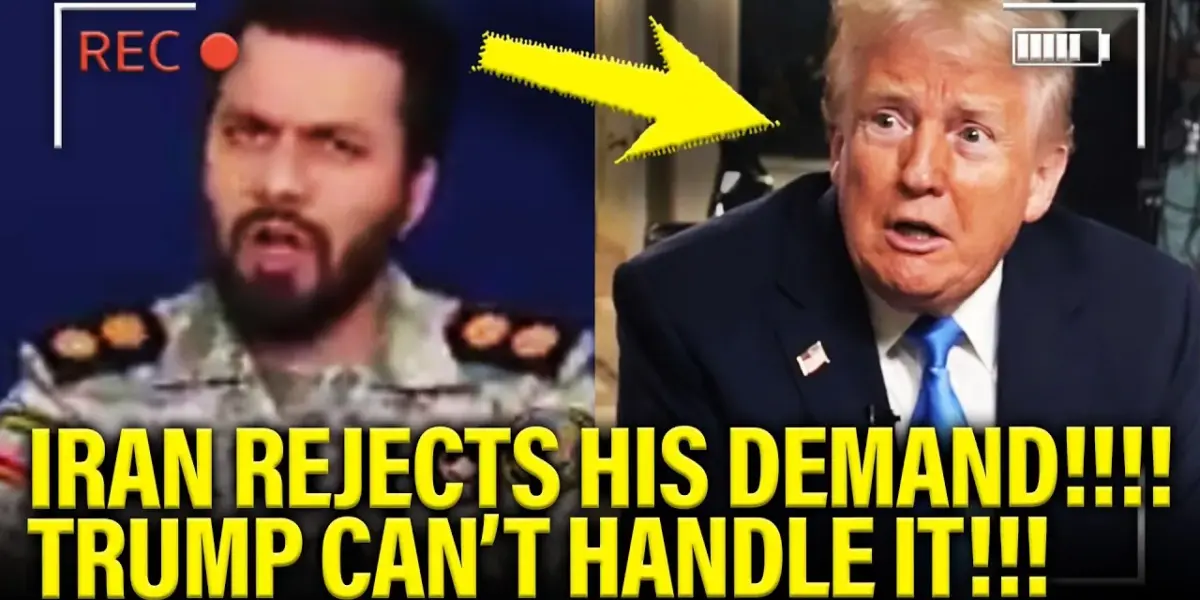
Trump’s Iran Standoff: Claims of Victory Mask Growing Weakness
In a complex geopolitical dance, the Trump administration’s approach to Iran has been met with strong claims of success, yet evidence suggests a more complicated reality. While official statements boast of maritime superiority and decisive actions, on-the-ground data and Iranian responses paint a picture of a standoff where stated goals may be unmet and a “grand bargain” remains elusive.
Blockade Claims Questioned by Maritime Data
Following a U.S. Blockade of Iranian ports, the U.S. Central Command (CENTCOM) announced that maritime trade was halted, asserting U.S. forces maintained superiority in the Middle East. Admiral Brad Cooper stated the blockade was “fully implemented,” effectively stopping all sea traffic in and out of Iran for roughly 36 hours.
However, commercially available maritime data appears to contradict these claims. Reports indicate that at least eight vessels, including six linked to Iran, departed the Strait of Hormuz.
Nine vessels, with three Iranian or Iranian-linked ships, entered the strait during the same period. This suggests that the blockade may not have been as complete as asserted.
The situation raises questions about the effectiveness of the U.S. Strategy. If maritime superiority means controlling the Strait of Hormuz, why are ships moving freely in and out? Some analyses suggest this might be part of a larger, unrevealed plan, while others point to a potential disconnect between public statements and operational reality.
Iran’s Response: Mockery and Resilience
Iran’s reaction to the U.S. Actions has been notably defiant, bordering on dismissive. Social media accounts in Iran have posted messages that can be interpreted as mocking the U.S. Stance, even suggesting a lack of engagement due to the perceived weakness of the American position.
One post humorously offered, “I’m choosing peace today. Do not test the retired troll in me,” implying the situation was beneath serious engagement.
Adding to this, a non-Iranian supertanker, previously blacklisted by the U.S. For violating sanctions, reportedly entered Iran via the Strait of Hormuz with its transponder on, visible to all. This act, rather than being hidden, seemed to signal an open defiance and a challenge to the U.S. Blockade’s authority.
Further complicating the narrative are reports of a maneuver where ships travel to an Iranian port, then proceed to Oman, a neighboring country. This tactic appears designed to circumvent the blockade by claiming they did not directly depart from or arrive at an Iranian port, a strategy that the current U.S. policy seemingly allows.
The “Grand Bargain” vs. Reality
President Trump has repeatedly stated that Iran “wants to make a deal badly,” a sentiment echoed by allies like Senator J.D. Vance. Vance suggested that Trump is holding out for a “grand bargain,” promising economic prosperity and integration into the global economy if Iran commits to not developing nuclear weapons.
However, this vision of a comprehensive deal seems at odds with the current situation. Reports from Iranian negotiators and analysts suggest a deep distrust of the U.S., stemming from past broken agreements and perceived ulterior motives.
Professor Morandi, who was part of the Iranian delegation, stated that Iran would not give up its sovereignty or its rights, particularly regarding civilian uranium enrichment. He also expressed skepticism about U.S. Sincerity, suggesting that negotiations were often conducted on behalf of Israel rather than U.S. Interests.
“Iran is not going to give up its sovereignty. It’s not going to give up its rights as a sovereign and and independent country…”
This perspective highlights a fundamental difference in negotiation goals. While the U.S. may seek to dismantle Iran’s nuclear program and influence, Iran views these as matters of national sovereignty and dignity, hard-won through revolution.
Historical Context: A Pattern of Distrust
The current standoff is not an isolated event but part of a long and often contentious history between the U.S. and Iran. The 1953 coup, the 1979 revolution, and subsequent diplomatic crises have created a deep-seated mistrust. The Joint Comprehensive Plan of Action (JCPOA), or Iran nuclear deal, negotiated under the Obama administration, aimed to curb Iran’s nuclear program in exchange for sanctions relief.
However, the Trump administration withdrew from the JCPOA in 2018, reimposing stringent sanctions. This move was seen by many international observers as undermining diplomatic efforts and increasing regional tensions. Iran’s current stance, therefore, can be partly understood as a reaction to perceived U.S. Unreliability and a determination to protect its national interests and sovereignty.
The professor’s comments about past negotiations, where the U.S. Allegedly conspired to attack Iran even while negotiating, further fuel this distrust. He noted that Iran continued negotiating then to show the international community that the problem was not Iran, demonstrating a strategic use of diplomacy even amidst suspicion.
Why This Matters
The implications of this standoff are significant, extending beyond the immediate region. The perceived weakness of U.S. Maritime control, as suggested by the free movement of ships and the rerouting of aircraft carriers around Africa due to fear of Iranian proxies, can embolden adversaries and create uncertainty among allies.
The narrative of U.S. Victory, contrasted with data suggesting otherwise, raises concerns about transparency and the accuracy of information presented to the public. If the U.S. is not achieving its stated objectives, or if the strategy is failing, a clear understanding of the situation is crucial for informed public discourse and effective foreign policy.
The focus on a “grand bargain” while ignoring Iran’s core concerns about sovereignty and security could lead to a prolonged stalemate or even escalation. The conflict highlights the challenges of diplomacy when fundamental national interests and deeply ingrained historical mistrust are at play.
Future Outlook: A Path Forward?
The future of U.S.-Iran relations remains uncertain. The current approach, characterized by strong rhetoric and questionable effectiveness on the ground, may not lead to a stable resolution. The Iranian perspective, emphasizing sovereignty and national pride, suggests that any lasting agreement would need to acknowledge these fundamental principles.
A shift towards more realistic assessments of the situation, combined with a willingness to engage in genuine, good-faith negotiations that address Iran’s core concerns, might offer a more promising path. This would require moving beyond claims of absolute victory and acknowledging the complexities and nuances of the relationship.
The current dynamic, where Iran appears to be mocking U.S. Actions and asserting its resilience, suggests that the strategy of maximum pressure may be yielding unintended consequences. Without a clear and achievable path to de-escalation, the region could face continued instability, with far-reaching global implications.
Source: Trump BLINKS FIRST as Iran REJECTS HIS DEMAND!! (YouTube)

Related Articles


Iran’s Missile Claims Debunked by US Intel
Recent claims of Iran's complete military defeat are being challenged by U.S. intelligence, which suggests Iran retains significant missile capabilities. This discrepancy highlights potential misrepresentations of conflict outcomes and impacts diplomatic efforts.

Trump’s Fitness: A Divided Nation Seeks Answers
A debate on Donald Trump's fitness to lead reveals deep divisions, weighing democratic legitimacy against concerns over character and norms. Nuanced views highlight the role of authenticity and the impact of globalization on American workers.
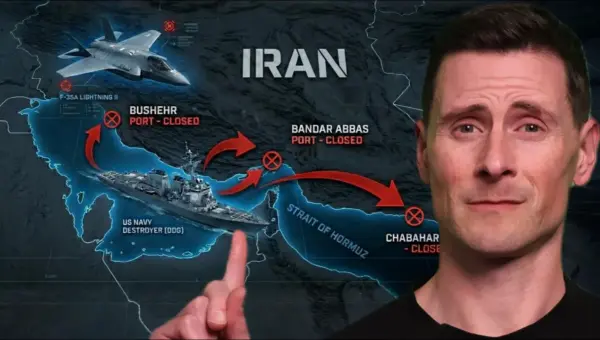
US Navy Tightens Strait of Hormuz Blockade
The U.S. Navy has tightened its blockade in the Strait of Hormuz, part of Operation Economic Fury against Iran. Pentagon officials have issued direct warnings to the IRGC, emphasizing U.S. military dominance and offering an "off-ramp" for a diplomatic resolution. While Iran has issued defiant threats, its naval capabilities are severely degraded, leaving few options against the U.S. carrier strike groups and advanced air power.