GOP Pushes $70B Border Funding, Sidelines Democrats
Senate Republicans are pushing forward with a $70 billion budget plan for ICE and Border Patrol, using a special process to bypass Democrats. This move highlights deep divisions over immigration policy and funding. The bill's passage could reshape how these agencies are funded and operate.


GOP Pushes $70B Border Funding, Sidelines Democrats
Senate Republicans have advanced a budget plan that could send up to $70 billion to immigration enforcement agencies. This move breaks a long-standing disagreement over how to fund the Department of Homeland Security (DHS).
Lawmakers voted 52 to 46 to move the measure forward. This vote started a special process called reconciliation, which allows the bill to pass without needing Democratic votes.
The reconciliation process is a powerful tool. It lets the majority party bypass certain rules, like the Senate filibuster.
This means the bill can pass with a simple majority, not the usual 60 votes needed to overcome objections. Republicans are using this to push their funding priorities for agencies like Immigration and Customs Enforcement (ICE) and Customs and Border Protection (CBP).
Democrats’ Stance and the Reconciliation Process
Democrats have expressed strong opposition to the current funding plan. They argue that Republicans are ignoring calls for reforms within immigration enforcement.
Democrats have stated they would only support funding if changes are made, especially after recent incidents involving immigration agents. They believe these agencies need oversight and reform before receiving increased budgets.
By using reconciliation, Republicans are effectively moving the bill forward on their own. This process allows them to address funding for ICE and CBP separately.
The rest of the Department of Homeland Security’s budget would then be handled in a different bill. This strategy separates the contentious immigration enforcement funding from other DHS operations.
Historical Context of Border Funding Debates
Disagreements over border security and immigration funding are not new. Throughout recent history, these issues have often led to political standoffs.
Different administrations have proposed various solutions, from increasing agent numbers to building physical barriers. Congress has frequently struggled to reach a consensus on how much money to allocate and what conditions should be attached.
The current debate reflects a deeper political divide. Some lawmakers prioritize increased enforcement and detention, while others focus on humanitarian concerns and pathways to legal status.
These differing views often make it difficult to pass comprehensive immigration legislation or even routine funding bills. The use of reconciliation signals a willingness by one party to push its agenda without bipartisan agreement.
The $70 Billion Measure: What It Means
The proposed $70 billion would significantly boost funding for ICE and Border Patrol. These agencies are responsible for enforcing immigration laws, patrolling the nation’s borders, and detaining individuals who enter the country illegally. The money could be used for personnel, technology, infrastructure, and operational expenses.
Proponents of the bill argue that increased funding is essential for national security. They believe these agencies need more resources to manage the flow of migrants and to deport those who have committed crimes. The funding is seen as a way to strengthen border control and maintain order.
Potential Consequences and Future Outlook
This move by Republicans could lead to a divided budget for Homeland Security. It might also further polarize the debate on immigration policy. If the bill passes, it could set a precedent for how future funding disputes are resolved, relying more on party-line votes than on compromise.
The future outlook depends on whether Democrats can negotiate for reforms or if Republicans will proceed alone. The separate handling of DHS funding could mean that other parts of the department, which may have broader support, could be delayed or face different challenges. The ultimate impact will be on the operations and effectiveness of these critical immigration agencies.
Why This Matters
This development is significant because it highlights the deep divisions in Congress over immigration policy and border security. The ability of one party to advance such a large funding measure without the other’s support shows how political polarization can affect essential government functions. It directly impacts the resources available to agencies tasked with managing the country’s borders and enforcing immigration laws.
The outcome of this vote and the subsequent bill could influence immigration enforcement strategies and the treatment of migrants for years to come. It also raises questions about the future of bipartisan cooperation on national security issues. The focus on funding without immediate reform could lead to ongoing tensions and challenges in managing the complex immigration system.
Source: Senate Moves Forward on $70 Billion Measure to Fund ICE, Border Patrol (YouTube)

Related Articles


Congresswoman Crockett’s Words Spark Fierce Debate
A recent political debate erupted over accusations that Congresswoman Jasmine Crockett hates white people. Supporters defended her, demanding specific proof and likening the claims to political manipulation. This highlights the ongoing, sensitive discussions about race and rhetoric in American politics.


Florida Democrat Resigns From Congress Amid Ethics Probe
U.S. Representative Sheila Cherfilus-McCormick has resigned from Congress effective immediately, citing an unfair ethics investigation and a pending criminal indictment. In a statement, she described the process as a "witch hunt" that prevented her from defending herself and warned against setting dangerous precedents. Her departure leaves Florida's 20th Congressional District needing new representation.

Congressman Slams ‘Shameful’ Migrant Detention Centers
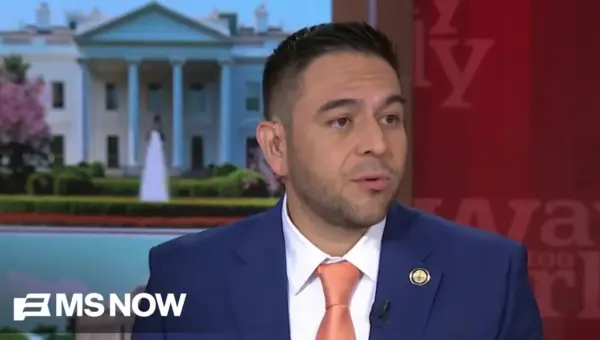
Rep. Gabe Vasquez has sharply criticized the Department of Homeland Security's use of converted warehouses as migrant detention centers, citing inadequate conditions, insufficient healthcare, and excessive taxpayer spending. He visited a facility in El Paso, Texas, describing it as a "makeshift prison" and is advocating for his "New American Immigration Plan" which focuses on border security technology and economic realities.